
Last updated October 17, 2026
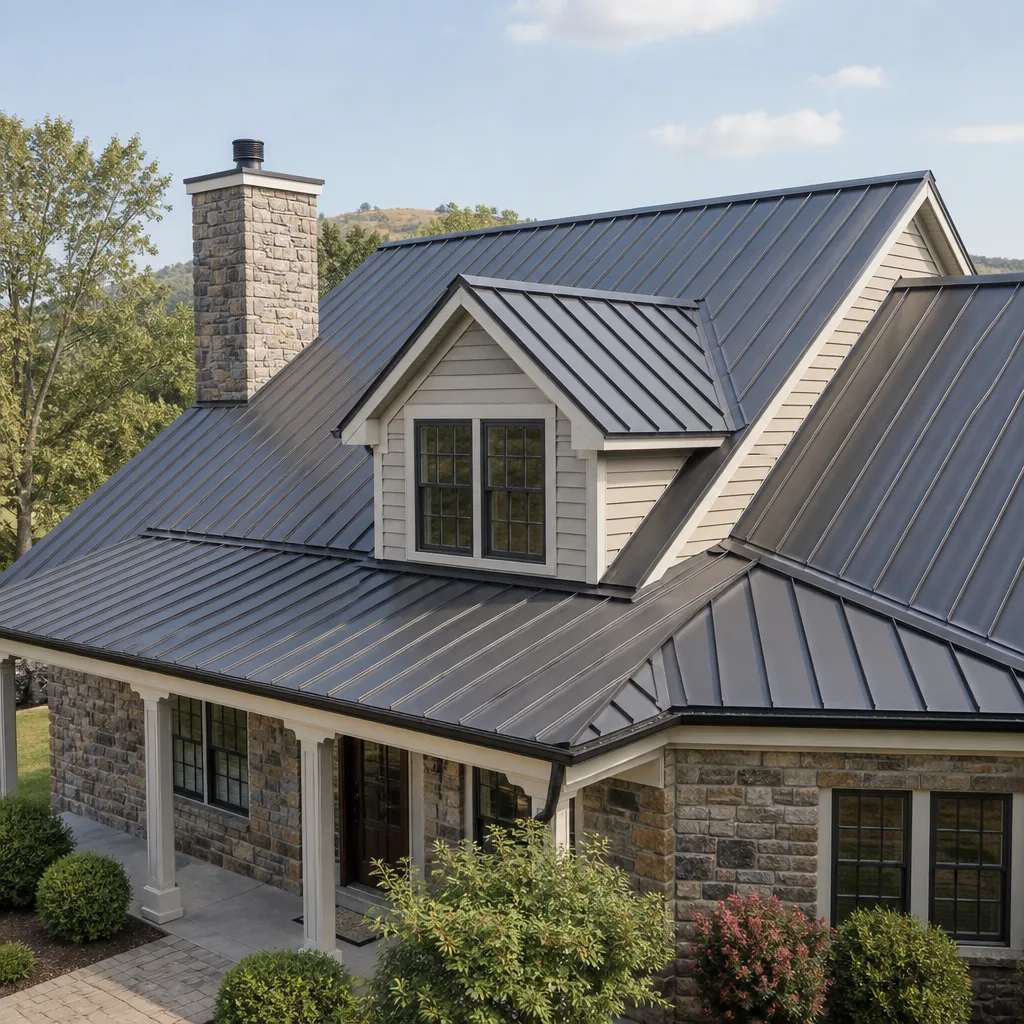 Metal roofing
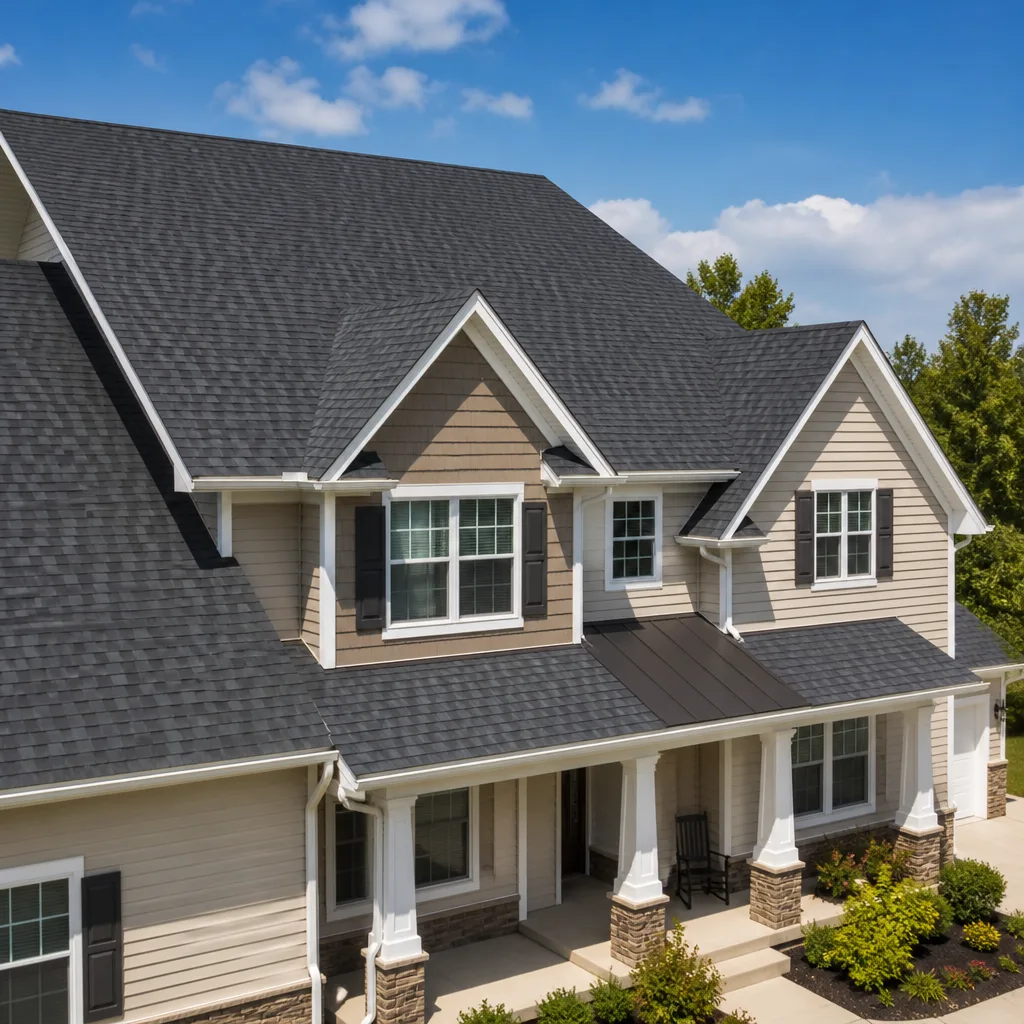
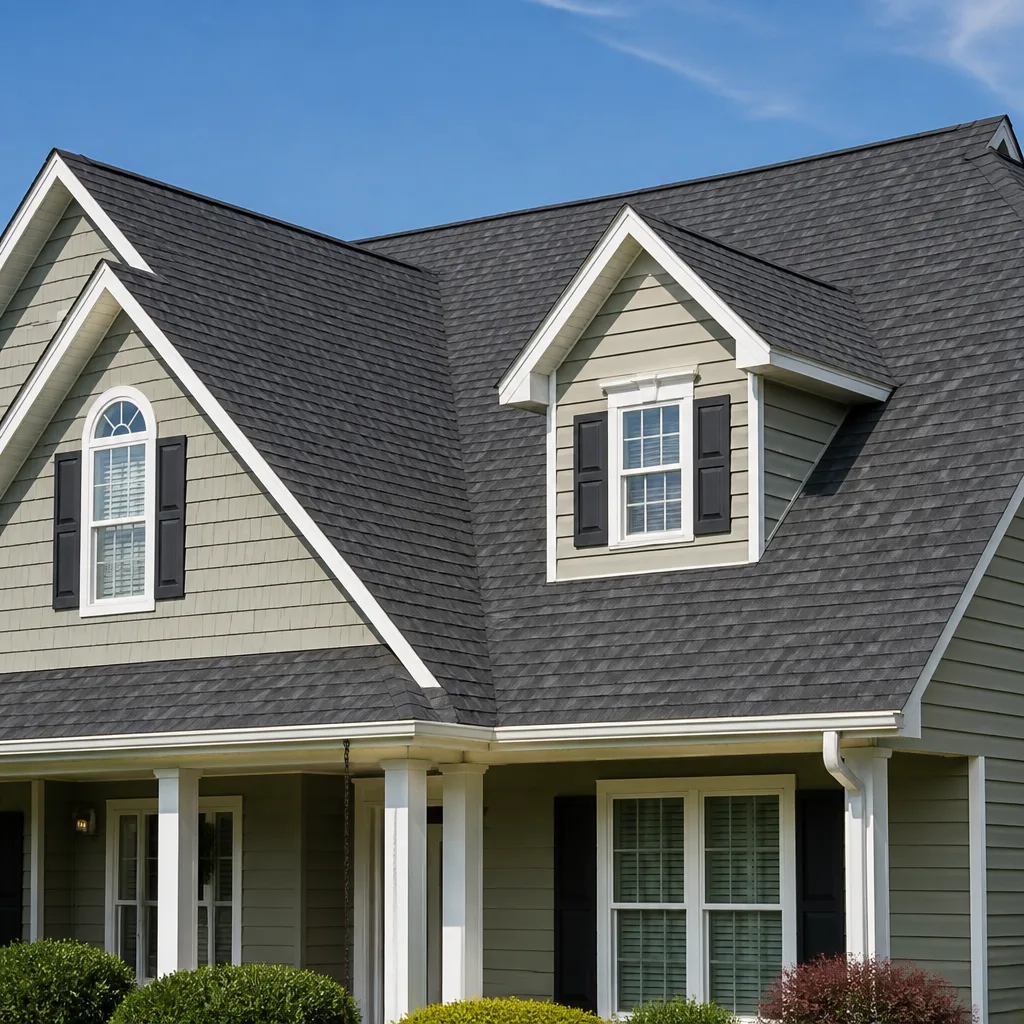 Architectural shingles
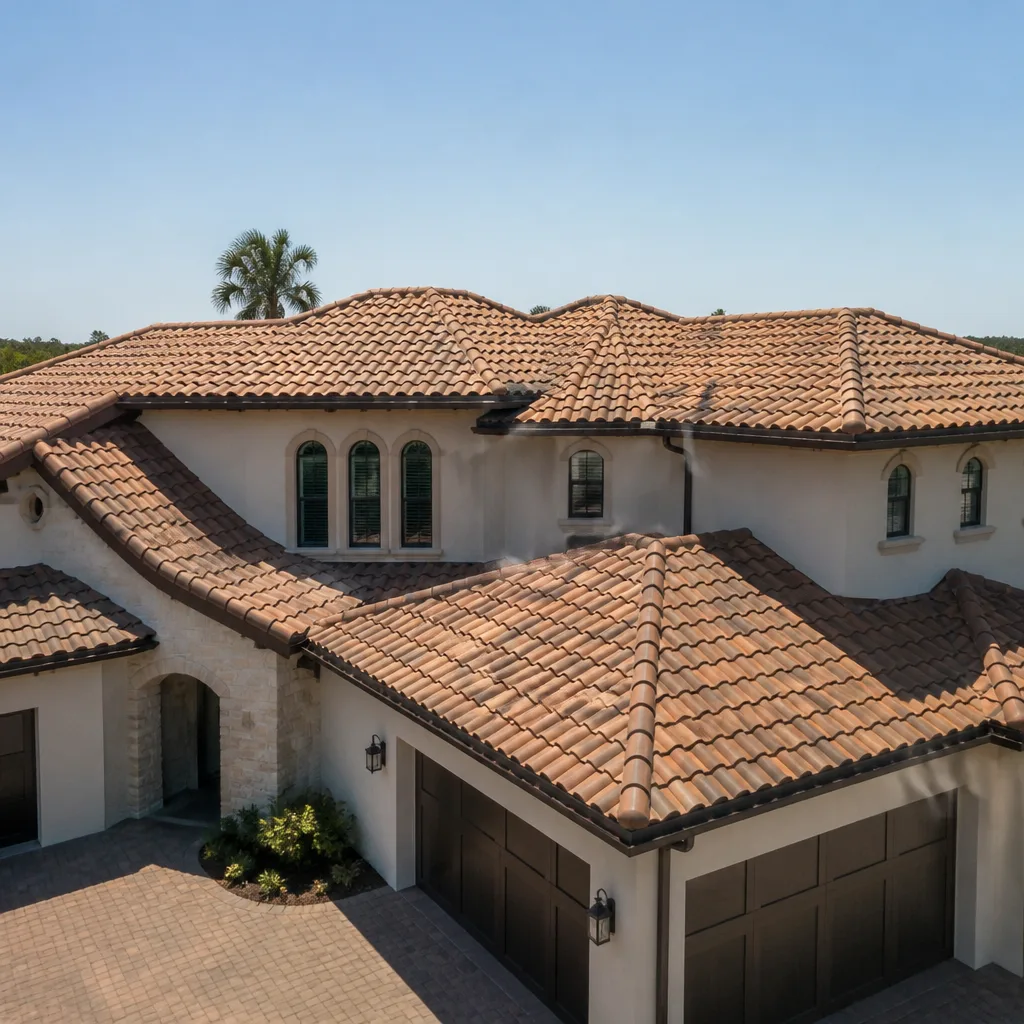 Tile roofing
 GAF
GAF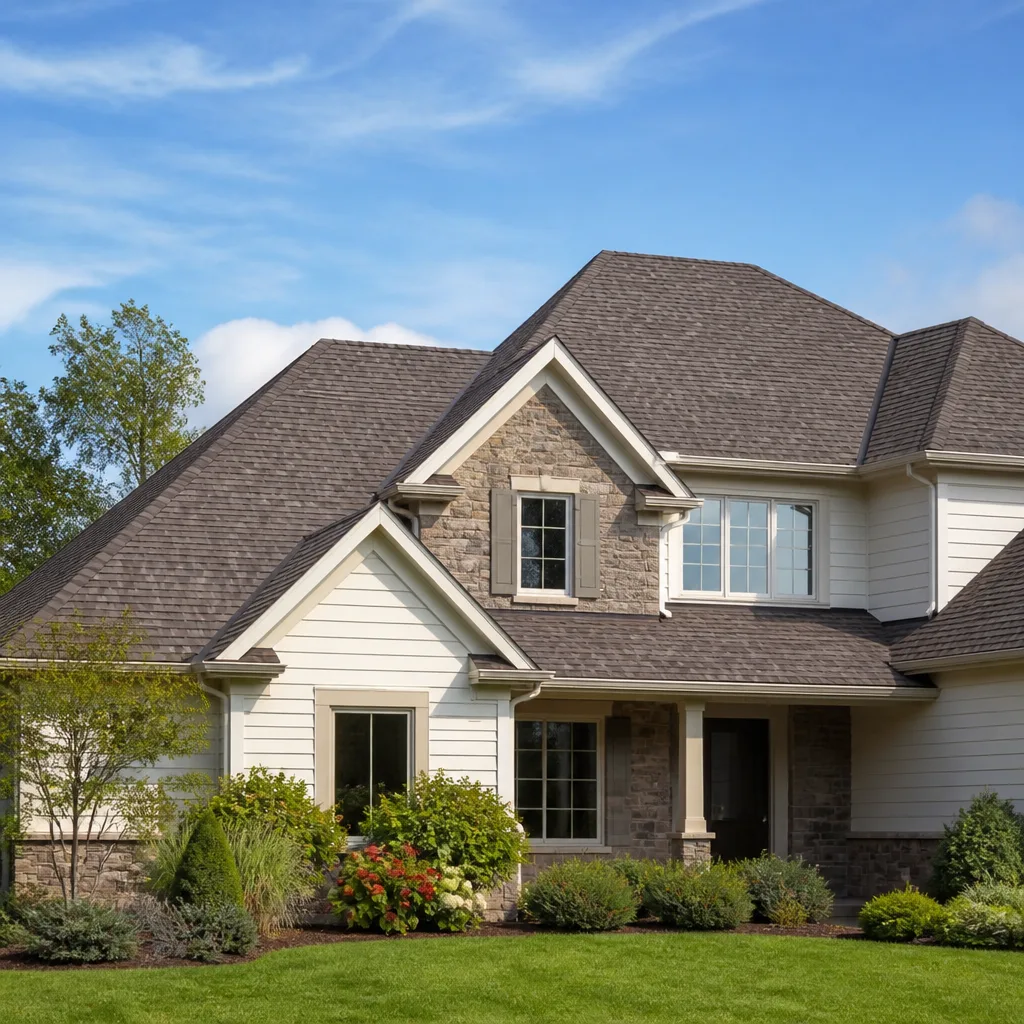 Owens Corning
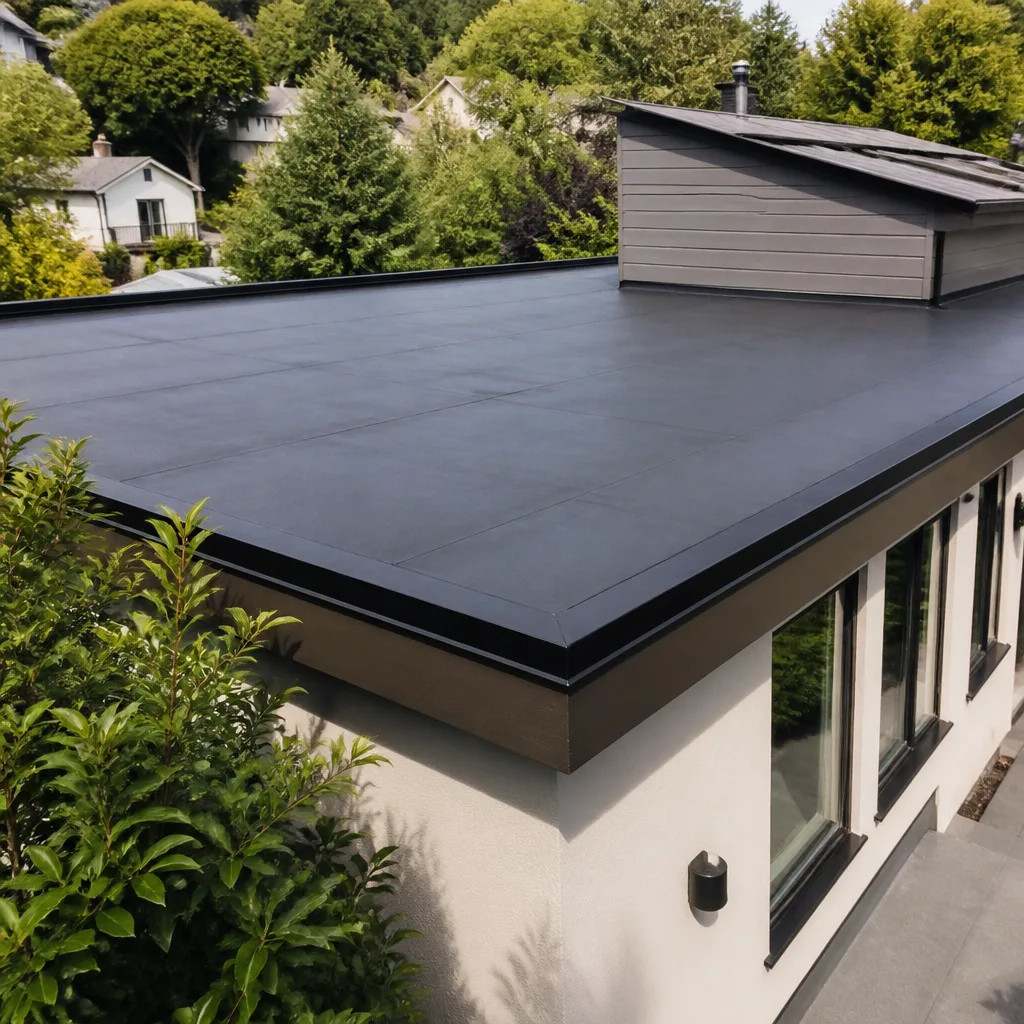 Flat & low-slope
Free roof inspection with deck photos before we talk money - GAF and Owens Corning certified installation
The Complete Guide to Roofing in Orlando
Orlando averages 233 sunny days a year, more than Miami, and that relentless UV exposure degrades standard asphalt shingles roughly 30% faster than manufacturer lifespan ratings assume. Those ratings were built around moderate climates, not Central Florida’s particular mix of heat, humidity, and afternoon storm cycles. But here’s what most guides won’t tell you: roofing in Orlando is less about picking the right shingle and more about understanding wind uplift, solar reflectance, and the Florida Building Code’s permitting triggers. This guide walks you through every decision a Central Florida homeowner faces, from material selection to insurance compliance, with real numbers and local context you won’t find on a manufacturer’s spec sheet. For more guides & resources, explore our full library.
Quick Answer
Roofing in Orlando, FL means choosing materials and installation methods that meet Florida Building Code wind-uplift requirements, handle intense UV and thermal cycling, and comply with Orange County’s permit and inspection process. A typical asphalt shingle roof in Orlando lasts 15 to 20 years, metal roofing lasts 30 to 50 years, and tile can last 40 to 60 years, provided installation follows manufacturer specs and local code. Every re-roof requires a permit in Florida, and skipping it voids your homeowner’s insurance coverage and creates liability when you sell.
Styles & brands we work with
Table of Contents
- Florida Building Code and Wind Uplift: Why Miami-Dade Approval Matters in Orange County
- UV, Solar Reflectance, and Your Cooling Bill: The Orlando Energy Equation
- Real Lifespans in Orlando: How Long Each Roof Material Actually Lasts
- Permits, Inspections, and Insurance: The Florida Re-Roof Rule
- Choosing Between Asphalt, Metal, and Tile: An Orlando-Specific Breakdown
- What a Written Scope of Work Must Include in Florida to Be Enforceable
- The Relay Standard: What Full Visibility Roofing Looks Like in Practice
Florida Building Code and Wind Uplift: Why Miami-Dade Approval Matters in Orange County
Here’s a fact that surprises most Orlando homeowners: the Florida Building Code applies wind-uplift requirements across all of Orange County, not just coastal zones. Wind uplift is the force that tries to peel your roof off during a storm, and it’s measured in pounds per square foot. The Miami-Dade NOA (Notice of Acceptance) is the strictest wind-uplift testing standard in the country. While Orlando isn’t in the High Velocity Hurricane Zone like Miami-Dade or Broward, the 7th Edition (2023) Florida Building Code still requires roofing systems in inland counties like Orange to meet specific uplift ratings based on the roof’s exposure category and mean roof height.
What this means in practical terms: if a roofer hands you a quote for materials that don’t carry a Florida Product Approval or Miami-Dade NOA number, that roof won’t pass inspection in Orlando. We’ve seen homeowners buy materials online to save money, only to have an Orange County inspector fail the job because the product lacked the required approval documentation. The code doesn’t care where the house sits relative to the coast; it cares about wind speed maps, and Orlando sits in a zone that demands rated fastening patterns, proper nail size and spacing, and an underlayment system that meets ASTM standards.
When you’re comparing bids, ask each contractor two direct questions: “What is the Florida Product Approval number for the roofing system you’re proposing?” and “What uplift rating is this system installed to?” If you need help vetting candidates, see our How to Hire a Roofing Contractor in Orlando: A Step-by-Step Guide. A legitimate roofer answers both without hesitation. If you get vague language about “hurricane rated” without a number, you’re not getting a compliant roof. The fastening schedule matters more than the shingle brand. A GAF, CertainTeed, or Owens Corning shingle installed with the wrong nail pattern is a code violation, full stop.
UV, Solar Reflectance, and Your Cooling Bill: The Orlando Energy Equation
Cooling accounts for more than 50% of home energy use in Orlando, which means your roof is a major player in what you pay OUC or Duke Energy every month. This is where solar reflectance index (SRI) comes in. SRI measures how well a material reflects solar heat; the scale runs from 0 (standard black asphalt, absorbs everything) to 100 (a clean white surface that reflects nearly all solar radiation). In Orlando’s climate, a roof with a high SRI can reduce attic temperatures by 30 to 40 degrees, which translates to lower heat transfer into your living space and a smaller cooling load on your AC system.
Here’s the counterintuitive part: not every homeowner should chase the highest SRI available. Light-colored roofs are great for reflectivity, but in a humid subtropical climate like Orlando’s, any cooling benefit runs against a phenomenon called thermal bridging, where high attic heat meets air-conditioned ceilings and creates condensation risk when insulation is insufficient. The better play for most Orlando homes is a balanced approach: choose a material with a moderate-to-high SRI (cool-rated shingles or lighter-toned metal), ensure your attic ventilation is engineered for Florida’s humidity, and verify your ridge vents and soffit vents work together as a system. For a full breakdown of seasonal tasks, use our Roof Repair Maintenance Checklist for Orlando Homeowners.
CertainTeed’s Landmark Solaris shingles, for example, carry an SRI rating high enough to qualify for cool-roof credits in some utility programs. GAF’s Timberline Cool Series does the same with a different granule technology. The material brand matters less than the SRI rating on the specific product line. When you’re evaluating materials, look for the printed SRI value in the manufacturer’s technical data sheet, not marketing copy that says “energy efficient” without a number. A roof with an SRI above 25 is generally considered cool-roof compliant in Florida’s climate zones.
Real Lifespans in Orlando: How Long Each Roof Material Actually Lasts
National lifespan charts for roofing materials are close to useless in Central Florida. Those averages assume moderate UV, limited thermal cycling, and no hurricane-season wind events. Orlando’s climate shortens the realistic window for every material, and here’s what we actually observe on roofs across Orange County:
- Architectural asphalt shingles: 15 to 20 years in Orlando, versus the 25 to 30 years manufacturers quote. UV radiation breaks down the asphalt binder, and daily thermal cycling (90-degree days followed by 70-degree nights) accelerates granule loss and curling. By year 15, most Orlando shingle roofs show visible granule washout in valleys and southern exposures.
- Three-tab asphalt shingles: 10 to 14 years. These thinner single-layer shingles don’t hold up to Florida’s wind and UV at all. We’d rarely recommend installing them in Orlando at this point, except for sheds or accessory structures.
- Standing seam metal: 30 to 50 years, and here’s the exception to the UV rule. Coated steel and aluminum panels with a PVDF (Kynar 500) finish resist UV degradation far better than asphalt. What shortens metal roof life in Orlando is improper installation of the panel seams, which leads to water intrusion at fasteners. A properly installed metal roof in Orlando should outlive the homeowner’s tenure.
- Clay and concrete tile: 40 to 60 years, but with two Orlando-specific caveats. First, tile is heavy, and your home’s truss system must be engineered to carry it. Second, tile’s lifespan in Orlando depends entirely on the underlayment beneath it. A tile roof with a failing underlayment leaks just as much as a failing shingle roof, and repairs cost more because tiles must be removed and reset.
- Flat/low-slope membrane roofs (TPO, modified bitumen): 15 to 20 years, consistent with national averages. Ponding water from afternoon thunderstorms accelerates seam failure, so drainage details matter more in Orlando than anywhere else in the country.
Permits, Inspections, and Insurance: The Florida Re-Roof Rule
Here’s the rule every Orlando homeowner needs to know before they touch a shingle: re-roofing triggers a full permit and inspection in Florida, and skipping that step voids your homeowner’s insurance coverage. This isn’t a gray area or a recommendation; it’s Florida Statute 553.844 and the Florida Building Code working together. Your insurance policy almost certainly contains a clause requiring all roof work to be permitted and inspected. If a claim follows unpermitted work, the carrier can deny it, and they will.
The permit process in Orange County works like this:
- Permit application: Your contractor files with Orange County Building Safety, including the roofing system’s Florida Product Approval, the scope of work, and the contractor’s license. The permit must be posted on the job site before work begins.
- In-progress inspection: For most re-roofs, an inspector checks the stripped deck and underlayment before shingles or panels go on. This verifies the deck is sound and the underlayment meets code for the material type.
- Final inspection: After installation, the inspector verifies fastener patterns, flashing details, and edge details against the approved product installation instructions. The inspector signs off, and the permit is closed.
- Documentation: You receive a closed permit and inspection record. Keep this. You’ll need it for insurance renewals, claims, and when you sell the home.
We’ve been called to fix roofs in Orlando where the homeowner paid cash for an unpermitted re-roof and only discovered the problem when a storm-damage claim was denied. The fix was a full tear-off and permitted reinstallation. That’s a five-figure mistake that a $300 permit would have prevented. If a roofer tells you a permit “isn’t necessary” for your job, end the conversation there. The only roofing work that typically doesn’t require a permit in Orange County is minor repair covering less than a certain square footage, and even then, the definition varies by inspector.
Choosing Between Asphalt, Metal, and Tile: An Orlando-Specific Breakdown
Three material families dominate Orlando roofing: asphalt shingles, metal panels, and clay or concrete tile. Each has a distinct profile in Central Florida’s climate, code environment, and resale market. Here’s how they stack up when Orlando conditions are the deciding factor.
Asphalt Shingles: The Sensible Default
Architectural asphalt shingles from GAF, CertainTeed, or Owens Corning remain the most common choice in Orlando for three reasons: they’re cost-effective on a dollar-per-year basis, they meet Florida wind-uplift requirements when installed with the manufacturer’s high-wind fastening pattern, and they’re easy to repair or match after a storm. The tradeoff is lifespan. Expect 15 to 20 years, not 30. If you’re in neighborhoods like Conway, Audubon Park, or Baldwin Park where homes are tight to one another, shingles are also the neighbor-friendly option because they don’t reflect glare onto the house next door.
Metal Roofing: The Long-Game Choice
Standing seam metal has been gaining share in Orlando for a reason: a properly installed metal roof with a PVDF finish weathers Florida’s UV and heat cycles far better than any asphalt product. Metal also handles the afternoon thunderstorm downpours well because of its slick surface and interlocking seams. The catch is upfront cost, which runs two to three times architectural shingles, and installation quality matters more than any other material. A metal roof with poorly detailed penetrations will leak, and the repairs are expensive. If you choose metal, choose an installer who has done metal in Orlando specifically, not someone who learned on a warehouse in another state. Still weighing your options? Read our DIY vs Professional Roofing: The Orlando Homeowner’s Decision Guide.
Clay and Concrete Tile: The Traditional Look
Tile roofing is common in older Orlando neighborhoods like College Park and Delaney Park, where the Mediterranean or Spanish style matches the original architecture. Tile’s advantage is longevity (40 to 60 years on the tile itself) and wind resistance. The challenge in Orlando is twofold: structural load and underlayment maintenance. A tile roof requires an underlayment specifically rated for high temperatures, and that underlayment typically needs replacement every 20 to 30 years, even though the tiles may still be fine. Budget accordingly. Tile also costs more to repair because each broken tile must be individually sourced and set.
What a Written Scope of Work Must Include in Florida to Be Enforceable
Florida construction law requires a written contract for residential roofing work, and that contract must include specific items to be enforceable in the event of a dispute. A “ballpark number” written on a business card is not a contract, and a one-page proposal missing key line items won’t protect you if the job goes sideways. Here are the items every legitimate Orlando roofing quote must include:
- Contractor’s license number and insurance information: Florida requires roofing contractors to carry a Certified Roofing Contractor license (CCC) or a statewide Roofing license. The number must appear on the contract. If it doesn’t, walk away.
- Complete scope of work: This means the roofing system being installed (manufacturer, product line, color), the underlayment specification, the fastening pattern, the flashing and edge details, and the ventilation plan. “We’ll roof your house” is not a scope.
- Total contract price: A fixed, all-in number. Not an estimate, not a range, not an allowance. Florida law requires the contract to state exactly what you’re paying.
- Payment schedule: The Florida Homeowners’ Construction Recovery Fund caps down payments on residential jobs. Your contract should state the deposit, progress payments, and final payment schedule. Any roofer asking for 50% down before materials arrive is asking for more than state law allows.
- Start and completion dates: Florida requires reasonable start and completion dates in the contract. A “we’ll get to it when we can” clause isn’t enforceable, and it’s a red flag.
- Permit and inspection responsibility: The contract must state who pulls the permit and who’s responsible for inspections. The correct answer is the contractor. If the contract says the homeowner pulls the permit, that’s a signal the contractor isn’t properly licensed.
- Warranty terms in writing: Not just “we guarantee our work,” but the specific term, coverage, and remedy. A one-year workmanship warranty is the standard minimum in Orlando. The flimsier the warranty language, the more you should negotiate or walk.
At Crestview Roofing Co Orlando, we deliver a written price before any work starts, and the number on that page is the number on the invoice. That’s how Florida contracts are supposed to work, and it’s surprising how many Orlando homeowners have never seen a proper scope of work before they hire a roofer.
The Relay Standard: What Full Visibility Roofing Looks Like in Practice
Most of the frustration we hear from Orlando homeowners isn’t about the roof itself; it’s about the process. The roofer who calls to say he’s running late, then shows up three hours later. The quote that balloons at the door when the crew “finds something.” The silence after the check clears. The Relay Standard was built to solve exactly those problems, and it’s the process we follow on every job at Crestview Roofing Co Orlando.
Here’s what it means in practice. You call and a live person answers, 24/7. You schedule a visit, and you get a live trackable arrival time, not a four-hour window. The technician who shows up is background-checked and uniformed, and you’ll see their name and photo before they arrive. You get a written price before any work starts, based on a real inspection, not a guess from a satellite image. During the job, you get before-and-after photo documentation so you can see exactly what was done. And when the job is complete, you receive a digital invoice by text, with every line item itemized.
The 365-Day Done Right Promise covers every repair we do for a full year. If something fails within that year, we correct it at no charge, and if we need to make a second visit, that second visit is free. No negotiation, no runaround. That’s the standard, and we think it’s the minimum any Orlando roofer should offer.
Common Mistakes to Avoid
- Skipping the permit: The most expensive mistake in Orlando roofing. An unpermitted re-roof voids insurance coverage and creates liability when you sell. Always insist on a permit.
- Choosing materials by price alone: A cheap three-tab shingle in Orlando will fail in 10 to 12 years and may not meet wind-uplift requirements. The cheapest bid usually costs more per year of service life.
- Ignoring ventilation: Orlando’s humidity demands a working attic ventilation system. A new roof installed over a poorly ventilated attic will bake from underneath and fail prematurely. Ask how the roofer plans to handle ventilation before they start.
- Not verifying the contractor’s license and insurance: Florida has strict licensing requirements for roofers, and an unlicensed operator has no obligation to stand behind the work. Check the license before you sign anything.
- Accepting a verbal quote: If the price isn’t in writing with a full scope of work, you don’t have a contract. Verbal agreements are nearly impossible to enforce in Florida when a roofing dispute arises.
- Waiting too long to address small leaks: In Orlando’s humid climate, a small leak becomes a mold problem faster than in other parts of the country. Address water intrusion within days, not weeks.
- Overlooking the underlayment: The underlayment is the roof’s actual waterproofing layer, especially under tile. A roofer who quotes the cheapest possible underlayment is cutting the most important corner.
See the difference
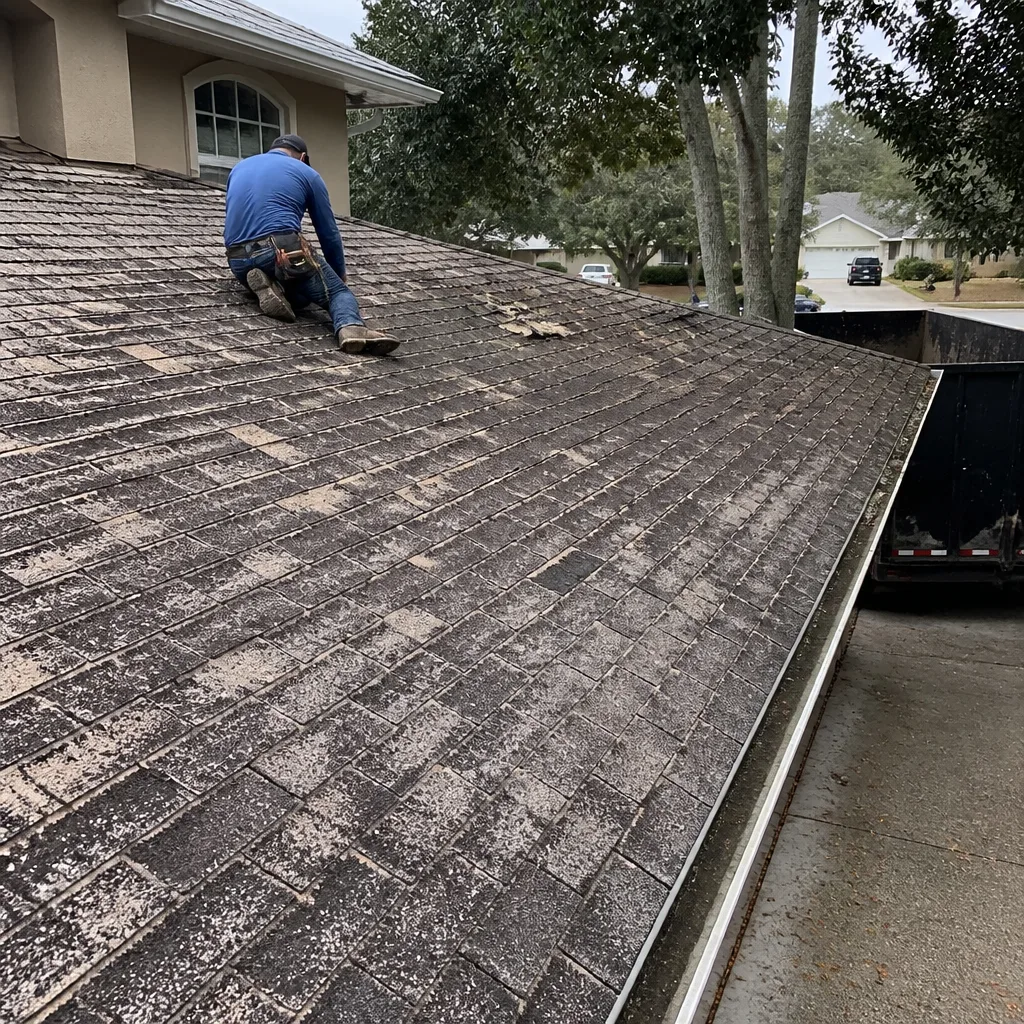 Before
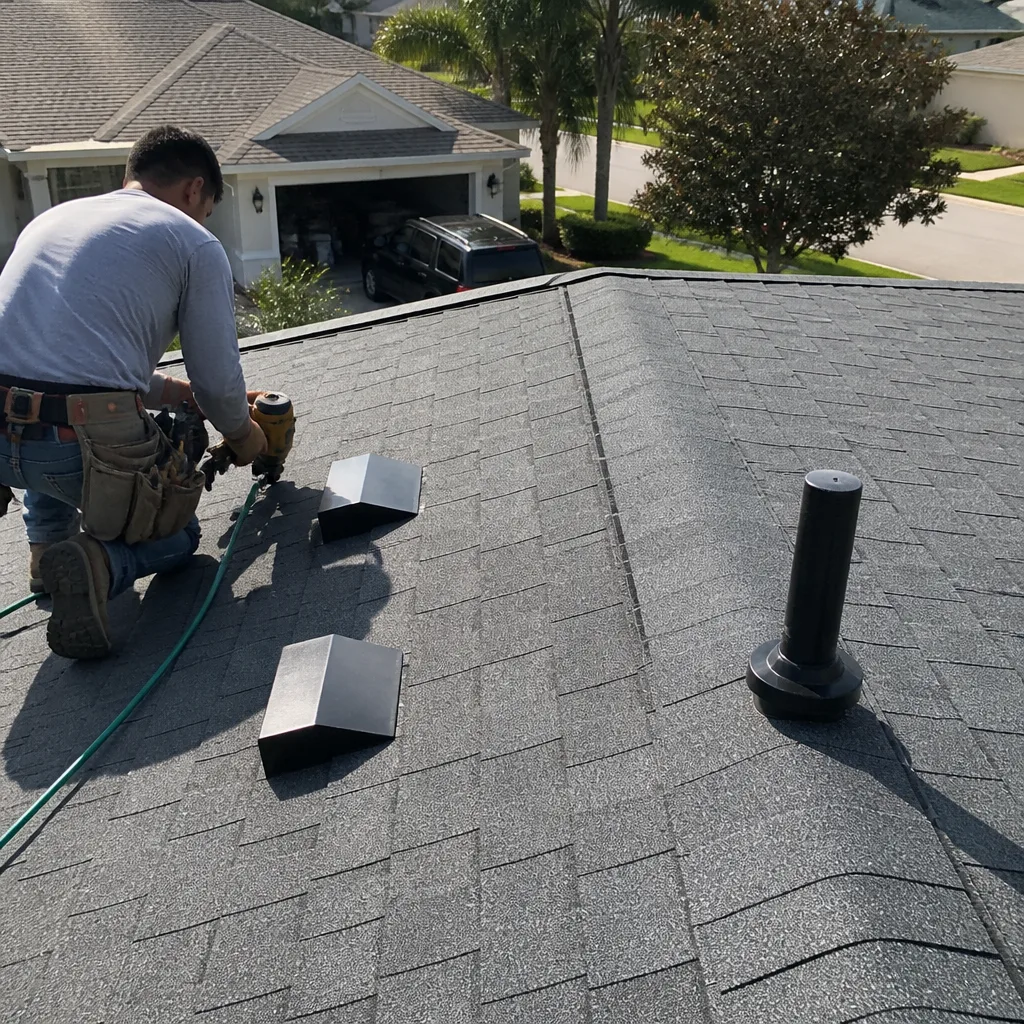 After
After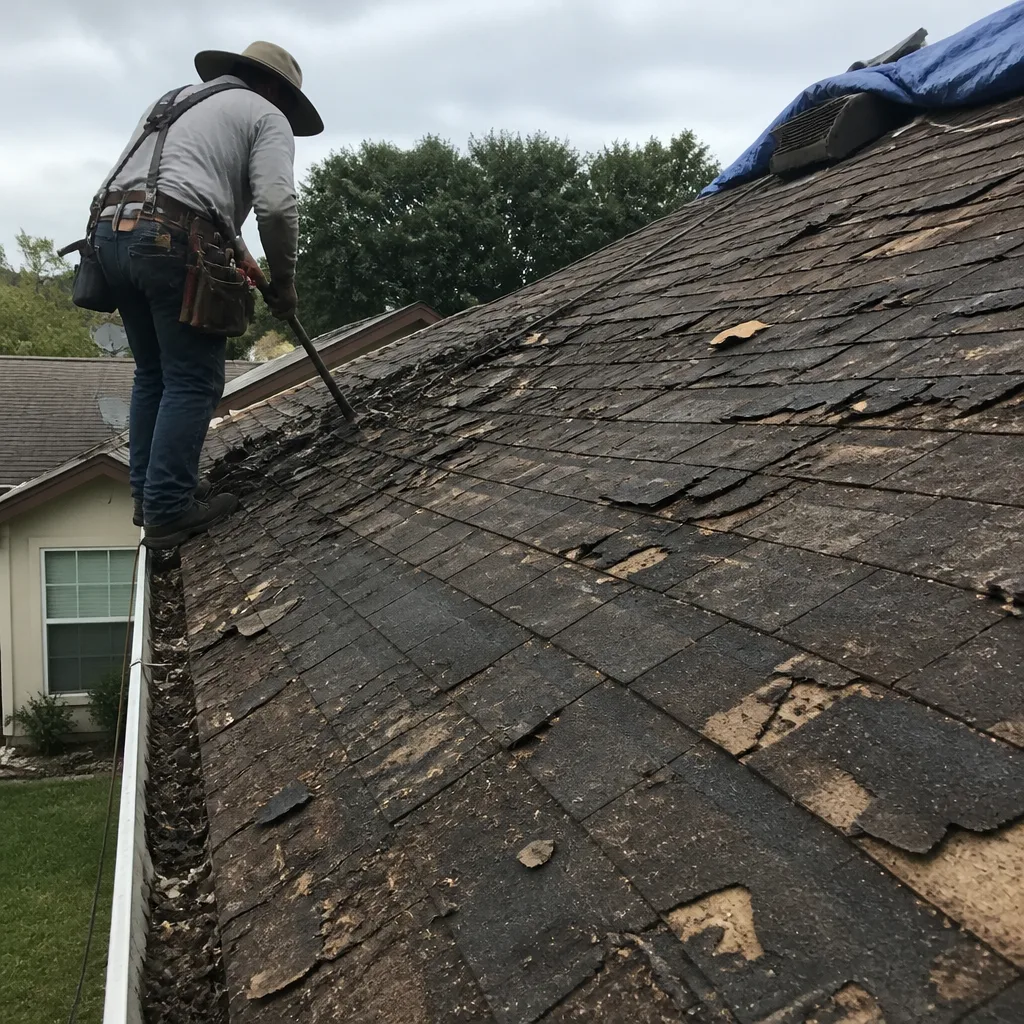 Before
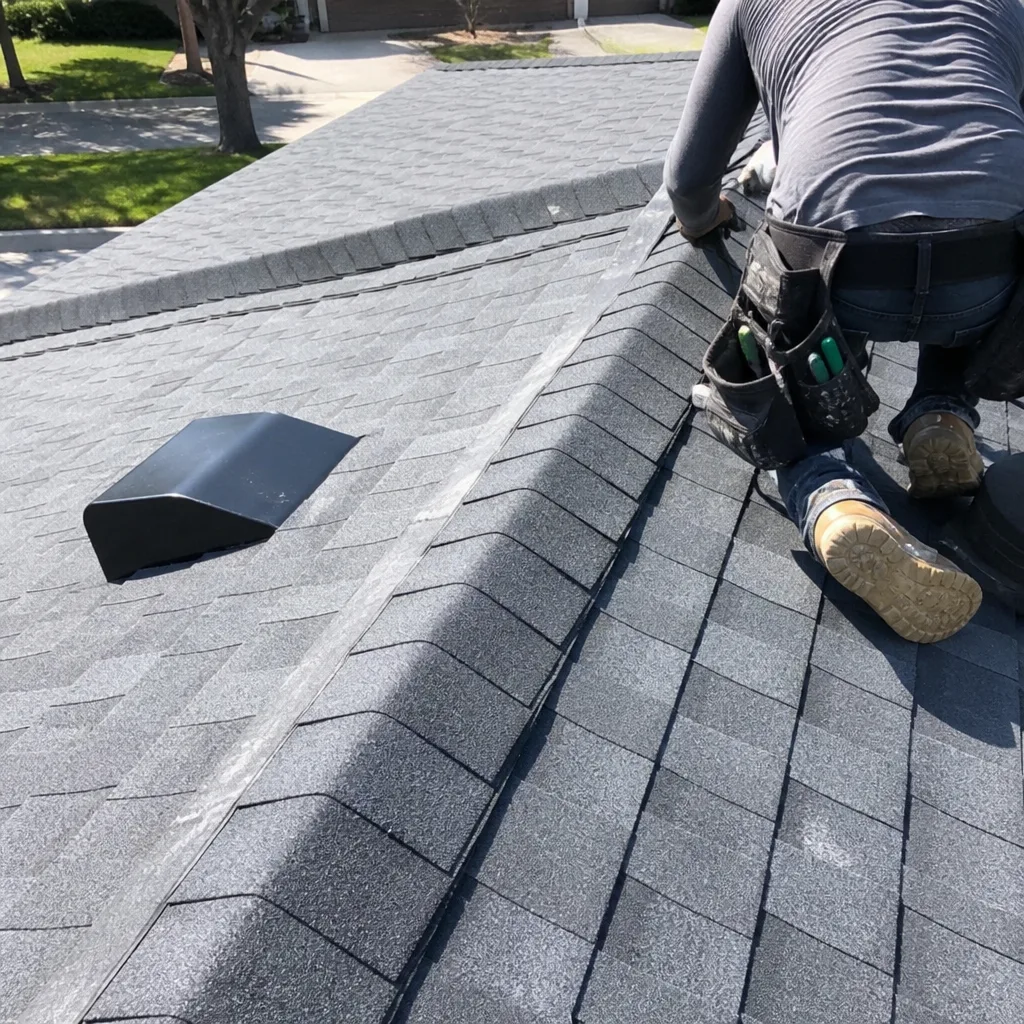 After
After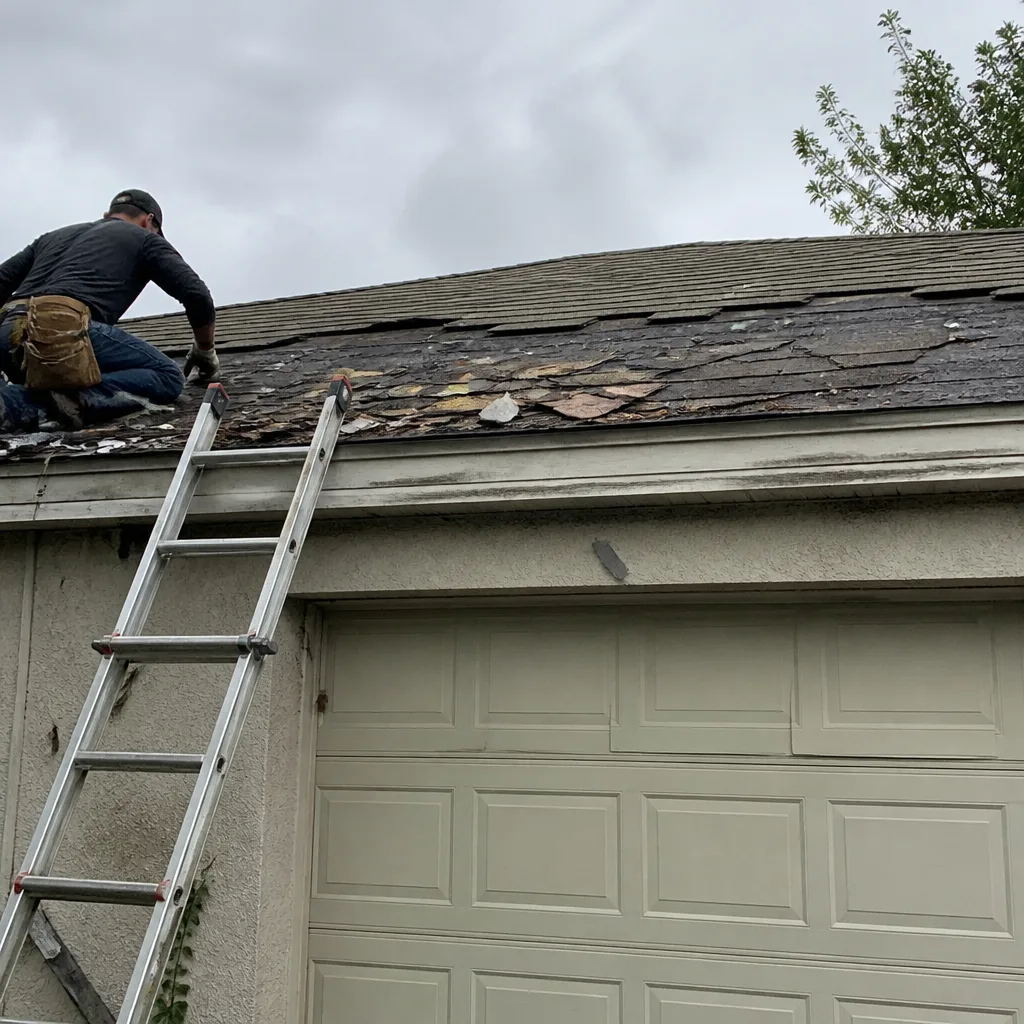 Before
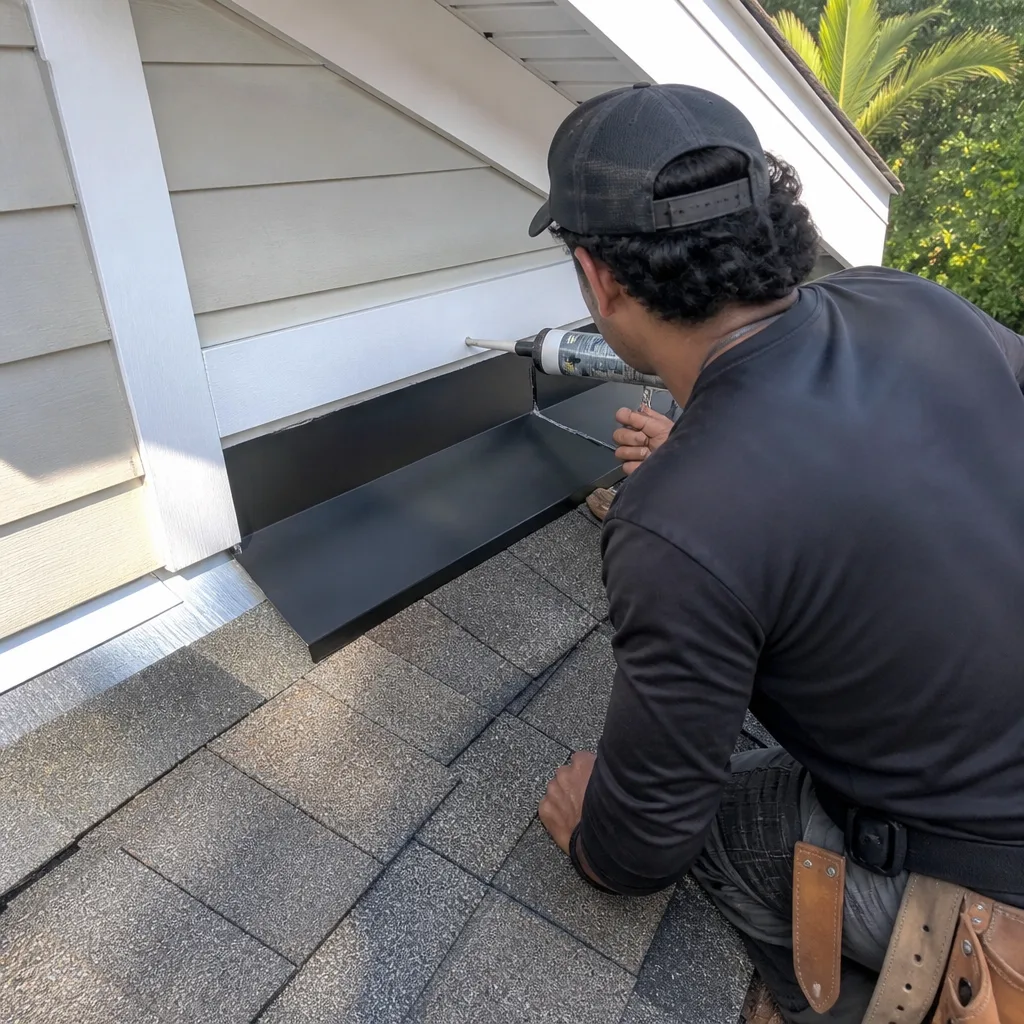 After
AfterWhen to Call a Professional
Some roofing tasks are genuinely dangerous, and you should never attempt them yourself. Walking on a steep-pitch roof, especially after Orlando’s afternoon rainstorms leave shingles slick, is how people end up in the emergency room. Any work involving roof-deck repair, structural framing, electrical penetration flashing, or gas-vent flashing requires a trained professional who knows Florida Building Code requirements. The same goes for anything involving high-tension work at roof edges or work on roofs over 12 feet off the ground where a fall would be catastrophic. If you see water stains on your ceiling, granule washout in your gutters, or curling shingles on southern exposures, call a professional with Orlando-specific experience. Crestview Roofing Co Orlando offers Roof Repair in Orlando with free estimates, a written scope of work, and a 365-day warranty on every repair. Call (448) 218-0800 to schedule yours.
Frequently Asked Questions
A new architectural asphalt shingle roof in Orlando typically costs $8,500 to $14,000 for a standard 2,000-square-foot home, while standing seam metal runs $18,000 to $30,000 and tile starts around $25,000 and goes up from there. These ranges reflect Orlando’s specific code requirements, including rated underlayment, high-wind fastening, and permit costs. Call (448) 218-0800 for an exact written quote, our estimates are free and we provide a line-item scope before any work starts.
Yes, a full re-roof in Orlando requires a permit from Orange County Building Safety, along with in-progress and final inspections. Skipping the permit voids your homeowner’s insurance coverage and creates liability when you sell the home. Any roofer who tells you a permit isn’t necessary is wrong.
A standard asphalt shingle re-roof on a typical Orlando home takes 3 to 5 days, including tear-off, underlayment installation, shingle installation, and final inspection. Metal and tile installations take longer, usually 5 to 10 days. Weather is the biggest wildcard; afternoon thunderstorms in summer can pause work, but a skilled crew works around them.
Orlando homes fall under the Florida Building Code’s wind speed maps for inland Orange County, which require roofing systems with Florida Product Approval or Miami-Dade NOA documentation. The specific uplift rating depends on your roof’s mean height and exposure, but your contractor should provide the product approval number for the system they’re proposing. Never accept a roof without this documentation.
Yes, in most cases. A roof with a higher solar reflectance index (SRI) reduces attic temperatures by 30 to 40 degrees in Orlando’s climate, which lowers cooling load, and with cooling representing more than half of home energy use in Central Florida, that difference shows up on your OUC or Duke Energy bill. Combined with proper ventilation, the savings compound over the roof’s lifespan.
The biggest difference is whether you get a written price and a full scope of work before the job starts, or a ballpark number that changes at the door. At Crestview Roofing Co Orlando home, we put our price in writing before any work begins, document the work with before-and-after photos, and back every repair with our 365-Day Done Right Promise.
The Bottom Line
Roofing in Orlando is a different discipline than roofing anywhere else. The sun degrades materials faster. The wind codes are stricter than they look. The insurance stakes are higher than most homeowners realize. And the difference between a roof that lasts 15 years and one that lasts 40 comes down to a few specific decisions: choosing materials with Florida approval documentation, respecting the permit process, insisting on a written scope of work, and hiring a contractor who gives you real visibility into the job. Get those right, and you’ve got a roof that handles Orlando’s climate for decades. Roof Replacement in Orlando and Roof Installation in Orlando are our core services, and every job starts with a free estimate. Call (448) 218-0800 to schedule yours.
Written by Dylan Pace, Owner at Crestview Roofing Co Orlando, serving Orlando since 2000.