
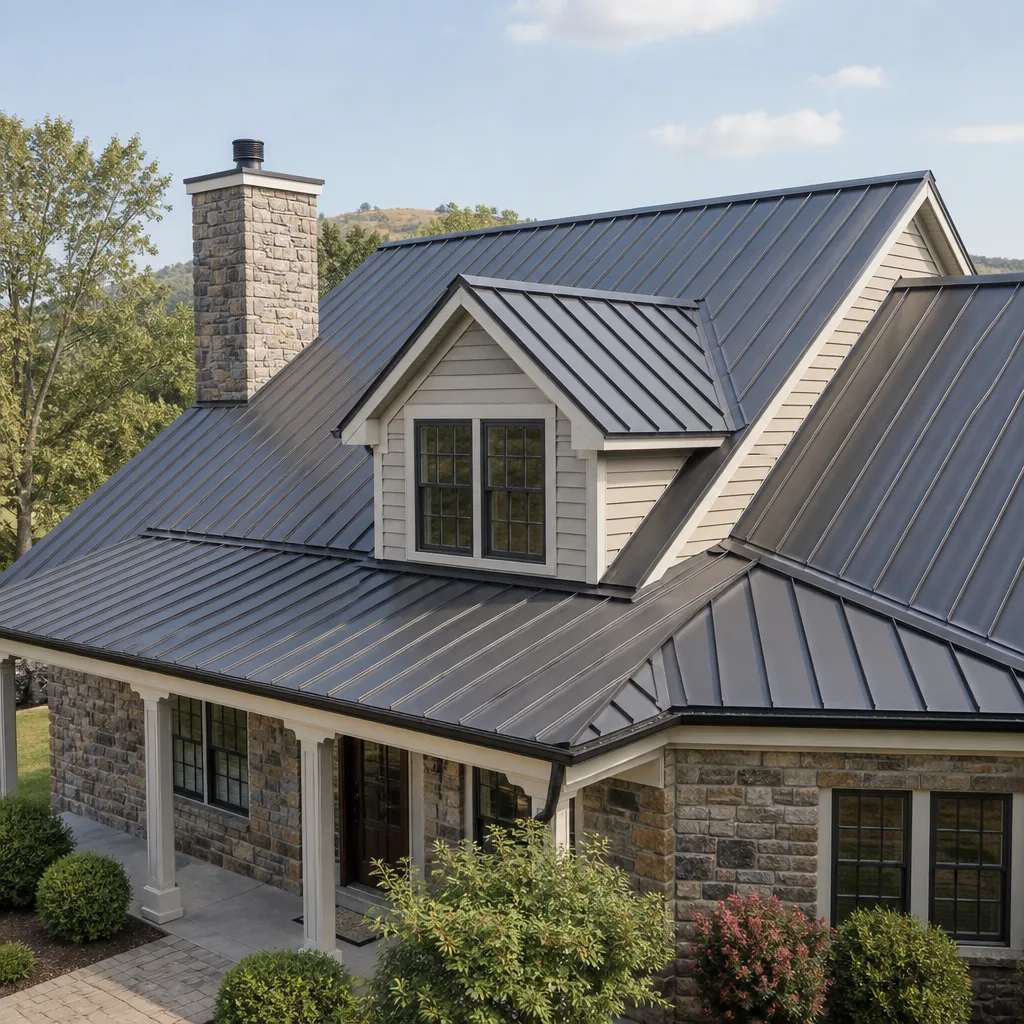
 Metal roofing
 Architectural shingles
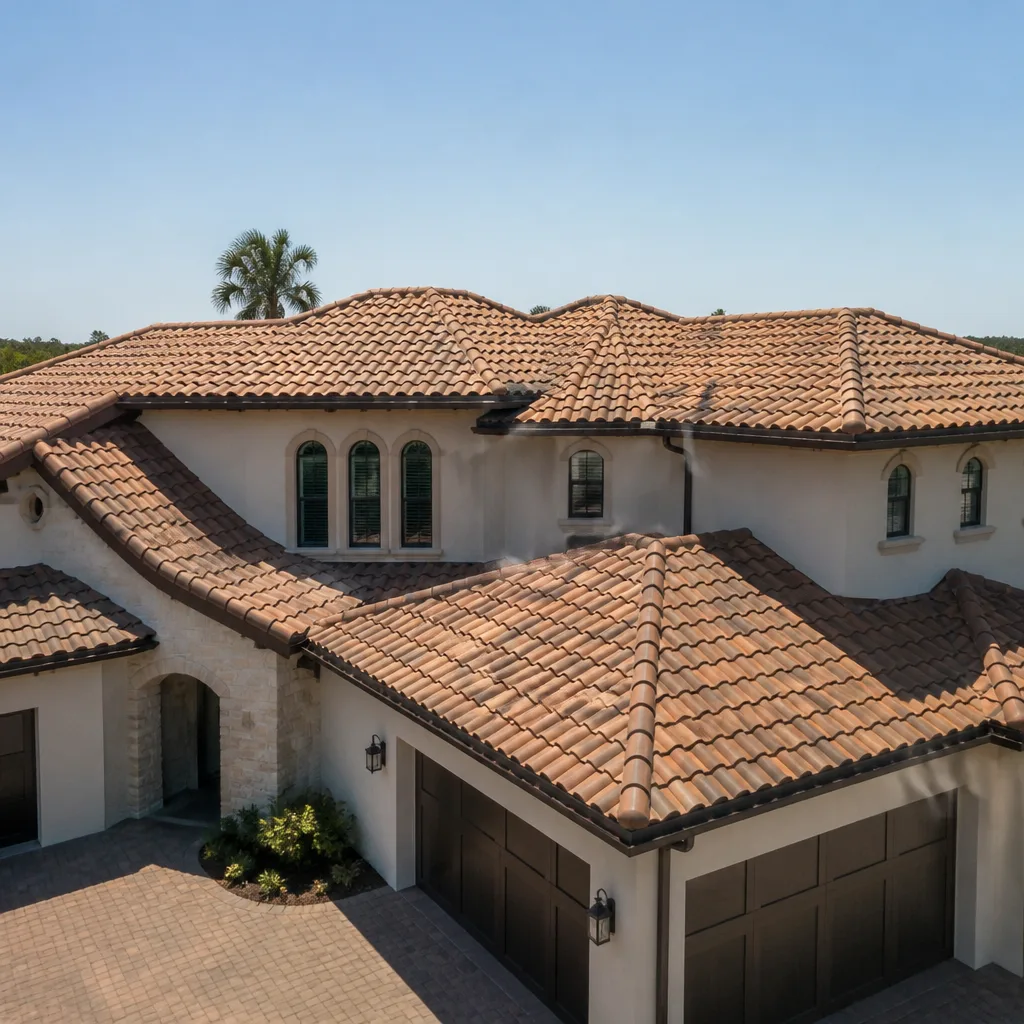 Tile roofing
 GAF
GAF Owens Corning
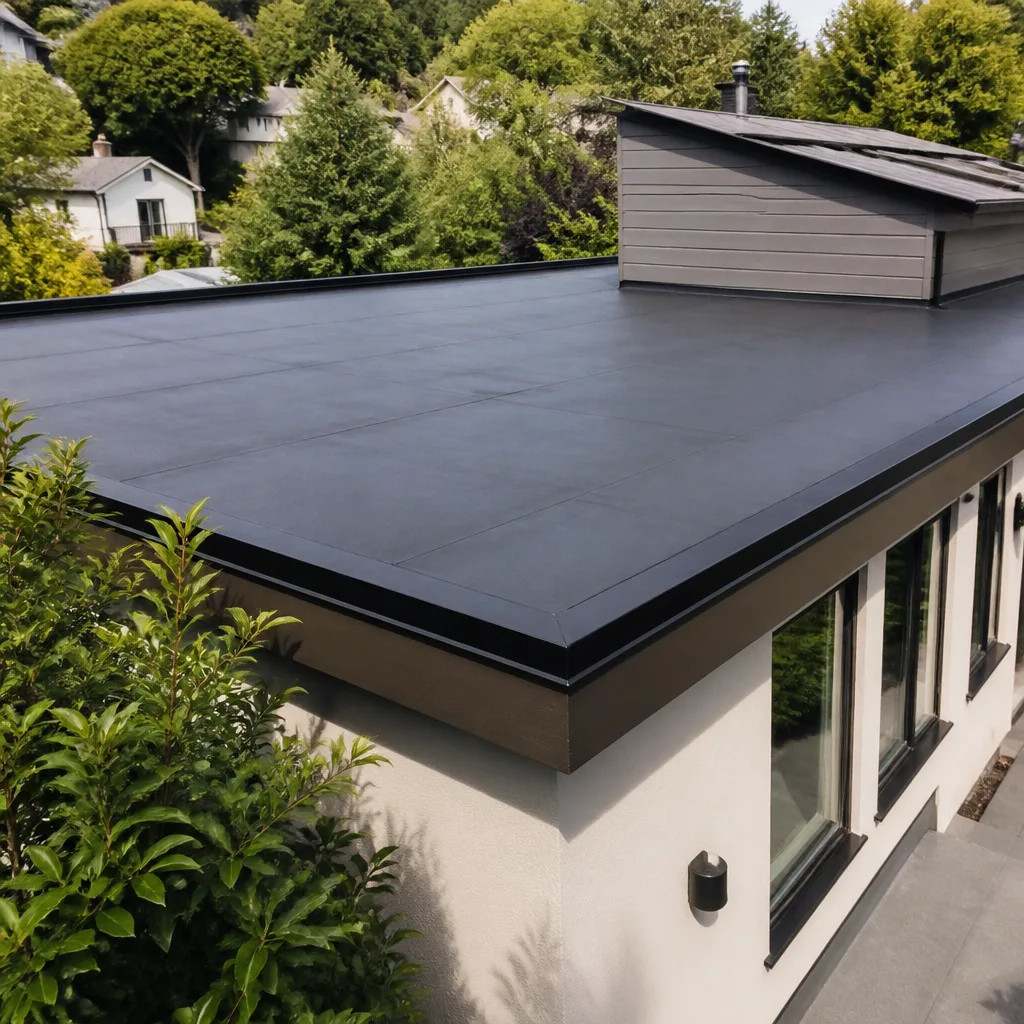 Flat & low-slope
Free roof inspection with deck photos before we talk money - GAF and Owens Corning certified installation
IKO Ridge Vent Installation: The Orlando Owner’s Guide
IKO ridge vent installation in Orlando typically runs $14 to $22 per linear foot installed, which puts most single-family homes between $420 and $1,100 depending on roof length and how much old vent material has to come off. We stock IKO-compatible ridge vent on our trucks, and most installs are done in a single visit. The way most Orlando homeowners find out their ridge vent has failed is a hot upstairs in July or a musty smell in the attic after one of our afternoon downpours, followed by a peek at the ridge line and the discovery that the vent is cracked, sun-baked, or pulled loose from the shingles.
If that sounds like your attic right now, here’s the full picture: what fits your IKO roof, what it costs, what goes wrong first in Florida weather, and how we handle the swap.
Which IKO Models This Applies To
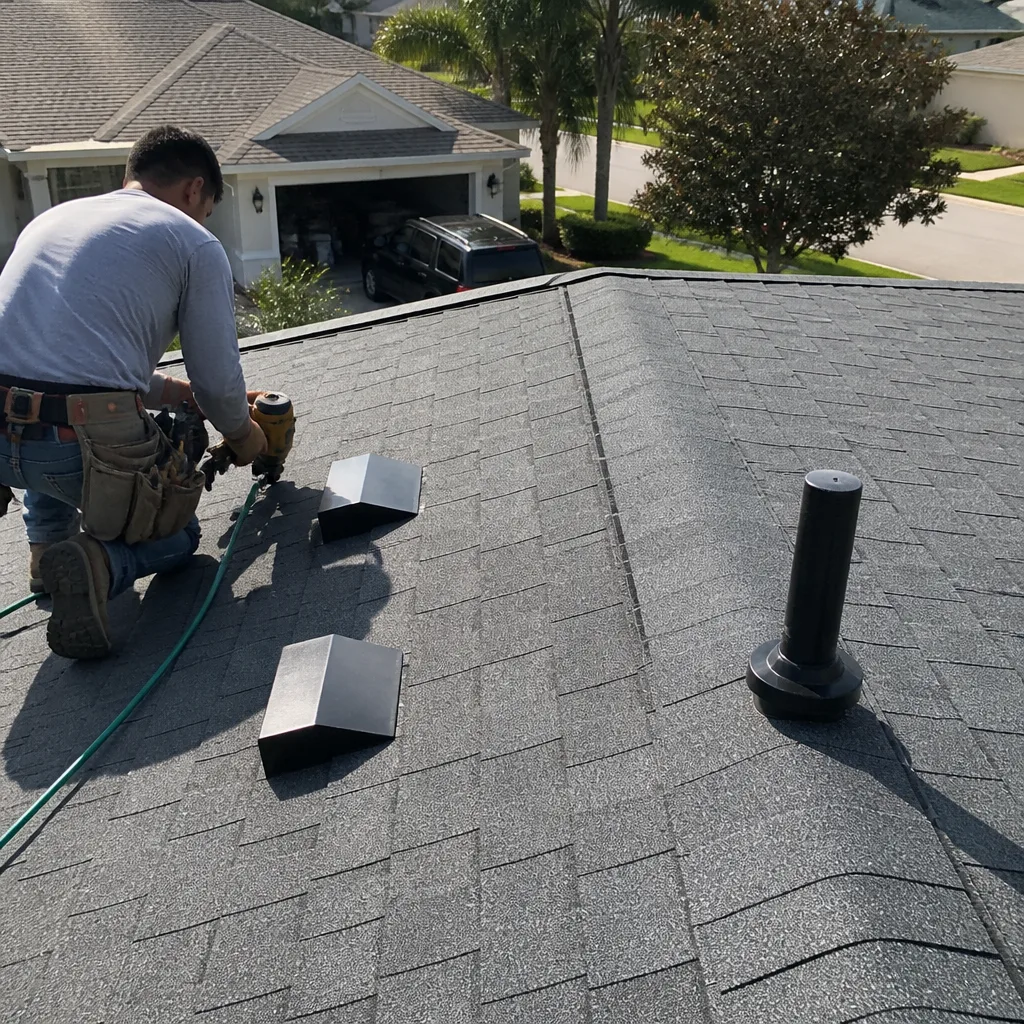
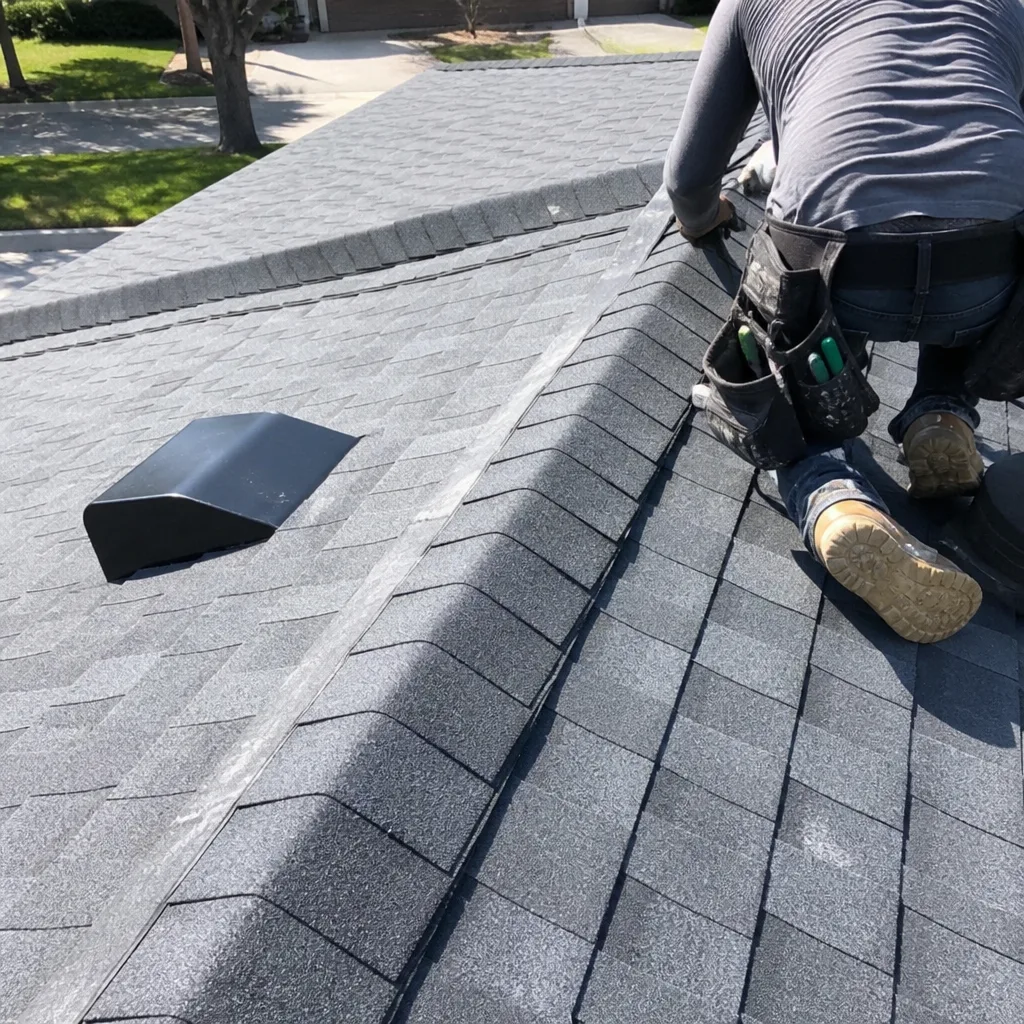
IKO’s ridge vent system is used across most of their architectural shingle lines, including the Cambridge, Dynasty, and Nordic series, and it’s designed to work with their standard ridge cap profiles. The vent itself comes in 4-foot sections, typically 11 to 12 inches wide, with a baffled or mesh design that lets air escape while keeping rain and insects out. What matters more than the shingle model is the ridge vent profile: IKO uses a lower-profile vent than some competitors, which means an aftermarket vent that’s too tall will telegraph through the ridge cap and make the cap shingles sit proud instead of flat. If a previous roofer installed a generic vent on an IKO roof, that’s often exactly what happened, and it’s a common source of leaks and lifted cap shingles.
When we match a replacement, we measure the existing vent width and profile rather than guessing from the shingle brand alone. IKO also makes a specific adhesive-backed vent for their metal ridge systems, and that’s a different part entirely. If you’re not sure which one you have, the simplest check is to look for an IKO product label on the underside of the vent end, but if the label’s gone (and in Orlando sun, it usually is), the width measurement tells us what we need to know. We’re an independent service provider, not affiliated with IKO, and we install both OEM IKO vent sections and quality aftermarket equivalents when the profile matches. The aftermarket options are often half the material cost and perform identically, and we’ll tell you which one we’re quoting and why.
Styles & brands we work with
Signs Your IKO Ridge Vent Installation Is Failing
- Attic temperature spikes in the afternoon. A working ridge vent lets hot air escape at the roof’s highest point. When the vent cracks or collapses, that heat has nowhere to go, and your attic can hit 140°F by 3 p.m. in an Orlando summer. If your upstairs AC runs constantly but still can’t hold temperature, check the attic before blaming the HVAC.
- Musty smell or condensation in the attic. Florida’s humidity is relentless, and a ridge vent that’s no longer exhausting air turns the attic into a moisture trap. You’ll often see condensation on the underside of the roof deck first thing in the morning, and that’s the precursor to mold and rotted decking.
- Cracked or warped vent sections visible at the ridge. UV exposure in Orlando is brutal on plastic vents. After eight to ten years, many IKO-compatible vents start showing visible cracks, curling edges, or sections that have separated at the seams. That’s not cosmetic, it’s an open channel for wind-driven rain.
- Ridge cap shingles lifting or missing. When the ridge vent underneath shifts or fails, the cap shingles nailed to it lose their base. You’ll see them flapping in a storm or sitting crooked along the ridge line. This is the one to catch early, because once a cap shingle goes, the underlayment below is exposed to direct rain.
- Water stains on the ceiling near interior walls. Not every ridge vent failure shows up at the attic first. Sometimes the first sign is a brown stain on the ceiling below the ridge line, appearing a day or two after heavy rain. Wind-driven rain through a cracked vent section travels along the ridge beam before it finds a path down.
See the difference
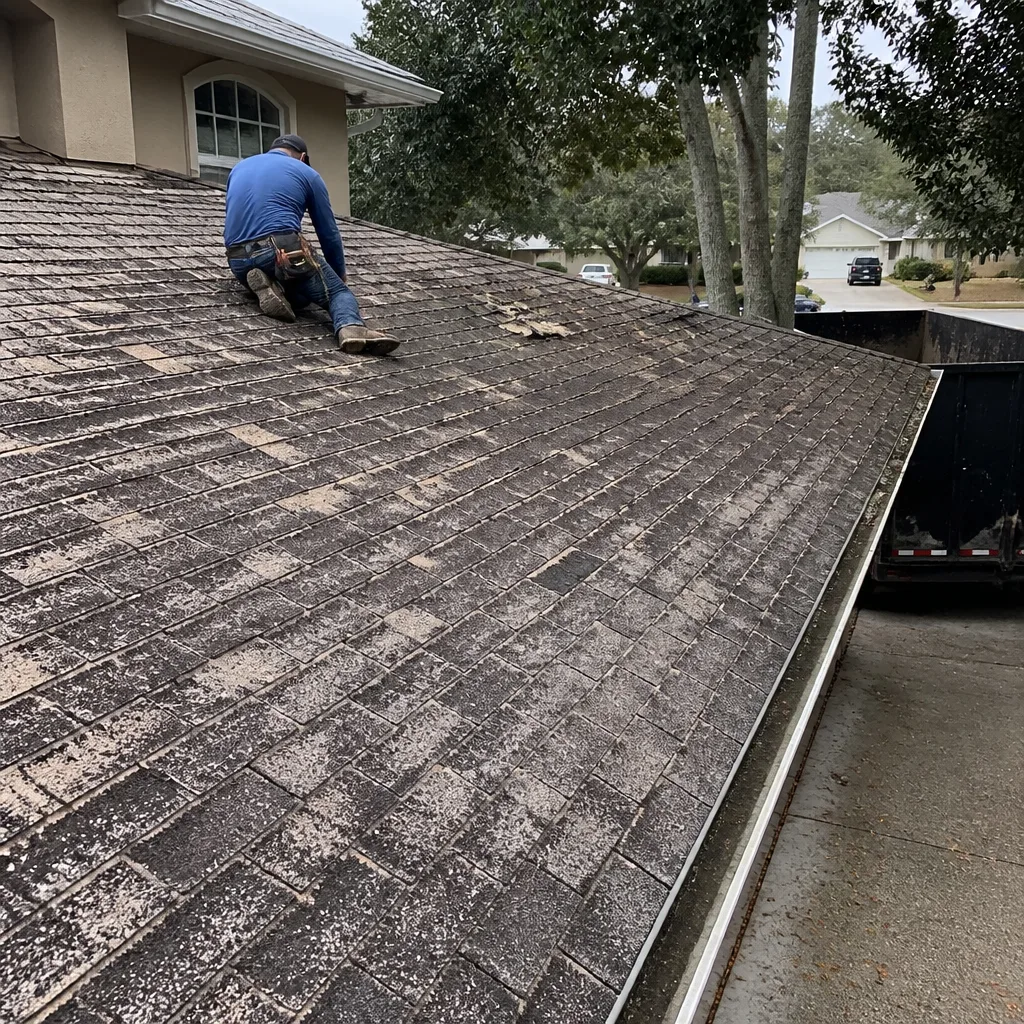 Before
 After
After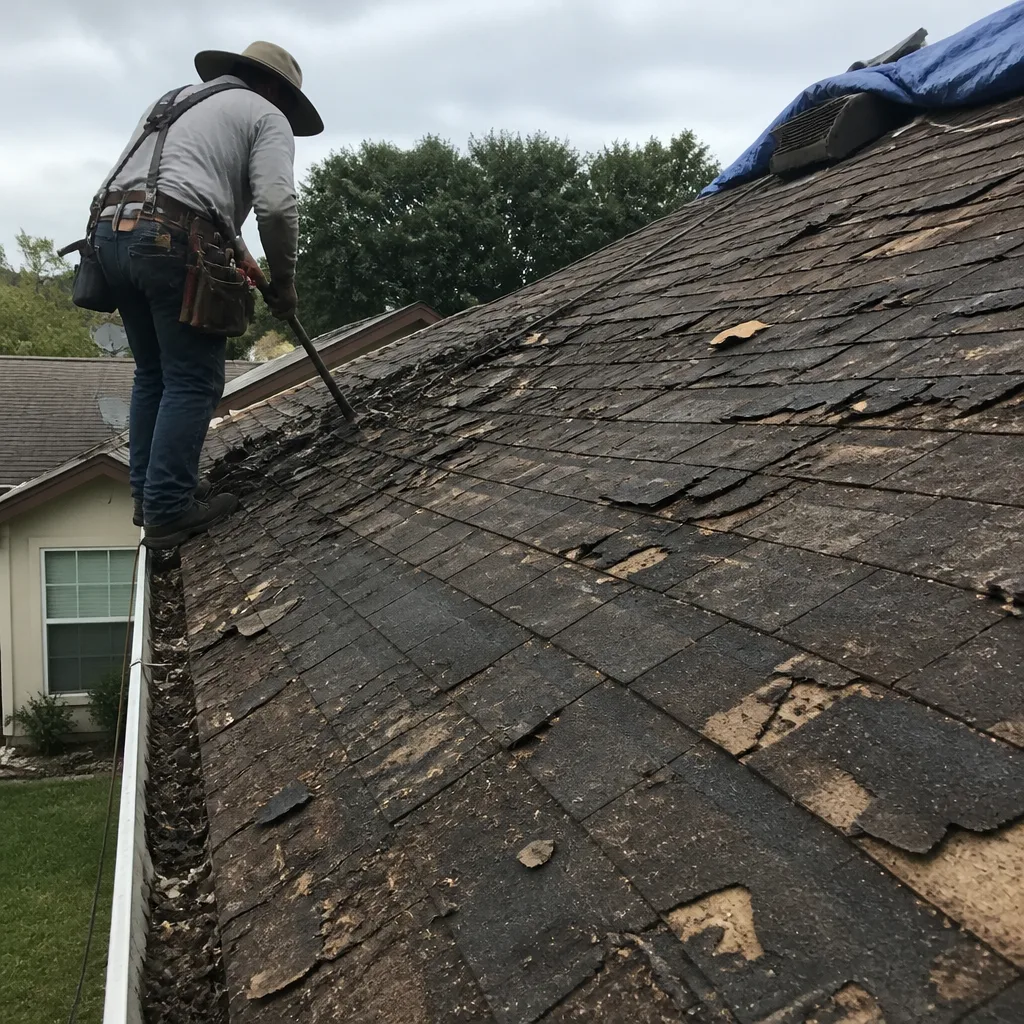 Before
 After
After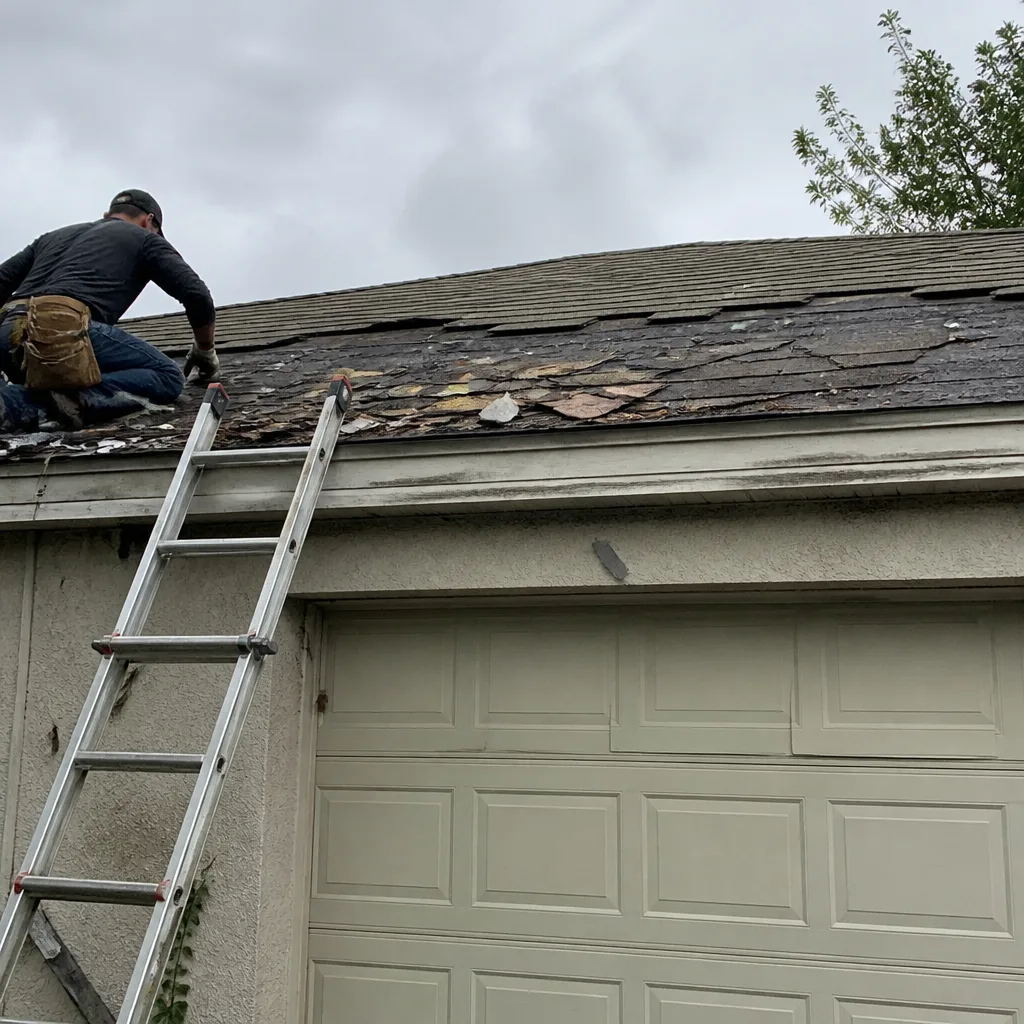 Before
 After
AfterReplacement Cost & What’s Included
For most Orlando homes, IKO ridge vent replacement runs between $420 and $1,100 installed. The range is driven by ridge length, whether the old vent can be removed cleanly or has fused to the shingles, and whether any cap shingles need to be replaced at the same time. Here’s the honest breakdown:
- Vent material: $4 to $8 per linear foot, depending on OEM IKO vs. quality aftermarket.
- Labor and disposal of old vent: $8 to $12 per linear foot.
- Cap shingle replacement (if needed): $60 to $180, depending on how many are damaged.
- Nail and sealant work at the ridge ends: included in labor.
Every quote we give in Orlando is a written, line-item price before any work starts. The number on the estimate is the number on the invoice, no change orders, no “we found something once we got up there” add-ons. The work itself is covered by our 365-Day Done Right Promise: if the vent installation fails within a year, we come back and fix it at no charge. That’s in writing, included with every job.
DIY or Call Us?
Replacing a ridge vent means working at the highest point of your roof, and on a two-story Orlando home, that’s a 20-plus-foot fall onto concrete or a pool cage. We don’t recommend it as a DIY project for that reason alone. Add in Florida’s afternoon storms, which can turn a sunny roof into a slick surface in ten minutes, and a ridge vent swap stops being a weekend project. What a homeowner can safely do is check the ridge from the ground with binoculars, look for cracked sections or lifted cap shingles, and feel the attic temperature on a hot afternoon. If anything looks off, that’s the time to call a roofer, not the time to climb a ladder.
If you’re seeing signs of a failing ridge vent on your IKO roof, call us at (448) 218-0800. Dylan Pace will get you a written estimate and an honest read on whether this is a simple vent swap or something that needs attention at the decking level. If it’s not in writing, it’s not a promise, it’s just weather talk.
FAQs
On a Central Florida roof, expect eight to twelve years from an IKO-compatible ridge vent. UV exposure, heat cycling, and our summer thunderstorm pattern shorten the lifespan compared to cooler climates. When we inspect a roof, we can usually tell within a minute whether a vent is in year six or year thirteen. If yours is over ten years old and showing cracks, budget for replacement sooner rather than later. Call (448) 218-0800 and we’ll take a look for free.
Small cracks in a single vent section can sometimes be sealed, but the repair rarely lasts more than a season in Orlando’s heat. Most ridge vent failures we see are UV-related, meaning the plastic has become brittle throughout, and patching one crack just moves the weakness to the next seam. If it’s one damaged section out of many, we may be able to swap just that section. If the whole run is sun-baked, full replacement is the honest call. We’ll tell you which one applies after we see it.
For a typical Orlando single-story home, a full ridge vent replacement takes three to five hours from setup to cleanup. Two-story homes run five to seven hours because of ladder work and steeper access. If cap shingles need replacement, add an hour. Most jobs are done in a single visit, and you’ll get before-and-after photos sent to your phone when the crew finishes.
We stock IKO-compatible ridge vent on our trucks in the most common 4-foot profiles, so most replacements in the Orlando area start the same day we inspect. If your roof needs a less common width or the IKO adhesive-backed metal-system vent, that’s typically a one to two day order from our supplier. We also carry parts for GAF, Owens Corning, and CertainTeed systems, so if you’re not sure what’s on your roof, we can usually identify and match it in one trip.
Written by Dylan Pace, Owner, Crestview Roofing Co Orlando at Crestview Roofing Co Orlando, serving Orlando and nearby areas.