
Last updated October 17, 2026
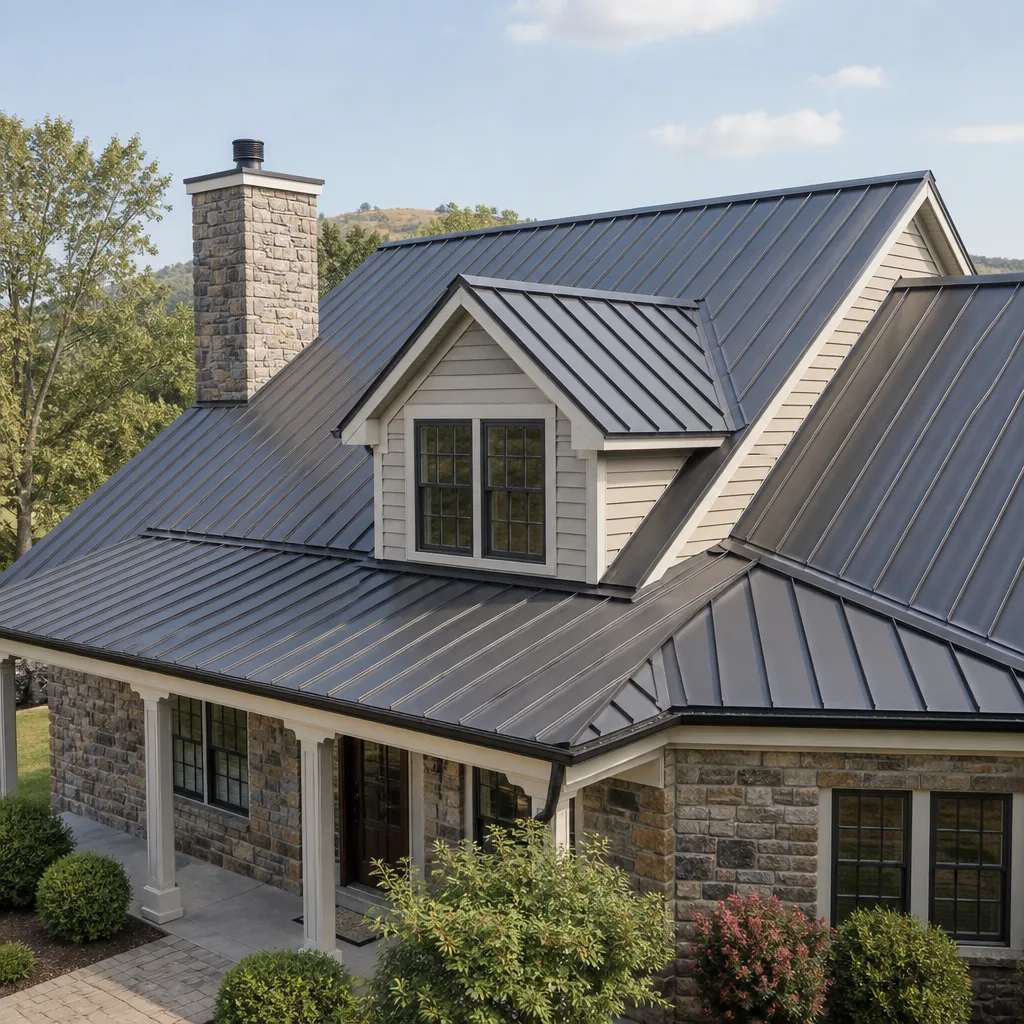 Metal roofing
 Architectural shingles
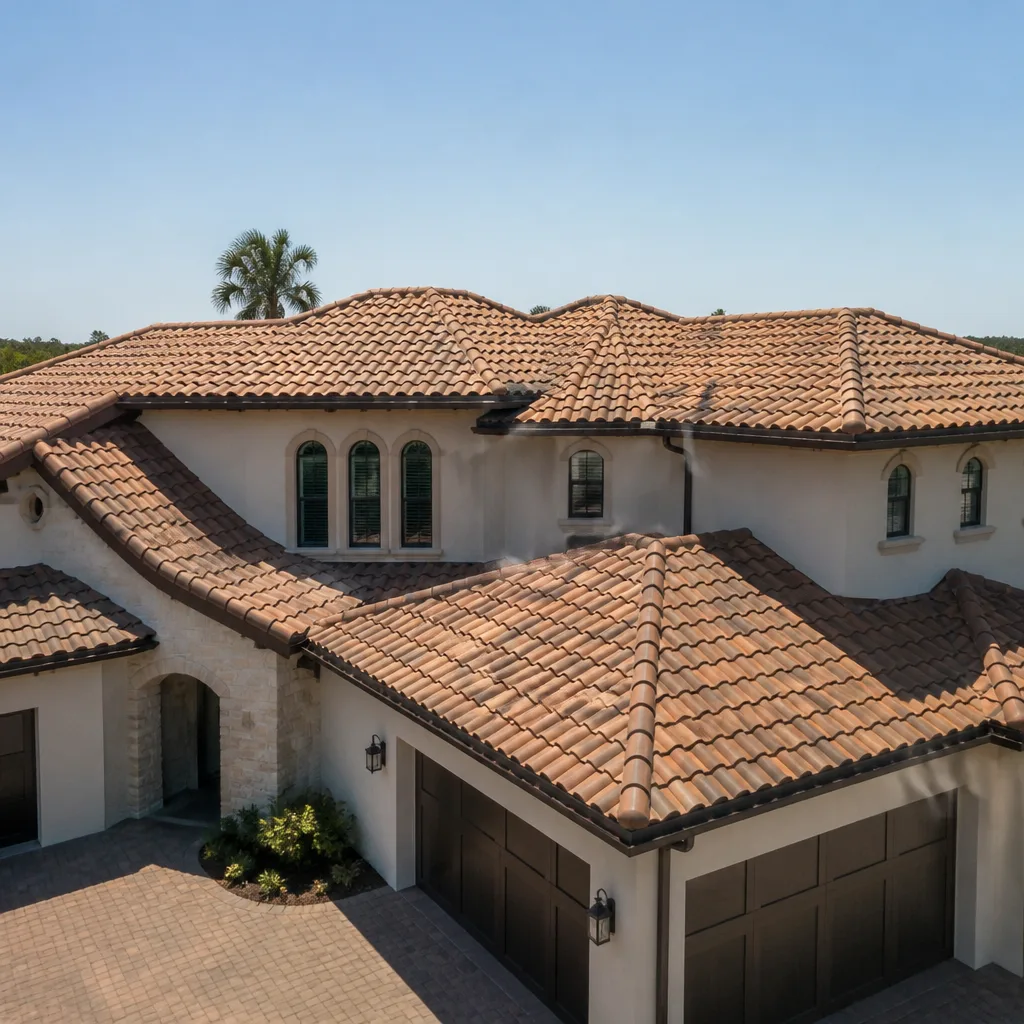 Tile roofing
 GAF
GAF Owens Corning
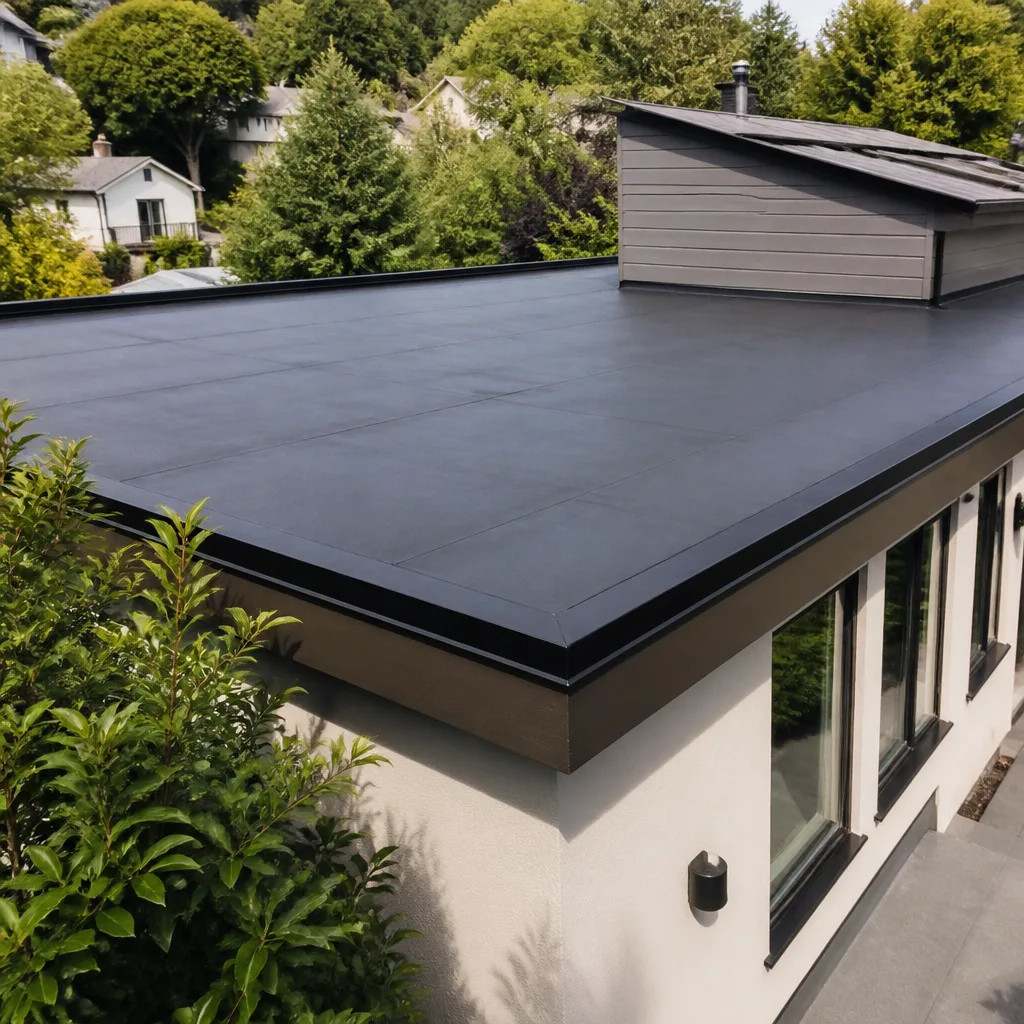 Flat & low-slope
Free roof inspection with deck photos before we talk money - GAF and Owens Corning certified installation
How to Hire a Roofing Contractor in Orlando: A Step-by-Step Guide
Florida logs more roofing-contractor complaints per capita than any other state, and the Florida Attorney General’s office sees a sharp, predictable spike after every named storm. But here’s what most Orlando homeowners miss: the scam rarely starts with shoddy work. It starts with a vague piece of paper. A one-page estimate with no permit line, no material grade, and no payment schedule tied to milestones is the single most common artifact in roofing fraud cases across Orlando. This guide walks you through the exact verification steps, the exact insurance certificates to demand, and the exact language a legitimate written quote must contain before you sign anything, and you can find Roofing Permits, Codes & Inspections in FL: What You Need to Know for deeper context on the permit process.
Quick Answer
To hire a roofing contractor in Orlando, verify the contractor’s Florida Certified Roofing Contractor license on the DBPR website, confirm active General Liability and Workers’ Comp insurance, and demand a written quote that specifies material brand and grade, permit cost, start and completion dates, and a payment schedule tied to milestones. Never pay more than 10% upfront before permit issuance, and walk away from any contractor who knocks on your door unsolicited after a storm or offers to “waive your deductible” – that offer is insurance fraud in Florida.
Styles & brands we work with
Table of Contents
- Step 1: Verify the Florida Roofing License in Under Two Minutes
- Step 2: Demand the Right Insurance Certificates
- Step 3: Read the Written Quote Line by Line
- Step 4: Spot Orlando’s Post-Storm Red Flags
- Step 5: Structure a Payment Schedule That Protects You
- Common Mistakes to Avoid
- When to Call a Professional
- Frequently Asked Questions
Step 1: Verify the Florida Roofing License in Under Two Minutes
Florida has two types of roofing licenses, and the difference matters more in Orlando than most homeowners realize. A Certified Roofing Contractor license is issued by the state and allows the contractor to work anywhere in Florida, including Orange County and every municipality within it. A Registered Roofing Contractor license, by contrast, is tied to a specific local jurisdiction – typically the county or city where the contractor originally qualified. If you live in Orlando and a contractor with only a registered license from, say, Polk County shows up at your door, they may not be legally permitted to pull a permit for your roof.
Here’s the two-minute verification process that weeds out most problems before they start:
- Go to the DBPR website. The Florida Department of Business and Professional Regulation maintains a searchable license database at myfloridalicense.com. You do not need an account to search.
- Enter the contractor’s name or license number. Ask the contractor for their license number directly – a legitimate roofer in Orlando will give it to you without hesitation. If they hedge or say they’ll “get it later,” that’s your first red flag.
- Check the license type. Look for “Certified Roofing Contractor” (statewide) versus “Registered Roofing Contractor” (local only). For most Orlando work, certified is what you want because it removes any ambiguity about jurisdiction.
- Check the status. The license must say “Current, Active.” If it says “Delinquent,” “Suspended,” or “Revoked,” the conversation is over.
- Check for complaints. The DBPR database includes a complaint history section. One or two old complaints that were resolved isn’t necessarily a dealbreaker, but a pattern of unresolved complaints in the last three years is.
In our experience with Roof Repair in Orlando, we’ve seen homeowners discover that the “roofer” they almost hired had a license that expired two years prior, or belonged to a different person entirely. The two minutes this check takes will save you from becoming a case study in the next Attorney General’s report.
Step 2: Demand the Right Insurance Certificates
A license proves the contractor is allowed to work. Insurance proves they can pay for it when something goes wrong. In Orlando, where summer thunderstorms roll through with wind gusts that can send debris onto a roof mid-project, insurance is not optional – it’s the thing that stands between you and a lien on your home if a worker gets hurt on your property.
Request certificates of insurance directly from the contractor’s insurance agent, not from a crumpled photocopy the contractor keeps in the truck. The agent can send you a Certificate of Insurance (COI) that lists you, the homeowner, as a certificate holder – meaning you get notified if the policy lapses or is canceled mid-project.
Here’s what the COI must show:
- General Liability insurance with a minimum of $1 million per occurrence. This covers property damage caused by the contractor’s work – for example, if a tear-off crew damages your neighbor’s car with falling debris.
- Workers’ Compensation insurance. This is non-negotiable in Florida. If a roofer without Workers’ Comp gets injured on your property, you can be held personally liable for medical bills and lost wages. Ask for the Workers’ Comp policy number and verify it’s active on the Florida Division of Workers’ Compensation website.
- The policy expiration dates. Insurance certificates expire. Make sure the coverage will remain active through your project’s estimated completion date, plus a buffer of a few weeks in case of weather delays.
- Your name listed as “Certificate Holder.” This is the mechanism that ensures you get a notification if the policy is canceled mid-project.
A contractor who balks at providing certificates of insurance, or who says “insurance is on file with the county,” is not someone you want on your roof. Any roofer doing Roof Replacement in Orlando work carries this coverage, and carries it proudly.
Quick check: match the name on the insurance certificate to the name on the license and the name on the contract. If all three don’t match exactly, stop and ask why before going further.
Step 3: Read the Written Quote Line by Line
This is where most Orlando homeowners get burned – not by what the quote says, but by what it leaves unsaid. A legitimate written quote is a legal document that specifies exactly what you’re paying for. A predatory estimate is a paragraph of vague promises designed to create room for “unforeseen conditions” upcharges later.
A legitimate Florida roofing quote must include, at minimum:
- Material brand and grade, by name. “Architectural shingles” is not a specification. “GAF Timberline HDZ, class HZ impact-rated” is. Ask for the manufacturer’s exact product line – brands like Atlas, IKO, and Tamko all make multiple grades, and the price difference between their budget and premium lines is often $100 to $200 per square.
- The permit line item. In Orlando, a roofing permit runs anywhere from $150 to $500 depending on the scope of work. A quote that doesn’t include a permit line item means the contractor either plans to work unpermitted – illegal – or plans to bill you for it later as a “change order.”
- Disposal and haul-off fees. Tear-off generates a lot of debris. Whether it’s a roll-off dumpster or a trailer, the cost of removing the old roof must be a named line item, not a vague “as needed” clause.
- Start and completion windows. Not “we’ll get there when we can.” A legitimate quote specifies a start date or at least a start week, and an estimated completion date with a defined process for weather-delay adjustments – which are real and frequent during Orlando’s summer thunderstorm season.
- Underlayment type. The material between your decking and your shingles. This should be specified by brand and type (synthetic vs. felt), because it’s a meaningful line item and a common place for unscrupulous contractors to cut corners.
- Flashing specifications. Flashing is the metal strips that seal joints around chimneys, vents, valleys, and wall intersections. A quote should specify which flashings will be replaced versus reused, and what metal grade will be used.
- Scope of decking repair. If the plywood beneath your shingles is rotted, the contractor will charge per sheet to replace it. The quote should state the per-sheet price for replacement decking and note that you’ll be shown photo documentation of any rot before it’s replaced.
What’s Missing from a Predatory Estimate
The gaps are as telling as the contents. An estimate with no permit line item, no material grade, no payment schedule, and no start date is a blank check with a letterhead. It is also the document that appears in the overwhelming majority of post-storm fraud complaints filed with the Florida Attorney General. When you see one, do not try to fix it. Walk away.
We’ve built our entire Crestview Roofing Co Orlando home service on the principle that a written price is delivered before any work starts. The number on the page is the number on the invoice. If it’s not in writing, it didn’t happen.
Step 4: Spot Orlando’s Post-Storm Red Flags
Hurricane season in Orlando runs from June through November, and it’s not just the storms that cause damage – it’s the wave of out-of-state contractors who follow them. These crews roll into Orange County within days of a major storm, canvass neighborhoods with door-knockers, and use high-pressure tactics designed to get a signature before the homeowner has time to think.
Here are the red flags specific to Orlando’s post-storm market:
- Unsolicited door-knocking. A contractor who shows up at your door because they “happened to be in the neighborhood and noticed your roof” is almost certainly working a canvassing script. Legitimate Orlando roofers are booked weeks out after a storm – they don’t have time for cold calls.
- “We’ll waive your deductible.” This offer is not a discount; it’s insurance fraud. Under Florida law, a contractor who waives a deductible and inflates the claim to cover it is committing a felony. And the homeowner’s insurance policy is the one that pays the price – often in the form of a canceled policy or a fraud investigation.
- Same-day pressure to sign. “If you sign today, I can get you on the schedule next week.” Any contractor who needs a signature before you’ve verified their license, confirmed their insurance, and read their quote is someone you should not hire. Urgency is a sales tactic, not a scheduling necessity.
- Out-of-state license plates and a temporary local address. Many post-storm scammers work out of a rented motel room and split town when the Attorney General’s office starts looking. Verify that the contractor’s business address in Orlando is real and has existed for more than a few weeks.
- “We’re doing three other houses on your street.” This is social proof manufactured on the spot. Ask for the addresses and verify.
- Cash-only deals or “discounts” for paying upfront. Any contractor who wants the full balance before work begins is a walking red flag. See the section below for what a legitimate Florida payment schedule looks like.
None of this is theoretical. In the aftermath of Hurricane Ian and Hurricane Nicole, the Florida Attorney General’s office fielded thousands of complaints involving unlicensed roofing contractors – and the Orlando metro area was among the hardest hit. The homeowners who avoided becoming victims all had one thing in common: they slowed down, verified the license, and demanded a written quote before a single shingle came off the roof.
Step 5: Structure a Payment Schedule That Protects You
Under Florida Statute 489, contractors are legally limited in what they can collect upfront. The law is specific: a contractor may not require a down payment of more than 10% of the total contract price before work begins, and even that 10% cannot be collected until the contractor has applied for the building permit. Any contractor who demands more than 10% upfront – or who wants a check before the permit application is filed – is outside the law.
A payment schedule that protects you looks like this:
- 10% down at contract signing, with permit application filed simultaneously. This is the maximum legal upfront payment in Florida. It covers the contractor’s cost of pulling the permit and securing materials.
- 40 – 50% at material delivery. When the shingles, underlayment, flashing, and other materials show up at your home, a second payment is made. This payment reflects the fact that the contractor has now spent real money on your project.
- 30 – 40% at project completion. When the roof is installed and the contractor has done their own final walkthrough.
- Final 10 – 20% after the final inspection passes. In Orlando, roofing work requires a final inspection by the Orange County Building Division. The final payment should be made only after that inspection passes and you receive written confirmation of the pass.
Any payment schedule that deviates from this structure – especially one that front-loads more money earlier – should be questioned. If a contractor can’t afford to float 90% of the project until completion, that’s a solvency signal you shouldn’t ignore.
One more note on the written contract: the contract should specify a schedule of values – a line-item breakdown of what each payment covers. The contract should also include the contractor’s license number, the permit number once issued, and a clause stating that all work will be performed in accordance with the Florida Building Code. If the contract is vague about what each payment buys, it’s not a contract; it’s a hoping-for-the-best document.
As part of the Relay Home Co. family, we operate under the same principle: a written price before any work begins, a payment schedule tied to milestones, and a digital invoice sent by text for every payment. No surprises at the door, no arguments after the job.
See the difference
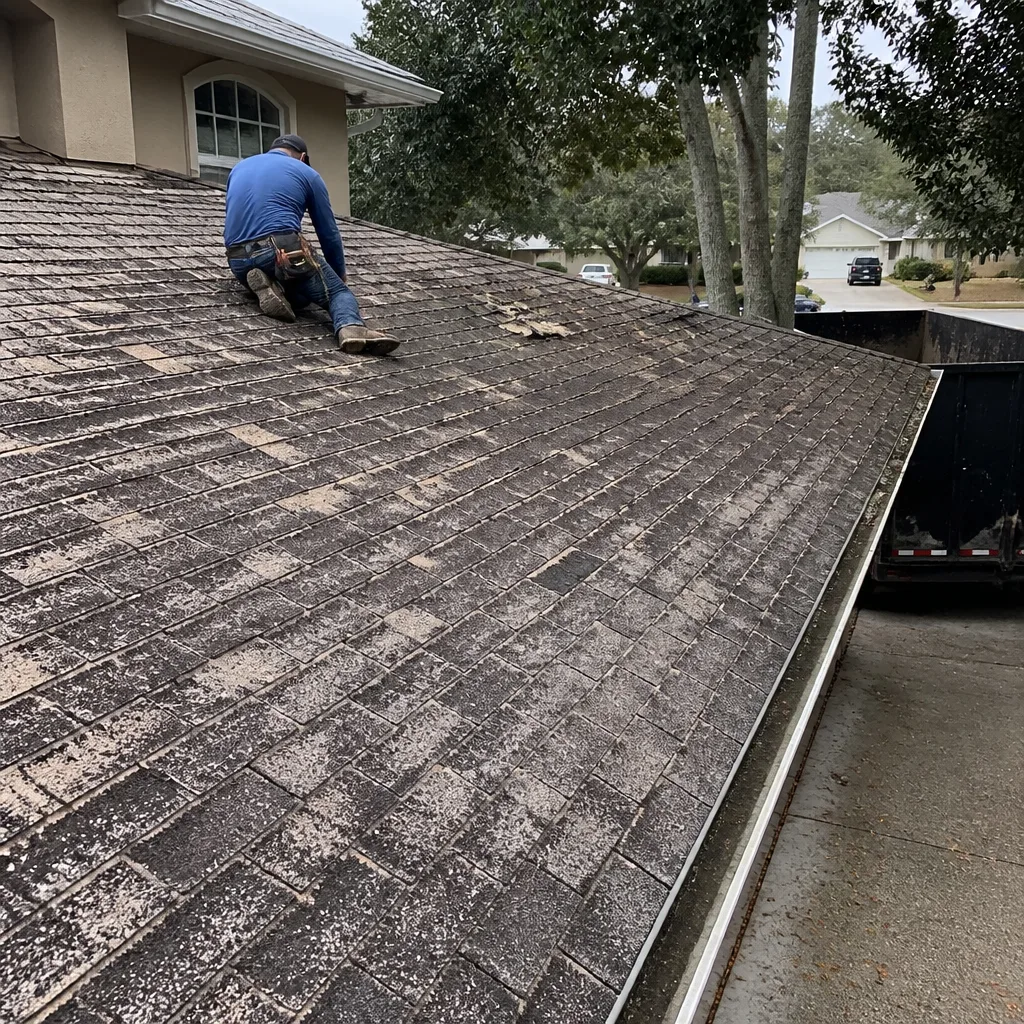 Before
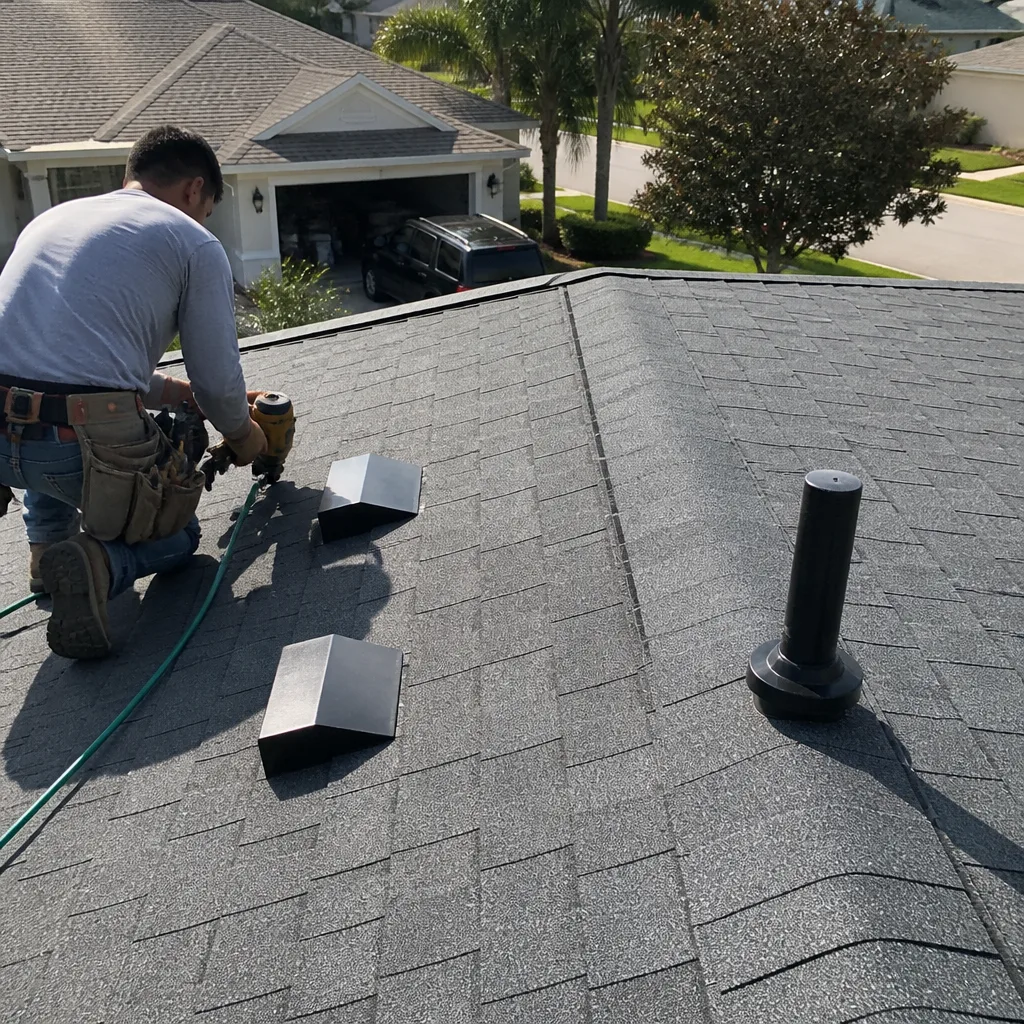 After
After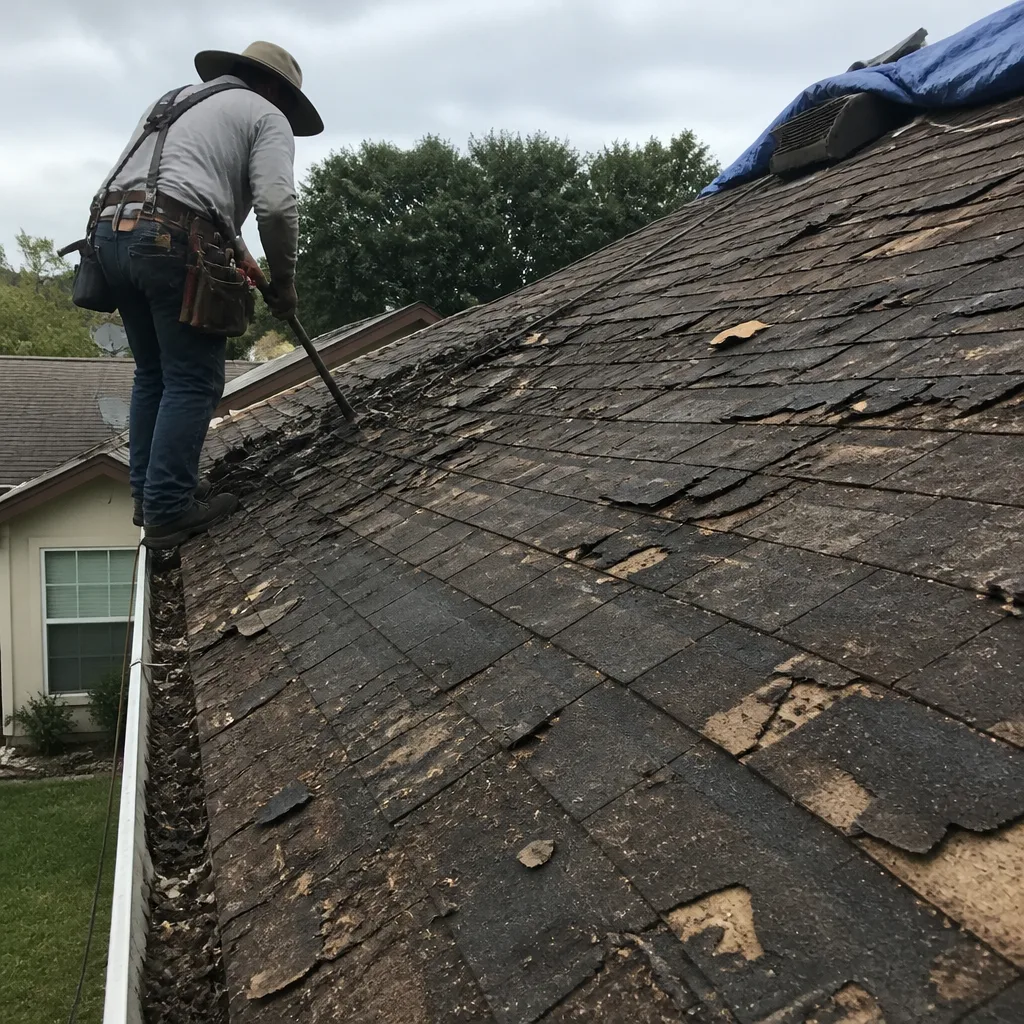 Before
 After
After Before
 After
AfterCommon Mistakes to Avoid
- Hiring based on the lowest bid without comparing line items. A cheap quote in Orlando is often cheap because it omits the permit, the disposal fee, or the underlayment. Compare line items, not total prices.
- Skipping the DBPR license check. Two minutes on the DBPR website is the difference between a licensed contractor and a guy with a ladder and a pickup truck.
- Accepting an estimate instead of a quote. An estimate is a guess. A quote is a fixed price. In Florida roofing, you want the latter – in writing.
- Taking the deductible-waiver bait. It’s insurance fraud, and the homeowner is the one who gets caught holding the bag when the insurance company audits the claim.
- Not verifying that the insurance certificate matches the license name. If the license is in one name and the insurance in another, you’re dealing with a shell company – and if something goes wrong, you’ll have no one to sue.
- Overlooking the decking-repair clause. Rotted decking is common on older Orlando homes, especially in neighborhoods with mature oak trees that shed branches onto roofs during summer storms. A contract with no per-sheet decking price is a blank check for upcharges.
- Ignoring the warranty language. A lifetime shingle warranty from the manufacturer doesn’t cover installation defects. Ask what the contractor’s own workmanship warranty covers and for how long – and get it in writing.
When to Call a Professional
There are situations where every homeowner should bring in a licensed roofer rather than attempting even a visual assessment. If you see water stains on your ceiling, granules collecting in your gutters, shingles in your yard after a storm, or daylight visible through your attic decking, you need a professional inspection. Working on a roof without proper training and safety equipment is dangerous – a fall from even a single-story Orlando home can be fatal or permanently disabling. A licensed inspector has the training to walk the roof safely, identify the actual source of a leak, and document the findings. Roof Installation in Orlando projects and complex repairs are not DIY projects. Crestview Roofing Co Orlando offers free estimates to homeowners across Orlando. Call (448) 218-0800 to schedule yours – a live person answers, 24/7.
Frequently Asked Questions
Go to myfloridalicense.com, the DBPR’s license verification portal, and enter the contractor’s name or license number. The result should show a “Certified Roofing Contractor” license with “Current, Active” status and a complaint history you can review. A “Registered Roofing Contractor” license is tied to a specific local jurisdiction, so confirm it covers Orange County before moving forward. Call (448) 218-0800 if you want help checking credentials before you sign.
A legitimate Orlando roofer carries at least $1 million in General Liability insurance and active Workers’ Compensation coverage. Request a Certificate of Insurance naming you as a certificate holder so you’re notified if the policy lapses. Verify the Workers’ Comp policy on the Florida Division of Workers’ Compensation website before allowing any work to begin.
In the Orlando market, most standard roof replacements run between $8,000 and $18,000 depending on the size of the roof, the shingle grade, and the condition of the decking; for a detailed breakdown, see our Roofing Cost Breakdown: The Orlando Homeowner’s Reference for 2026. Budget and architectural lines from manufacturers like Atlas, IKO, and Tamko sit at different price points, and impact-rated shingles add a premium. Call (448) 218-0800 for a written quote specific to your home – the price is delivered in writing before any work starts.
No. A contractor who offers to waive your deductible and “make it up” on the claim is committing insurance fraud under Florida law. The offer is designed to hook you into a contract, and the homeowner is the one who faces consequences when the insurance company catches it. Never sign a contract contingent on a deductible waiver.
For a standard single-family home in Orlando, a full tear-off and replacement typically takes two to five days from start to finish, plus the time needed for the Orange County Building Division final inspection. Weather delays are common during the summer thunderstorm season, so a legitimate quote will specify a start window and a defined process for weather-related adjustments.
A legitimate Florida roofing quote includes the material brand and grade by name, the permit cost, disposal fees, the start and completion window, the underlayment type, flashing specifications, and a per-sheet price for any decking replacement; our Roof Repair Maintenance Checklist for Orlando Homeowners covers what to track after the work is done. If any of these items is missing, ask for a revised quote before signing. Estimates are free at Crestview Roofing Co Orlando – call (448) 218-0800 to get one.
The Bottom Line
Hiring a roofing contractor in Orlando comes down to verification, documentation, and patience. Verify the Florida Certified Roofing Contractor license on the DBPR portal. Confirm active General Liability and Workers’ Comp insurance with you named as certificate holder. Demand a written quote with material grades, permit costs, and a payment schedule that never exceeds 10% upfront. Walk away from door-knockers, deductible-waiver offers, and same-day pressure. A legitimate contractor in Orlando will not flinch at any of these demands – they’ll have their paperwork ready and their numbers in writing. Crestview Roofing Co Orlando has operated that way since 2000, and we’d rather you verify us twice than skip the check once. Call (448) 218-0800 for a free estimate, and we’ll put everything in writing before you decide, or browse more guides & resources to keep learning.
Written by Dylan Pace, Owner at Crestview Roofing Co Orlando, serving Orlando since 2000.