
Last updated October 17, 2026
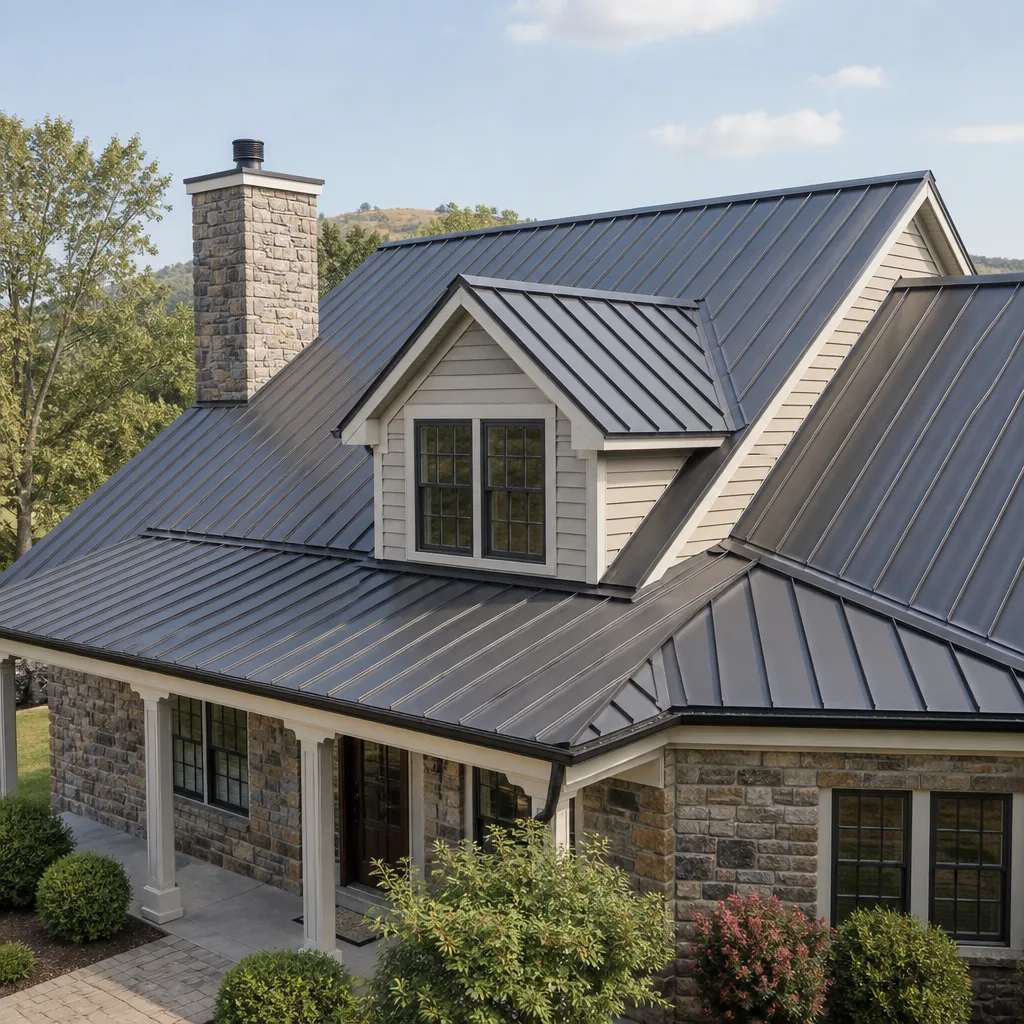 Metal roofing
 Architectural shingles
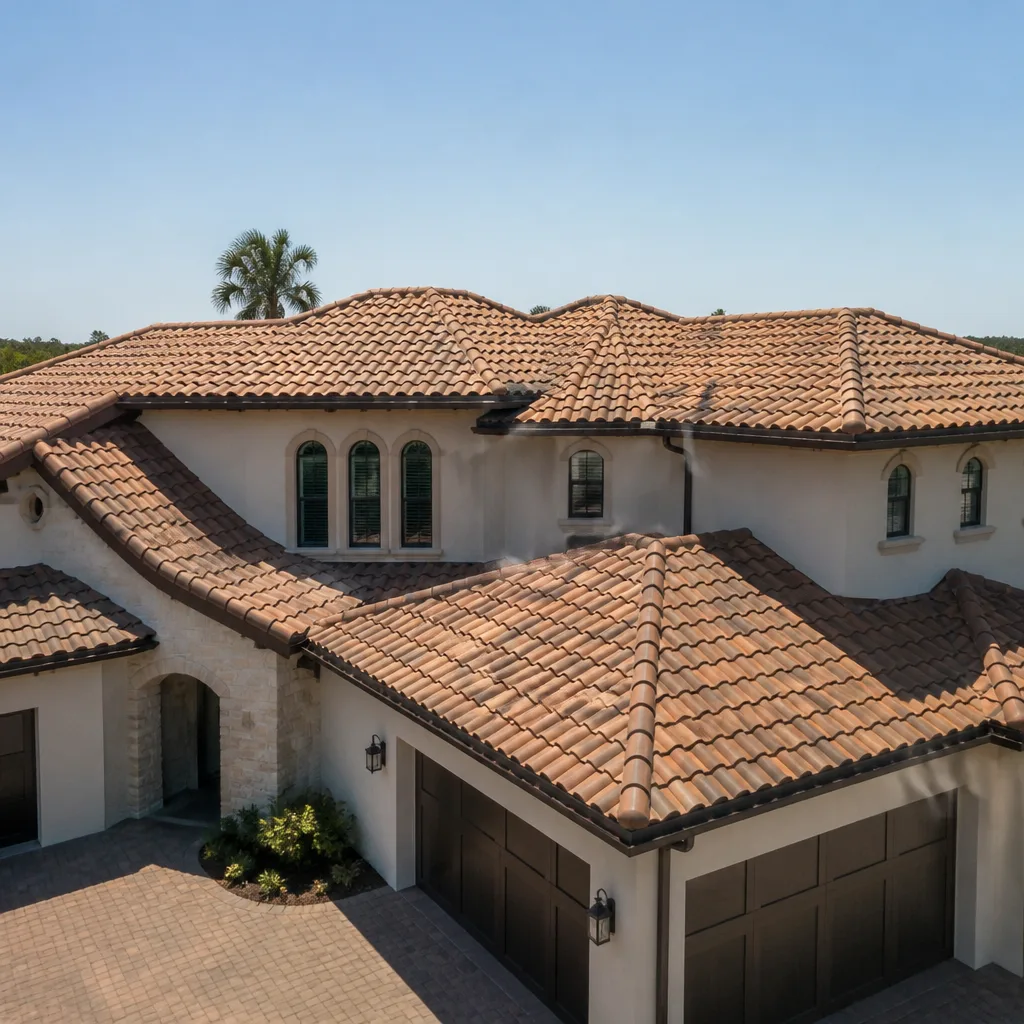 Tile roofing
 GAF
GAF Owens Corning
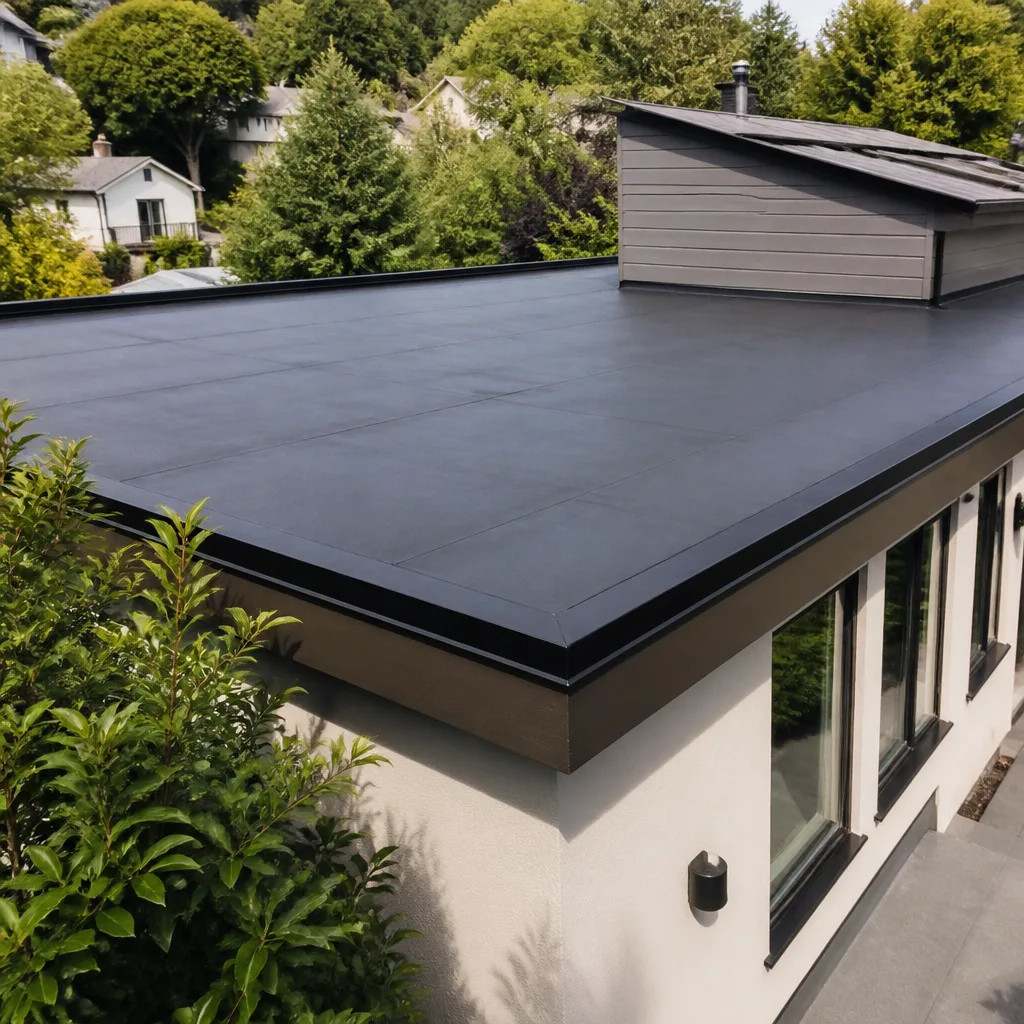 Flat & low-slope
Free roof inspection with deck photos before we talk money - GAF and Owens Corning certified installation
Roofing Permits, Codes & Inspections in FL: What You Need to Know
A permit-free roof replacement in Florida doesn’t just risk a fine. It can legally void your homeowner’s insurance policy and block your home sale, because title companies now routinely pull permit histories before closing. The “no permit saves money” pitch costs more than the permit ever would. This guide explains the Florida Building Code thresholds, what inspectors actually look for, the real timeline in Orlando and Orange County, and the steps to fix an unresolved permit before it haunts your resale. For more, see The Complete Guide to Roofing in Orlando.
Quick Answer
In Florida, any roof replacement, re-roof, or repair affecting more than 25% of a roof section (per Florida Building Code 2023) requires a permit from your local building department. The permit ensures the work meets current wind-load, underlayment, and fastener codes, and the final inspection records legal proof the roof was installed correctly. For a deeper look at what to watch for, read Roofing Warning Signs: A Orlando Homeowner’s Reference Guide. Skipping it can void insurance coverage, trigger code enforcement fines, and stall a home sale.
Styles & brands we work with
Table of Contents
- What Roofing Work Needs a Permit in Florida
- The 25% Rule: What It Actually Says and How Contractors Misquote It
- Orange County Permit Timeline: Days, Not Vague Weeks
- Notice of Commencement: Your Lien Protection on Jobs Over $2,500
- What a Final Roof Inspection Covers: Fastener Pattern, Underlayment, Drip Edge, Flashing
- Closed Without Final Inspection: What It Means for Resale and How to Fix It
- The Florida Codes That Shape Every Roof: Wind, Water, and the High-Velocity Hurricane Zone
- How Long the Whole Permit-to-Inspection Process Takes in Orlando
What Roofing Work Needs a Permit in Florida
Under the Florida Building Code (FBC), now in its 8th Edition (2023) with the 2025 supplement rolling into enforcement, any roof replacement or re-roof requires a permit. That is the simple rule. You tear off the old roof and put on a new one, you pull a permit, full stop. The code does not care whether you use shingles, tile, metal, or membrane. Replacement triggers the permit requirement every time.
Replacement: Any complete re-roof, including tear-off and re-cover.
Recover: Installing a new roof over an existing one (allowed on a single layer in most Florida jurisdictions). Still permit-required.
Repairs: Small repairs (a few missing shingles, a small section of damaged flashing) may not need a permit if they affect only a “minor” area and do not touch the structural deck or underlayment. Every municipality in Orange County applies this threshold differently, so the safest rule in Orlando is: any repair large enough to expose underlayment or decking needs a permit.
In Orlando and unincorporated Orange County, the building department (Orange County Division of Building Safety) uses the same FBC baseline. What changes by jurisdiction is the administrative layer: how you file, what fees run, how long review takes. In the city of Orlando proper, permits go through the city’s Permitting Services Division. In Winter Park, Maitland, Ocoee, Apopka, or unincorporated Orange County, you file with Orange County directly or that municipality’s own building office. The code is statewide; the process is local.
The 25% Rule: What It Actually Says and How Contractors Misquote It
Contractors love to tell homeowners that “anything under 25% of the roof doesn’t need a permit.” That is a misreading of the Florida Building Code and it has gotten more homeowners into code enforcement trouble than any other single phrase in roofing. Here is what the 25% rule actually governs.
In the Florida Building Code (Existing Building volume), the “25% rule” addresses when repairs to an existing roof trigger the requirement to bring the entire structure or entire roof assembly up to the current code. The rule does not say small repairs skip permits. It says if you repair, replace, or alter more than 25% of a given roof section within any 12-month period, the entire section must be brought into compliance with the current Florida Building Code, including the current wind-load requirements and underlayment standards. Below 25%, the repaired portion still must be built to code; it just does not force a full section upgrade.
In practice, what this means for an Orlando homeowner:
- If a storm tears off 8 shingles near the ridge, that is a repair. Whether a permit is needed depends on your local building department’s administrative rule, not on the 25% line.
- If you replace 30% of a roof slope after a tree falls, you trigger the 25% rule and that entire slope must now meet current code, including secondary water barrier in the HVHZ if you are in one.
- If a contractor tells you “we can stay under 25% to avoid permits and save you $1,200,” what they are really saying is “we will perform unpermitted work.” The permit fee is rarely the main cost; the inspection and code compliance are the point.
Our position at Crestview Roofing Co Orlando home is simple: we pull the permit on every job that requires one, period. The written price we provide before work starts includes the permit fee, and if the building department changes the fee, we eat the difference. The number on the page is the number on the invoice.
Orange County Permit Timeline: Days, Not Vague Weeks
Homeowners hear “waiting on permits” and picture two to four weeks of mystery. In Orange County, the process is actually pretty predictable for a standard residential re-roof. Here is what the typical timeline looks like, from our experience pulling permits in Orlando for Roof Installation in Orlando projects.
- Submission: The contractor or homeowner files the permit application online through the Orange County Fast Track portal (or Orlando’s Compass system for city permits). For a simple shingle re-roof on a single-family home, the application includes the roof sketch, product approvals for the shingles and underlayment, and the signed contract.
- Initial review: Plan review for a straightforward re-roof typically runs 1 to 5 business days in Orange County. It is faster in the city of Orlando. Complex tile or metal roofs, or roofs on homes in the coastal high-velocity hurricane zone, can take longer because they require additional wind-load calculations.
- Fee payment: Once the permit is approved, the applicant pays the permit fee. For re-roofs, Orange County fees typically run a few hundred dollars depending on the valuation. The fee schedule is public and itemized.
- Permit issuance: The permit is issued instantly after payment. At this point, the permit card must be posted on the job site.
- Inspection scheduling: Roof inspections in Orange County can usually be scheduled for the next business day. Orange County runs one of the faster inspection shops in the state for residential work. The inspector arrives, walks the roof (or checks the mid-roof depending on the stage), and passes or fails the inspection.
- Passed inspection: The permit is marked “finaled” and the process is done. Total elapsed time for a typical Orlando re-roof from filing to final inspection: 5 to 12 calendar days, with the roof work itself taking 1 to 2 of those days.
That is the honest number. When a roofer in Orlando or Orange County tells you “permits take a month,” what they often mean is their process is slow. That should be a red flag, not a statement about Orange County.
Notice of Commencement: Your Lien Protection on Jobs Over $2,500
Florida Statute 713 requires a Notice of Commencement (NOC) to be recorded with the Orange County Comptroller (or the clerk of court in your county) before work begins on any project where the final contract price exceeds $2,500. A full roof replacement in Orlando practically always crosses that threshold. And the NOC is not a technicality. It is the single document standing between you and a mechanics lien filed by a supplier or subcontractor after you have already paid the contractor.
Here is how the mechanic’s lien risk works without an NOC:
- You hire a roofer for a $14,000 replacement. You pay the roofer in full on the day the job finishes.
- The roofing company’s supplier in Orlando never got paid. The supplier files a mechanics lien against your home.
- Under Florida law, the materials supplier’s lien may be valid even though you paid the contractor, because no Notice of Commencement was recorded that would have limited the lien timeline.
The purpose of the NOC is straightforward. It publicly records the project start date, the legal description of the property, the contractor’s name, the surety, and the lender if any. Anyone who supplies labor or materials to the project must serve you with a Notice to Owner within 45 days of first furnishing. If they miss that deadline, their lien rights expire. When the NOC is properly recorded, you know exactly who might claim money against your property, and when their clock runs out.
What to know as the homeowner:
- The NOC must be signed by you and recorded before the first day of work, including any tear-off or material delivery.
- The contractor should handle the recording, but you should get a copy of the recorded document. In Orange County, it is a one-page form with a recording fee.
- At the end of the job, the contractor provides signed partial and final lien releases from any suppliers and subs. On a Roof Replacement in Orlando, the final release should be in your hand before you hand over the last check.
- After the job, you can record a Notice of Termination to formally close the NOC once all work is done and all payments have cleared.
Any roofer in Orange County who quotes a job over $2,500, takes your money, and never mentions the NOC is not doing you a favor. They are either sloppy or setting you up for a lien. It is one of the first things we put in writing on every Orlando roof.
What a Final Roof Inspection Covers: Fastener Pattern, Underlayment, Drip Edge, Flashing
A final roof inspection in Orange County is not a formality. The inspector is checking for specific code compliance items, and they will fail the job on any of them. Some of the most common fails in our experience in Orlando: insufficient nailing pattern, underlayment not run to current secondary water barrier standards, missing or kinked drip edge, and re-used flashing that does not meet the current sealing code. Here is exactly what the inspector looks at.
Fastener pattern
The Florida Building Code specifies a nail pattern for shingles based on wind zone. Most of Central Florida sits in a wind zone that requires six nails per shingle, not the four that national manufacturer literature sometimes shows. The current FBC removes the “sealant only for high wind” exception that older codes allowed in some cases. The inspector will count. A good roofer in Orlando nailing six per shingle has nothing to hide.
Underlayment
Since the 2007 code cycle, Florida has required a secondary water barrier in most residential applications. That means two layers of underlayment or a self-adhered peel-and-stick membrane over the entire roof deck in many cases, not just a single layer of #30 felt. Orlando is not in the High-Velocity Hurricane Zone (HVHZ) that governs Dade and Broward, so the requirements are slightly less brutal, but the nail-rolled underlayment and the seam laps are checked closely. The inspector looks at how the underlayment is lapped at eaves and valleys, whether it wraps the drip edge properly, and whether fasteners poke through where they should not.
Drip edge
Drip edge is the metal strip at the eaves and rakes that carries water away from the fascia board. The FBC requires it on all eaves and on rakes in most product approval compilations. It must be nailed at a specified spacing, overlapped a minimum of 2 inches at splices, and installed so water sheds over the gutter, not behind it. A sloppy drip edge is one of the fastest ways to fail an Orlando roof inspection.
Flashing
Flashing – the metal strips that seal joints around chimneys, skylights, vents, and sidewalls – must be new or in excellent condition. The FBC’s product approvals for the shingle you use specify which flashing assembly is required at the pipe penetrations and at roof-to-wall intersections. Reusing damaged or undersized step flashing is a code violation and a regular fail. We replace flashing as a matter of course on every re-roof in Orlando, because the new roof is only as watertight as its weakest seam.
What failing does not mean
Failing a final inspection does not mean the roof comes off. It means the inspector found one or more specific code violations, wrote them on an inspection report, and the contractor must correct them and call for a re-inspection. Most fails in Orange County are corrected same-day or next-day. The homeowner is not charged for the re-inspection fee directly; it is part of the permit process. But if your contractor disappears after a failed inspection, you are left holding an open permit and an unfinished code record. That is why we put the complete inspection process, including correction and re-inspection, in our written scope before work starts.
Closed Without Final Inspection: What It Means for Resale and How to Fix It
When a permit record shows “closed without final inspection” or simply “open” with no final passed date, the county is telling the world one thing: work was done, and nobody ever verified it meets code. That one line on a permit record is enough to slow or kill a home sale in Orlando.
What causes it:
- The contractor pulled the permit, did the work, and never scheduled the final. Sometimes this is an honest miss. More often in our experience, it is intentional – the roofer didn’t want the inspector to see something.
- The homeowner paid, thought the job was done, and never knew the permit was still open until a title search pulled it up.
- The original contractor went out of business, moved out of state, or simply stopped answering the phone.
The practical consequences in an Orlando resale: title companies and mortgage lenders now review the permit history on any home sale. An open or unresolved roofing permit is a title defect. The buyer’s lender will often require the permit to be closed before funding. That means the seller gets to negotiate a repair credit, close the permit retroactively, or lose the sale. In a hot market, sellers might get away with it. In a normal market, it costs real money.
How to resolve it before you list:
- Pull the permit history: Orange County’s permit portal and the city of Orlando’s system both allow you to search permits by address. Pull every roofing permit on file and note which ones show anything other than “finaled” or “closed.”
- Request a retroactive inspection: For most single-family homes, the county will schedule an inspection on an open or unresolved roofing permit. You may need to pay a re-inspection fee. The inspector will walk the roof and either pass it or list corrections.
- Hire a licensed Orlando roofer to correct any code violations: If the retroactive inspection fails, you will need a licensed contractor to fix the flagged items and call for a re-inspection. On many older roofs in Orlando, the corrections are modest – replacing a few sections of damaged underlayment, re-flashing a vent, or re-nailing drip edge.
- If the original contractor is gone: You can re-permit the work yourself through Orange County and bring in a licensed contractor to inspect, correct, and close the permit. It costs more than catching it the first time, but far less than losing a sale.
We get these calls in Orlando with some regularity, usually from a homeowner who listed their house and got an uncomfortable call from their agent. Roof Repair in Orlando with an eye toward closing an open permit is a specific sub-niche, and we treat it like any other job: written price first, then work, then a final inspection that closes the file.
The Florida Codes That Shape Every Roof: Wind, Water, and the High-Velocity Hurricane Zone
The Florida Building Code is the state’s single construction code. It exists because Hurricane Andrew, back in 1992, produced building failures across Dade County that revealed how badly Florida’s patchwork of local codes protected homes. The FBC went into effect in 2002, and it remains the strictest statewide building code in the United States for wind and water resistance. For a homeowner in Orlando, the code matters in four concrete ways.
Wind-load requirements
Orlando sits inland, so the design wind speed is lower than on the coast, but the code still requires the roof assembly, shingles, underlayment, and fasteners to be rated for the project’s exposure category. Most shingle product approvals for Central Florida, including GAF’s Timberline series, CertainTeed’s Landmark line, and Owens Corning’s Duration, have product approval numbers that Orange County’s plan reviewers match against the FBC’s wind maps. The contractor must install per the product approval, not per national best practice.
Secondary water barrier
Since 2007, most Florida residential roofs have required a secondary water barrier: either a self-adhered membrane at all penetrations, eaves, and valleys, or a full roof deck of self-adhered or double-layer underlayment. The exact requirement depends on the roof slope and the wind zone. In Orlando, most re-roofs we install use a synthetic underlayment with a self-adhered ice-and-water-style membrane in the valleys and at penetrations. The material matters: Atlas and IKO both make underlayment products with Florida product approvals, and the inspector checks the approval number against what is actually stuck to the deck.
High-Velocity Hurricane Zone (HVHZ)
Miami-Dade and Broward counties operate under the HVHZ chapter of the FBC, which has stricter rules around peel-and-stick underlayment, nail placement, and materials testing. Orange County does not sit in the HVHZ, but Orlando roofs built by contractors who learned in South Florida sometimes install HVHZ details, and they are usually better roofs for it. The point is: the code is a floor, not a ceiling, and competent Orlando roofers build to the stricter standard when the customer wants to pay for it.
Materials and product approvals
Every shingle, underlayment, drip edge, and flashing assembly installed in Florida must carry a Florida product approval number. Tamko, Atlas, IKO, and Owens Corning all hold current Florida product approvals for shingles in the wind zones that cover Orlando and Orange County. When a contractor proposes a brand, the permit package includes the product approval. If your roofer cannot produce the approval number for the material they are quoting, they are not building to code.
How Long the Whole Permit-to-Inspection Process Takes in Orlando
Here is the honest sequence, in days, for a standard shingle re-roof on a single-family home in Orlando or unincorporated Orange County, based on our work volume in the area.
| Step | Days |
|---|---|
| Contract signed, deposit paid, materials ordered | 0 |
| Notice of Commencement recorded | 0-1 |
| Permit application filed | 0-1 |
| Plan review (typical single-family re-roof) | 1-5 business days |
| Permit fee paid, permit issued | Same day after review |
| Roof work completed | 1-2 days (weather permitting) |
| Final inspection scheduled and passed | 1-2 business days |
| Total typical timeline | 7-12 calendar days |
Rain in Orlando can stretch that timeline. A summer afternoon thunderstorm pattern can push a 2-day roof into a 4-day roof. The permit process itself, though, is rarely the bottleneck on a residential re-roof in Orange County, and anyone telling you otherwise is probably not familiar with the current process. For maintenance tips that keep your roof inspection-ready year-round, see Seasonal Roofing Care for Orlando: Year-Round Homeowner’s Guide.
Common Mistakes to Avoid
- Paying full price up front with no NOC recorded: A $14,000 Orlando roof paid in cash on day one with no Notice of Commencement on file leaves you exposed to supplier liens. Record the NOC before the first shingle comes off.
- Believing the “under 25%” permit exemption applies to all repairs: The 25% rule is a code upgrade trigger, not a permit exemption. If the roofer says you can avoid permits by staying under 25%, find a different roofer.
- Accepting a verbal quote: In Florida, a written contract with a written scope and a written price is your only real protection. If the roofer will not put the price on paper before work starts, the deal is not real.
- Not checking the permit status after the job: Many Orlando homeowners learn about an open permit at closing, when a title search catches it. Pull the permit record yourself after the final inspection and confirm it says “finaled.”
- Reusing old flashing to save money: The inspector will fail reused flashing that does not meet current sealing requirements. The cost of a flash fail in Orlando is a re-inspection, a delay, and often a second repair.
- Choosing the lowest bid without checking product approvals: All shingles and underlayment in Florida must carry a Florida product approval. A low bid that specifies a no-name material without an approval number is not a better deal. It’s an unpermitted roof waiting to happen.
- Letting the contractor “handle everything” with no paper trail: You want the permit number, the NOC recording, the materials list, and the lien releases in writing. Anyone who smooth-talks around the paperwork is not doing paperless; they are doing unprotected.
See the difference
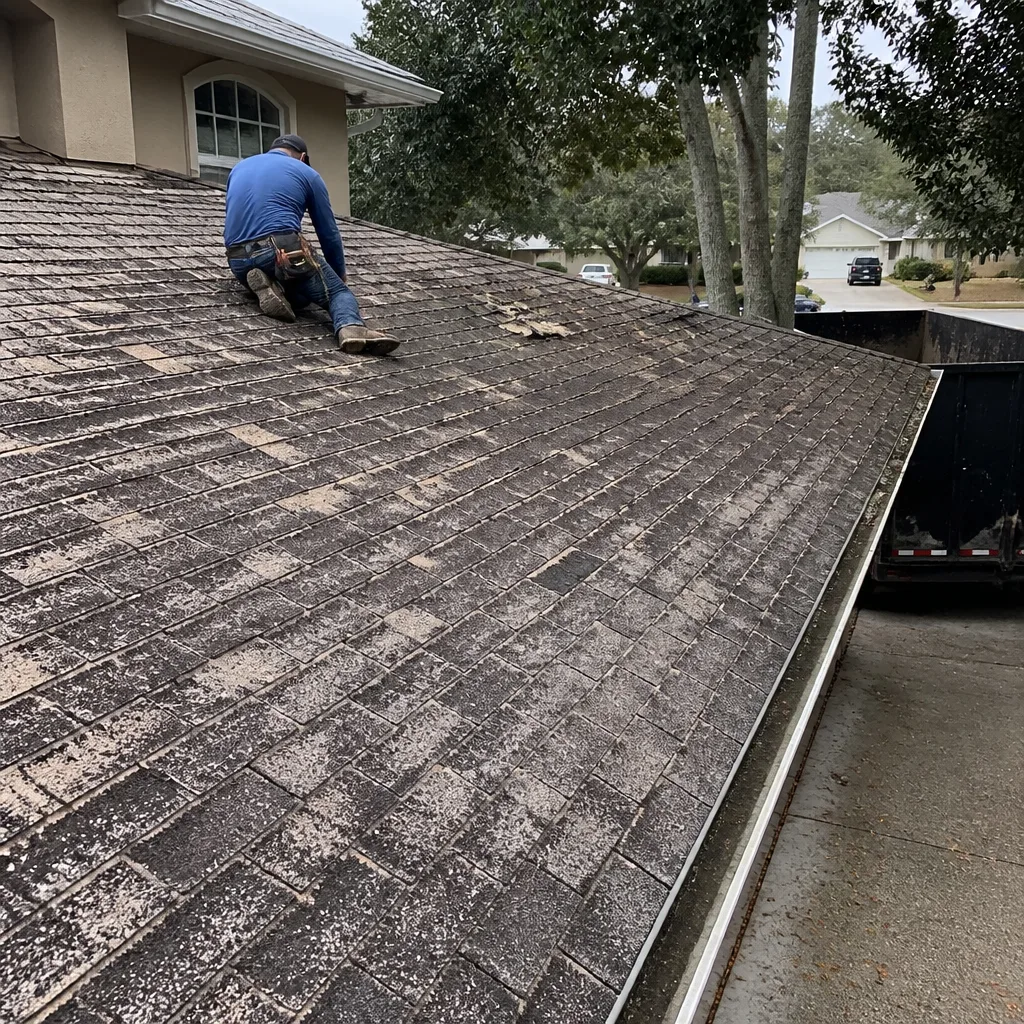 Before
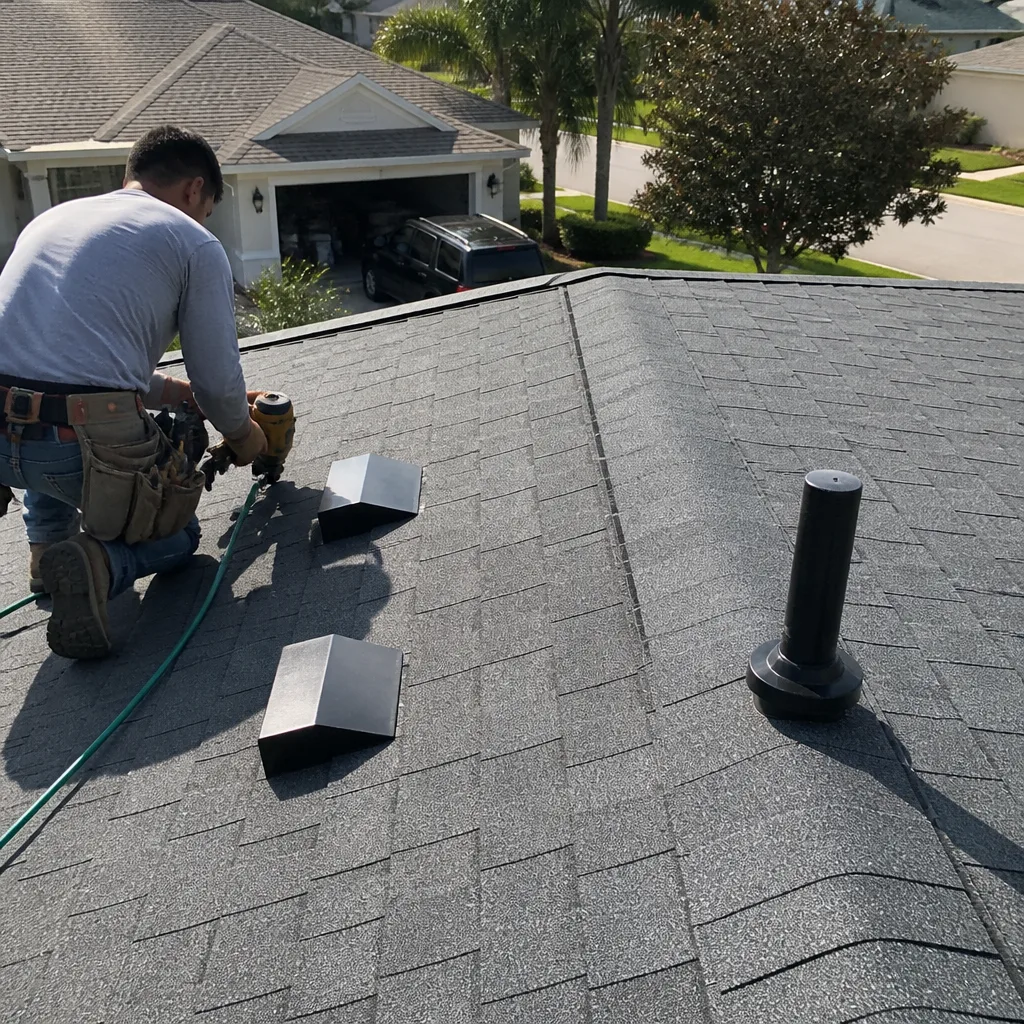 After
After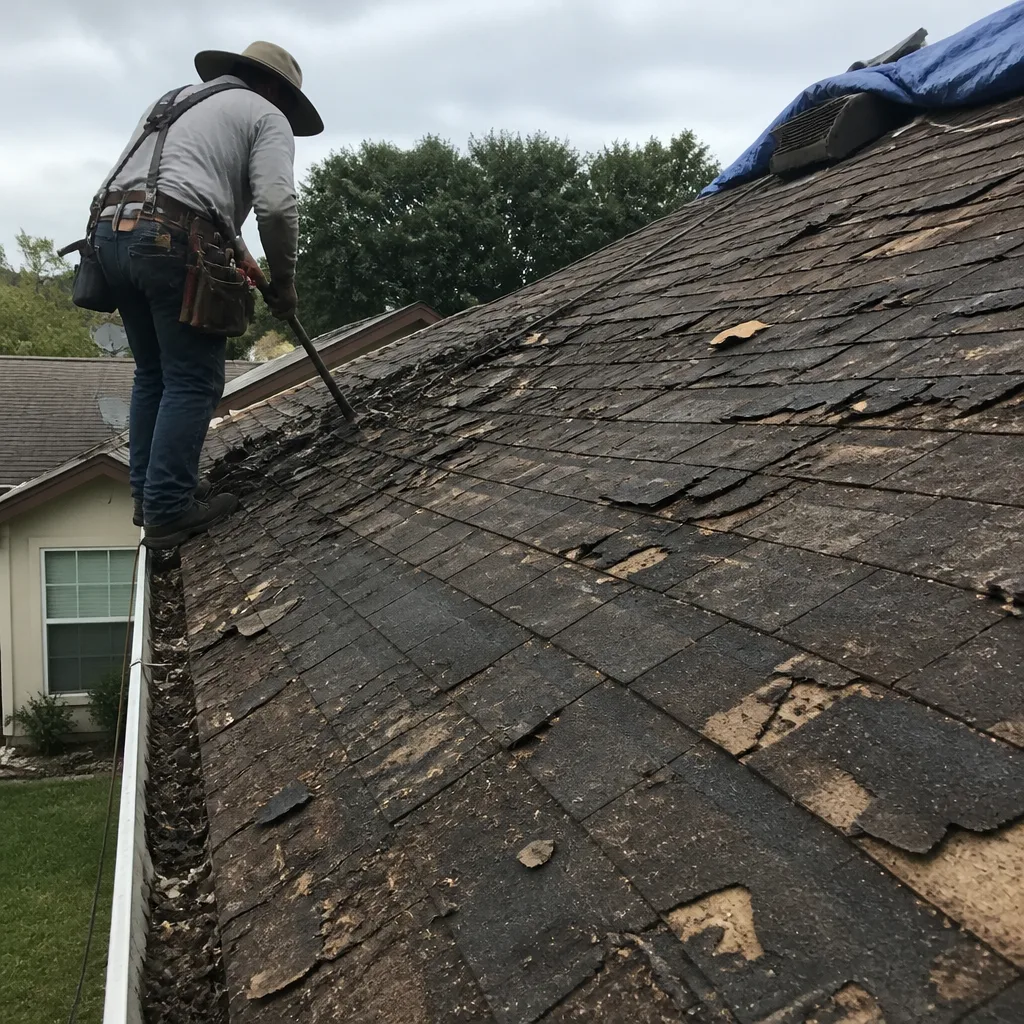 Before
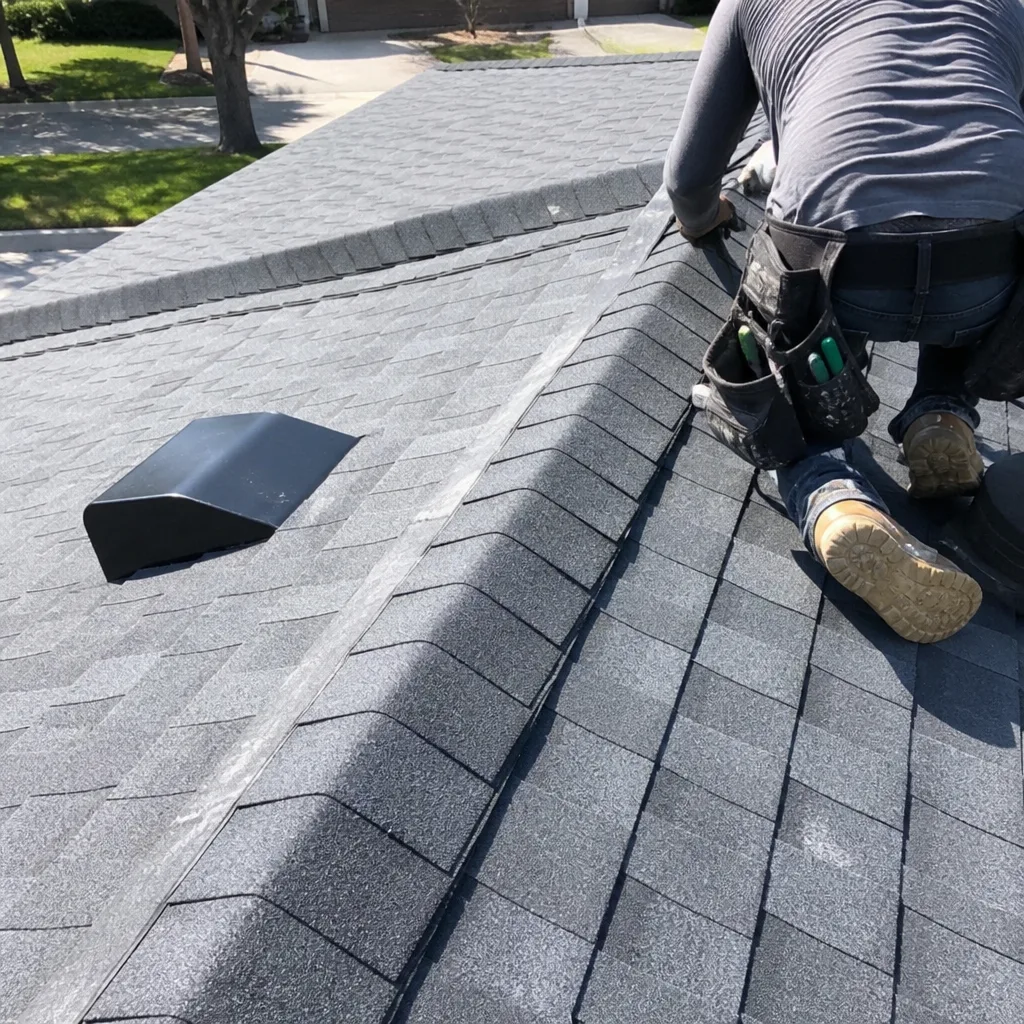 After
After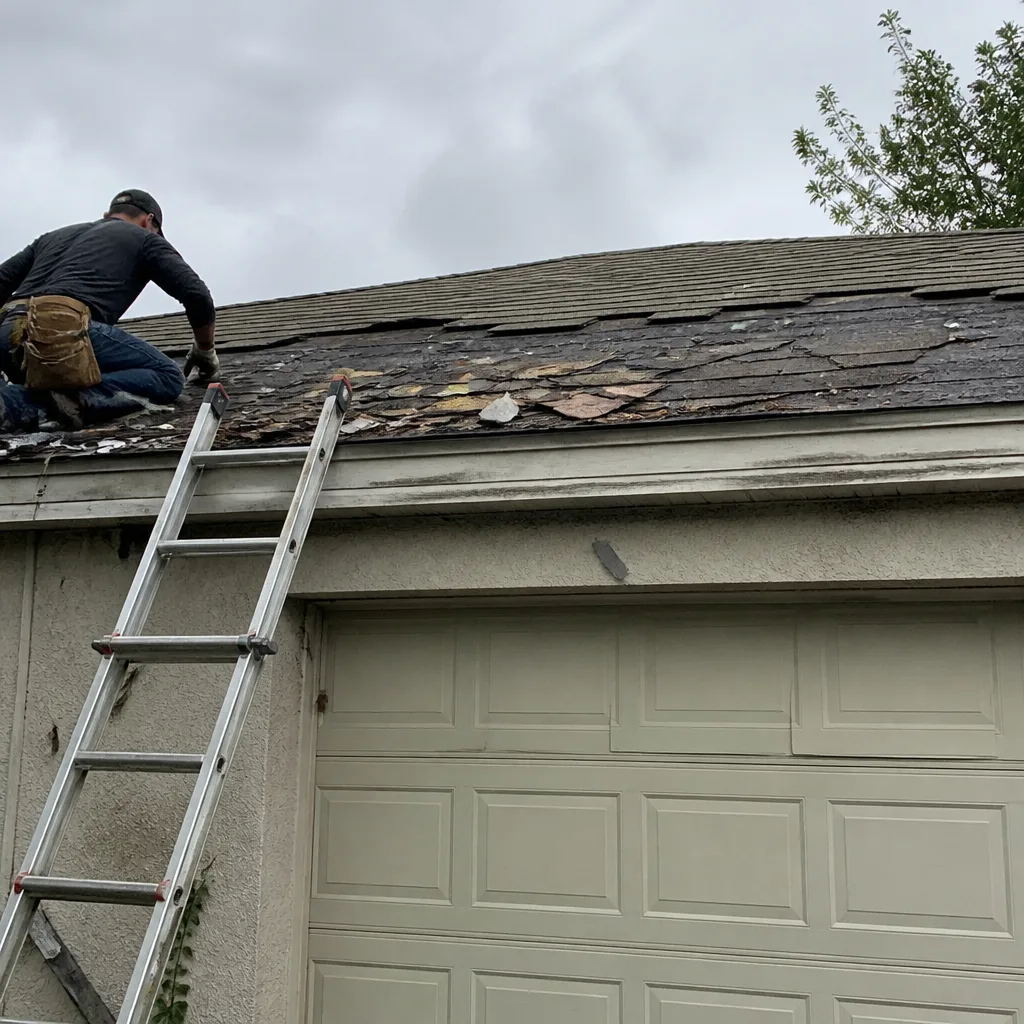 Before
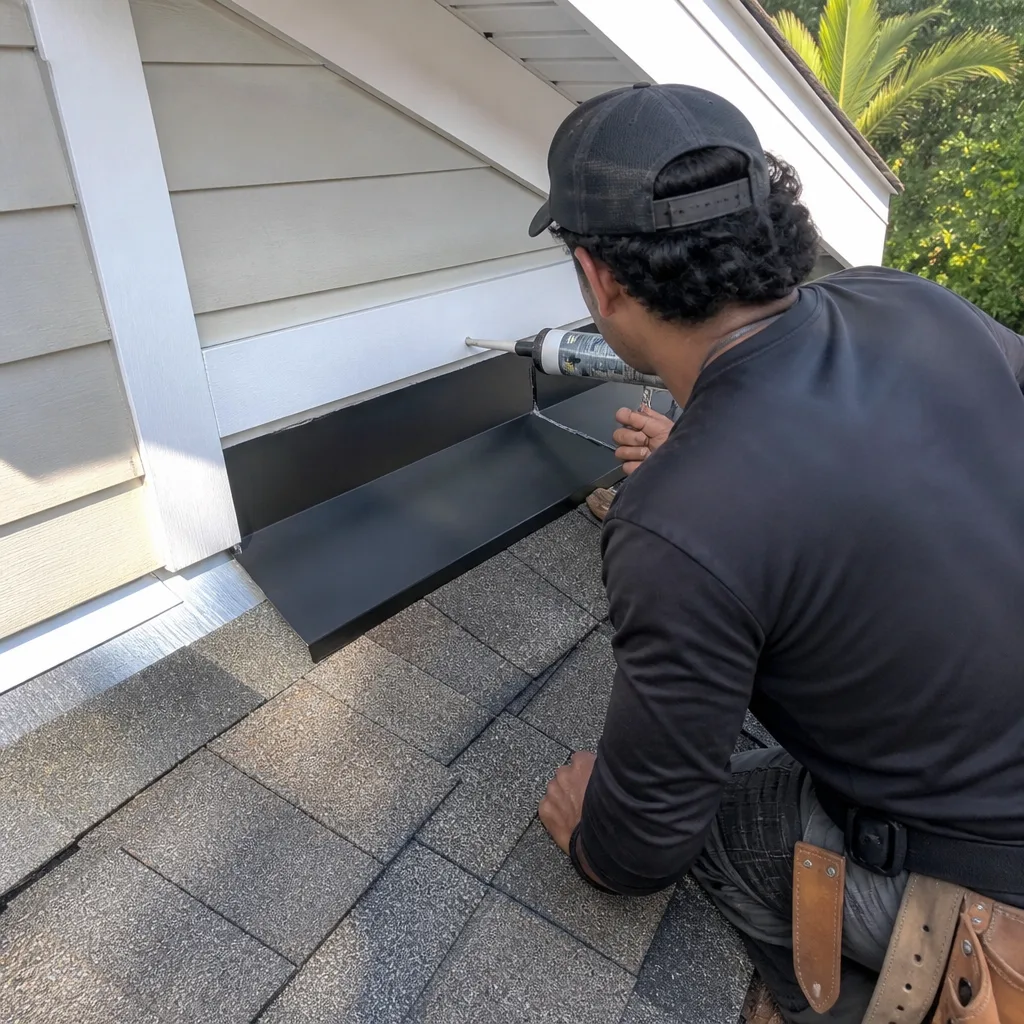 After
AfterWhen to Call a Professional
Any roof work in Orlando that involves a tear-off, a reroof, structural deck repair, or a reflash of a chimney or skylight should involve a licensed contractor and a permit. If you are buying or selling a home and the permit history shows an open or unresolved roofing permit, a licensed Orlando roofer can assess the roof, make corrections, and help close the permit through the county. If your existing roof is nearing that 25% repair threshold after storm damage, get a licensed assessment from a contractor who pulls permits, not one who sidesteps them. Crestview Roofing Co Orlando offers free estimates in Orlando – call (448) 218-0800.
Frequently Asked Questions
Permit fees for a standard residential re-roof in Orange County generally run from about $150 to $400, depending on the valuation and the jurisdiction. The permit fee is itemized in our written quote before work starts, so there is no surprise line item. Call (448) 218-0800 for an exact quote – estimates are free.
In most cases, small repairs – a few missing shingles, a single section of damaged flashing – do not require a permit under Orange County’s administrative rules, because they do not affect the structural roof assembly. But the line between “repair” and “permits required” depends on how much deck and underlayment gets touched, and a licensed roofer in Orlando should make that call honestly. When in doubt, pull the permit; the inspection protects you at resale.
Most title companies and lenders will flag an open or unresolved roof permit during the title search, and the buyer’s lender will often refuse to fund until the permit is closed. You may need to pay for a retroactive inspection, make corrections, and wait for a pass before the sale can close. It is far cheaper and faster to close the permit now than under the pressure of a purchase contract.
Not with Crestview Roofing Co Orlando. The written price we give you before work starts is the number on the invoice, including the permit fee. If the building department changes a fee or the scope shifts, we put the change in writing before any additional work begins. No change orders after the fact, no surprises at the door.
Yes. We pull all required permits through Orange County or the city of Orlando, record the Notice of Commencement, schedule inspections, and deliver final lien releases at project close. It is all part of the written scope, not an add-on.
For a standard single-family shingle re-roof in Orange County, the total timeline from contract signature to passed final inspection typically runs 7 to 12 calendar days, depending on weather and plan review volume. The roof work itself usually takes 1 to 2 days. Call (448) 218-0800 for an exact schedule on your specific roof.
The Bottom Line
The Florida roofing permit process is not bureaucratic overhead. It is the state’s legal mechanism for ensuring your roof can handle a hurricane, your insurer will still pay a claim, and your contractor’s work is on record as code-compliant. In Orlando and Orange County, the process is fast, predictable, and far cheaper than the alternative: an open permit, an unpaid materials lien, or a cancelled closing. The highest-return move is to hire a roofer who puts the permit, the NOC, the written price, and the final inspection in writing before work starts. That is how any good Orlando roofer should operate, and it is how Crestview Roofing Co Orlando has done it since 2000. Browse more guides & resources for Orlando homeowners.
Written by Dylan Pace, Owner at Crestview Roofing Co Orlando, serving Orlando since 2000.