
Last updated October 17, 2026
 Metal roofing
 Architectural shingles
 Tile roofing
 GAF
GAF Owens Corning
 Flat & low-slope
Free roof inspection with deck photos before we talk money - GAF and Owens Corning certified installation
Roofing Warning Signs: A Orlando Homeowner’s Reference Guide
The most expensive roofing call isn’t triggered by a missing shingle. It’s triggered by a musty smell in a second-floor bedroom that a homeowner ignored for two summers. That smell was condensation from a failed ridge vent. By the time it showed up on the ceiling, the roof decking underneath had been rotting for eighteen months and the repair cost tripled. In Orlando, where heat and humidity work on a roof every single day, the damage almost always starts where you can’t see it. This guide walks you through the early indicators: the attic signs, the gutter clues, the flashing failures, and the wind-lift damage that looks fine from the street. For a deeper dive into protecting your home, see our Complete Guide to Roofing in Orlando. If you catch these early, you save real money. If you miss them, you’re paying for a roof replacement instead of a repair.
Quick Answer
The earliest roof warning signs in Orlando homes show up inside before they show up outside: attic humidity above 60%, paint bubbling on ceilings, a sudden jump in your AC bill, or granule buildup in gutters that looks like coffee grounds. Orlando’s heat and humidity degrade roofs from the inside out, so the street-facing shingles often look fine for months after the real damage has started. A professional attic inspection catches most of these problems 12 to 18 months before they become emergency calls.
Styles & brands we work with
Table of Contents
- Interior Warning Signs That Precede Visible Roof Damage
- Granule Loss in Gutters: Normal Aging vs. Accelerated Damage
- Flashing Failure: The Florida-Specific Signs Most Guides Miss
- Wind-Lifted Shingle Damage: How to Spot It From the Ground
- The Attic Inspection Checklist That Catches Problems Early
- How Orlando’s Climate Accelerates Roof Aging
- Common Mistakes to Avoid
- When to Call a Professional
- Frequently Asked Questions
Interior Warning Signs That Precede Visible Roof Damage
Before a single shingle curls or a leak shows up as a brown stain, your roof is talking to you through your house. The problem is that most homeowners don’t know the language. In Orlando, the conversation usually starts in the attic.
The first thing we check on any Orlando attic inspection is humidity. Florida attics run hot and damp by nature, but a properly vented roof keeps attic humidity below 60% on a typical summer afternoon. When ridge vents fail or soffit vents get blocked by insulation, humidity climbs past 70% and stays there. The air feels heavy. You’ll see condensation on the underside of the roof deck. You might see rust forming on exposed nail points. Wood that’s been sitting at 70% humidity for a full Orlando summer starts to support mold growth, and then the decking begins to soften.
The second interior sign is paint bubbling on ceiling drywall. This isn’t the dramatic water stain most people picture when they think of a roof leak. It’s subtler. Paint blisters form small, round bubbles, usually near the edges of a room on the top floor. In Orlando homes, this is often condensation, not a direct leak. Warm, humid attic air meets the cooler drywall surface of an air-conditioned room, and moisture condenses inside the drywall layer. The paint lifts. By the time you notice it, the drywall has been absorbing attic moisture for weeks or months.
The third sign is one most roofing guides never mention: a sudden drop in HVAC efficiency. Here’s the connection. When your roof’s ventilation fails, attic temperatures in an Orlando summer can climb from a normal 120 degrees to 140 degrees or higher. That superheated air sits directly above your ceiling insulation. Your AC now has to fight a hotter heat load just to keep the upstairs at 78. The unit runs longer, the bill climbs, and if you’ve had the system maintained and the filter changed, you may not know why. In our experience with Orlando homes, a unexplained 15 to 20 percent jump in summer cooling costs is one of the earliest roof ventilation failure indicators there is.
None of these signs are visible from the curb. All of them are visible to a homeowner who knows to look. For more guides & resources on spotting roof problems early, explore our blog. That’s the difference between a $600 repair and a $6,000 roof replacement.
Granule Loss in Gutters: Normal Aging vs. Accelerated Damage
When you clean your gutters in Orlando, you’ll almost always find granules. The question is how many, and what they look like. This is one of the most misdiagnosed roof signals in Florida.
Normal granule loss looks like a light sprinkling of sand-sized particles scattered through the gutter. Every asphalt shingle sheds granules as it ages. The granules are the shingle’s UV protection, and like any protective layer, they wear away gradually. During the first two years after installation, new shingles actually shed excess granules from the manufacturing process, so a new roof will show more granule loss than a five-year-old roof. That’s normal. In a mature Orlando roof, a light, consistent granule presence in gutters is simply aging, not a problem.
Accelerated granule loss looks different. Instead of a light sprinkling, you’ll see piles of granules that look like coffee grounds piled in the gutter valleys or at downspout openings. After a heavy Florida storm, if you find a quarter-inch of granules sitting on your driveway under a downspout, that’s not aging. That’s damage.
Here’s how to tell which one you’re looking at:
- Volume: A light, even dusting means normal wear. Piles, clumps, or granular buildup deep enough to cover the gutter bottom means accelerated loss.
- Location: Normal granule loss is spread evenly along the gutter run. Accelerated loss concentrates under specific roof planes, usually the slopes that face south or west, where Orlando’s afternoon sun hits hardest.
- After storms: Normal aging doesn’t produce a sudden granule dump after a storm. Hail impact does. If you find heavy granule accumulation immediately after a hailstorm, you’re looking at impact damage, not aging.
- Shingle appearance: Get a ladder and look at the shingles above the gutter. If granules are washing off uniformly and the shingle still looks granular, it’s fine. If you see shiny, bald patches where the asphalt mat is exposed, the shingle has lost its UV protection and is failing.
Orlando’s UV index averages very high to extreme from March through October. That constant ultraviolet exposure is what the granules protect against. Once a shingle loses its granules in this climate, the underlying asphalt cooks, cracks, and fails, often within two to three years. Catching accelerated granule loss early means you replace a few shingles. Missing it means you lose entire roof slopes.
Flashing Failure: The Florida-Specific Signs Most Guides Miss
Flashing is the metal strips that seal the joints where your roof meets something else: chimneys, vent pipes, skylights, dormer walls, and the valleys where two roof slopes meet. In Orlando, flashing fails before shingles do, and it fails in ways that don’t show up as a straightforward leak.
Most roofing guides will tell you to look for bent, rusted, or missing flashing. That’s valid, but by the time flashing is visibly rusted through, water has been getting behind it for months. Here are the earlier, subtler signs specific to Florida homes:
Rust staining on fascia boards. The fascia is the horizontal board that runs along the roofline behind your gutters. When flashing at a roof-to-wall transition begins to fail, water runs down behind the exterior wall covering and exits at the fascia. In Orlando’s humidity, that metal flashing corrodes quickly once water gets to it, and the rust stains the fascia. Look for reddish-brown streaks on fascia boards directly below chimneys, dormers, or areas where an upper wall meets a lower roof.
Efflorescence on exterior walls below roof transitions. Efflorescence is a white, chalky mineral deposit that forms on masonry or stucco when water moves through it and evaporates, leaving dissolved salts behind. In Orlando, it shows up as white streaks or crusty patches on block walls or stucco chimneys, usually below where flashing should be sealing a joint. Efflorescence tells you water is traveling through the wall, which means the flashing has already failed. It’s not always active leaking; often it’s water from heavy rains that’s been working its way through for months. But it’s a reliable signal that the flashing seal is compromised.
Soffits that feel soft when pressed. The soffit is the horizontal underside of the roof overhang. In Orlando, soffits are often vented to help the attic breathe. When flashing fails above a soffit, water drips down into that space. The soffit material, often wood or fiberboard, absorbs the moisture and softens. Press a thumb into the soffit near a roof penetration or wall transition. If it gives, feels spongy, or shows a thumbprint, the wood is water-damaged. This is an early sign that flashing has failed and water is pooling in the soffit area, even if you haven’t seen a single drip inside the house.
Flashing failure in Orlando tends to accelerate in late summer. The combination of afternoon thunderstorms, extreme heat expansion during the day, and cooling contraction at night works the metal back and forth until the sealant bond fails. Once a flashing joint is compromised, every rain event pushes water a little further into the roof system.
Wind-Lifted Shingle Damage: How to Spot It From the Ground
Florida building codes require shingles to be installed to a specific wind-resistance standard for a reason. Orlando sits in a high-wind zone, and asphalt shingles have a known failure mode here: wind-lifted tabs.
An asphalt shingle is made of tabs, the visible rectangular sections, with an adhesive sealant strip on the underside of each tab that bonds it to the shingle below. Under repeated wind loading, that adhesive can fail. When it does, the tab lifts. In a Florida thunderstorm, wind drives under the lifted tab and folds it back. Then, when the wind drops, the tab settles back down into place. From the ground, right after the storm, the roof looks completely normal. The tab is sitting where it always sits. But the seal is broken, and the next wind event will lift it again, further and further each time, until finally the tab cracks or tears off entirely.
The broken seal is invisible from the street. But there’s a way to spot it.
Here’s the specific visual angle to use:
- Stand back far enough to see the entire roof plane at once. You’re not looking at individual shingles. You’re looking at the overall surface pattern.
- Look at the roof with the sun low to one side, ideally early morning or late afternoon. Low-angle light casts shadows that reveal surface irregularities you can’t see at noon when the sun is directly overhead.
- Scan for tabs that appear slightly raised compared to their neighbors. A shingle with a broken seal will show a shadow line along its leading edge that sealed shingles don’t show. It looks like a subtle, repeating ridge across the roof plane.
- Look for tabs that are no longer perfectly parallel. Wind-lifted tabs that have re-settled often don’t return to exactly the same position. You’ll see a tab that’s offset by a fraction of an inch from the tabs beside it, breaking the uniform grid pattern.
- After the next rain, look for dark patches where shingles look wetter than surrounding areas. Water penetrating under a lifted tab makes the shingle look darker and heavier. On an otherwise dry roof, these damp-looking spots are a sign of water getting in where it shouldn’t.
Orlando’s summer thunderstorm pattern, with intense, short-duration wind gusts, is exactly what breaks shingle seals. A roof that survived Hurricane season may still lose seals tab by tab over the course of a normal summer of afternoon storms. The broken-seal phase is when repairs are cheapest: a few tabs re-sealed with the right adhesive, and the shingle is structurally sound again. Missed, the tab eventually tears off, and now you have exposed decking and a real leak.
The Attic Inspection Checklist That Catches Problems 12 to 18 Months Early
The single best tool an Orlando homeowner has for catching roof problems early is a flashlight and ten minutes in the attic. Most of the roof signals that matter here show up in the attic long before they’re visible anywhere else. This is also the part of the roof most homeowners never look at, which is exactly why damage accumulates unnoticed.
Here’s the checklist we walk Orlando homeowners through. You can do this yourself in ten minutes on a Saturday morning. Do it twice a year, once in May before hurricane season and once in November after it. For timing and seasonal priorities, see our Seasonal Roofing Care for Orlando: Year-Round Homeowner’s Guide.
- Check for daylight gaps. Turn off any attic light and let your eyes adjust. Look up at the roof deck. You should see no light coming through from outside, except at designated vents. If you can see a pinprick or sliver of daylight through the decking or around a pipe or vent penetration, that’s a hole in the roof system. It may not leak yet, but it will.
- Inspect the underside of the roof deck for staining. Look for dark streaks, water rings, or areas where the wood looks darker than surrounding wood. In Orlando, where roofs dry quickly after a storm, old water stains can look like grayish or tannish marks rather than dark wet spots. Any staining means water has penetrated at some point.
- Check rafter staining patterns. Water travels. It enters at one point and runs down the underside of the decking until it hits a rafter, then follows the rafter to a lower point. Staining that runs along a rafter rather than spreading across decking tells you water is finding a path, which usually means a localized entry point like failed flashing or a nail hole.
- Look for displaced insulation. Insulation that’s been compressed, pushed aside, or is missing in patches often indicates a previous repair or a known problem area. But in Orlando attics, it also often means pests have entered through a roof gap. Rats and squirrels in Orlando find roof entry points with remarkable speed, and where an animal enters, water follows.
- Check for rust on exposed nail points. If the nails poking through the decking are rusty, the attic has a humidity problem. Nails don’t rust in a properly vented attic, even in Florida. Rust means moisture is trapped up there, which points back to ventilation failure.
- Feel the air after a rain. Step into the attic within a few hours after a heavy Orlando storm. If the air feels noticeably humid or if you can smell damp wood, the roof ventilation is not moving moisture out, and you may have a leak that’s small enough to evaporate before it shows as a stain.
Two attic checks a year, May and November, catches nearly every problem we’ve named in this guide at the stage where a repair, not a replacement, solves it. This is after the last cool front of spring and after hurricane season, which are the two points in the Orlando calendar when roof damage is most likely to have accumulated.
How Orlando’s Climate Accelerates Roof Aging
Roofs in Orlando don’t age on a national schedule. They age on a Florida schedule, which is faster and harsher than most national roofing averages assume.
The environmental loads on an Orlando roof are stacked. First, there’s the UV. Orlando sits at a latitude where the summer sun hits nearly overhead from May through August, and the UV index runs in the very high to extreme range for most of that period. Shingle granules exist to block that UV. In northern climates, granules wear gradually over decades. Here, a south-facing slope can lose its UV protection years before a north-facing slope on the same roof. That’s why Orlando roof inspections should always look at sun-facing exposures separately from shaded exposures: they fail at different rates.
Second, there’s the humidity and heat combination. Orlando’s average summer relative humidity runs 75 percent or higher. A poorly vented attic under those conditions doesn’t just get hot; it holds moisture. That moisture condenses on cooler surfaces at night, promotes mold on the decking, and softens the wood fiber that holds roofing nails. The connection between attic humidity and nail holding power is one of the most overlooked roof failure mechanisms in Florida homes. When decking softens, nails loosen, shingles lift more easily in winds, and the whole roof system loses structural integrity from the inside.
Third, there’s the storm cycle. Orlando’s afternoon thunderstorm season runs from June through September, producing intense but brief storms with high wind gusts. A 15-minute storm that hits 60 mile-per-hour gusts causes more shingle-seal damage than a full day of steady 30 mile-per-hour wind. Those daily cycles, repeated hundreds of times across a summer, progressively break shingle seals and work flashing joints loose. Then hurricane season adds the occasional full-force event that strips the already-weakened sections.
Fourth, there’s the organic growth pressure. Orlando’s heat and humidity are ideal for algae, moss, and the black streaking you’ll see on many neighborhood roofs. The notorious black streaks on Central Florida roofs are Gloeocapsa magma, a cyanobacteria that feeds on the limestone filler in shingles. It doesn’t structurally damage the roof, but it holds moisture against the shingle and shortens shingle life. Homes in tree-shaded Orlando neighborhoods like College Park or Colonialtown tend to show heavier algae growth because reduced sun keeps the shingle surface damp longer.
The practical takeaway: an Orlando roof that’s ten years old has taken more environmental stress than a Minneapolis roof at fifteen. Compare your roof’s condition to other Orlando roofs, not to national lifespan averages. And schedule your inspections on the Orlando calendar, not the generic “once a year” schedule. May and November are the months that matter here.
Common Mistakes to Avoid
- Waiting for a visible leak before calling a roofer. By the time water shows up on a ceiling in Orlando, it’s been inside the roof system for months. The leak is the last symptom, not the first. Attic and interior warning signs always precede it.
- Ignoring granule buildup because “all roofs lose granules.” All roofs do lose some granules. But heavy, concentrated granule piles in gutters after a storm mean impact damage or UV-cooked shingles, not normal aging. Learn the difference between a dusting and a pile.
- Painting over ceiling bubbles instead of investigating them. A bubbling paint patch on an upper-floor ceiling is a moisture signal. Painting it hides the symptom for six months while the attic keeps getting wetter. Fix the roof, then fix the paint.
- Assuming a roof that looks fine from the street is fine. Wind-lifted tabs, broken shingle seals, and failed flashing all hide in plain sight from the ground. A roof can look normal the day before it loses shingles in a storm. The seal damage was already there.
- Skipping the attic because it’s hot and uncomfortable. The attic is where Orlando roof problems announce themselves first. Go up there in the early morning before it heats up, or hire someone who will. Ten minutes twice a year is the cheapest roof maintenance you’ll ever do.
- Using a generic national inspection schedule. In Orlando, the meaningful inspection windows are May, before the daily thunderstorm cycle, and November, after hurricane season. A roof inspected on the national spring/fall schedule may be inspected at the wrong points in the Florida weather cycle.
- Treating algae streaks as a cosmetic issue that can wait. The black streaks on Orlando roofs hold moisture against the shingle surface and shorten shingle life. If the streaking is heavy, address it before the shingle’s protective layer degrades further.
When to Call a Professional
Some roof signals you can monitor yourself. Some need a trained eye and a ladder. Call a roofer when you see daylight through the roof deck, when soffits feel soft to the touch, when you find concentrated granule piles after a storm, or when you’ve had an unexplained spike in cooling costs that coincides with attic humidity you can feel. Also call after any storm with wind gusts above 60 miles per hour, even if the roof looks fine. Orlando storms break shingle seals that don’t show from the ground. Crestview Roofing Co Orlando offers free estimates for every roof inspection and repair call in the Orlando area, with a written price before any work starts. Call (448) 218-0800 to schedule yours.
Frequently Asked Questions
A standard roof inspection from Roof Repair in Orlando providers typically runs $150 to $400 in the Orlando market, though many companies offer free inspections when you’re already calling about a specific problem. At Crestview Roofing Co Orlando, our inspections are free, and if we find a repair, the written quote we give you is the price you pay, no change orders. Call (448) 218-0800 to schedule one.
Twice a year: once in May, before the daily thunderstorm cycle starts, and once in November, after hurricane season ends. Orlando’s climate loads damage onto a roof on a seasonal schedule that doesn’t match the generic “once a year” advice most national guides give. If you only do one inspection, make it November, when hurricane season damage has accumulated and needs to be found before the cooler months hide it.
A roof leak in an Orlando home often smells musty or earthy rather than obviously wet, because the moisture has usually been sitting in the attic or wall cavity long enough for mold to begin forming. If you smell a persistent mustiness in an upstairs room, particularly after heavy rain, check the ceiling for paint bubbling and get an attic inspection. The smell often appears months before a visible stain.
Yes, with the right light. Go out after a storm, stand where you can see the entire roof plane, and look at it with low-angle morning or evening sun. Shingles with broken seals show a shadow line along their leading edge and may be offset slightly from their neighbors. The broken seal is the earliest wind damage signal, and it’s what lets later storms strip the shingle entirely. For a free ground-level inspection from Roof Replacement in Orlando professionals, call (448) 218-0800.
The black streaking on Orlando roofs is Gloeocapsa magma, a cyanobacteria that feeds on the limestone in shingle granules. It’s common across Central Florida, especially on shaded roof planes. It doesn’t rot the roof like wood-destroying fungus, but it holds moisture against the shingle and accelerates granule loss over time. Treating it early preserves shingle life.
In the Orlando climate, most architectural asphalt shingle roofs last between 15 and 20 years, compared to 20 to 30 years in milder climates. The difference is the combined effect of intense UV, daily summer thunderstorm wind cycles, and high attic humidity. Roofs installed with premium shingles from manufacturers like Roof Installation in Orlando companies using GAF or Atlas materials tend to reach the higher end of that range when ventilation is properly designed.
The Bottom Line
Roof problems in Orlando don’t announce themselves from the street. They build quietly in the attic, in the soffits, in the gutter granules, and behind the flashing, while the roof looks perfectly fine from your driveway. The shift in thinking that saves Orlando homeowners the most money is this: watch the inside of the house, not the outside of the roof. Attic humidity, ceiling paint, HVAC bills, and gutter granule patterns will tell you more about your roof’s health than a visual check of the shingles ever will. Learn the early signals, check the attic in May and November, and when something looks wrong, get a professional up there before the repair becomes a replacement. Not sure whether to tackle it yourself? Read our DIY vs Professional Roofing: The Orlando Homeowner’s Decision Guide.
For help evaluating any roof warning sign in your Orlando home, call Crestview Roofing Co Orlando at (448) 218-0800. We’ll inspect it, tell you straight what we found, and give you a written price before any work starts. You can reach our Crestview Roofing Co Orlando home page to learn more about how we work.
Written by Dylan Pace, Owner at Crestview Roofing Co Orlando, serving Orlando since 2000.
See the difference
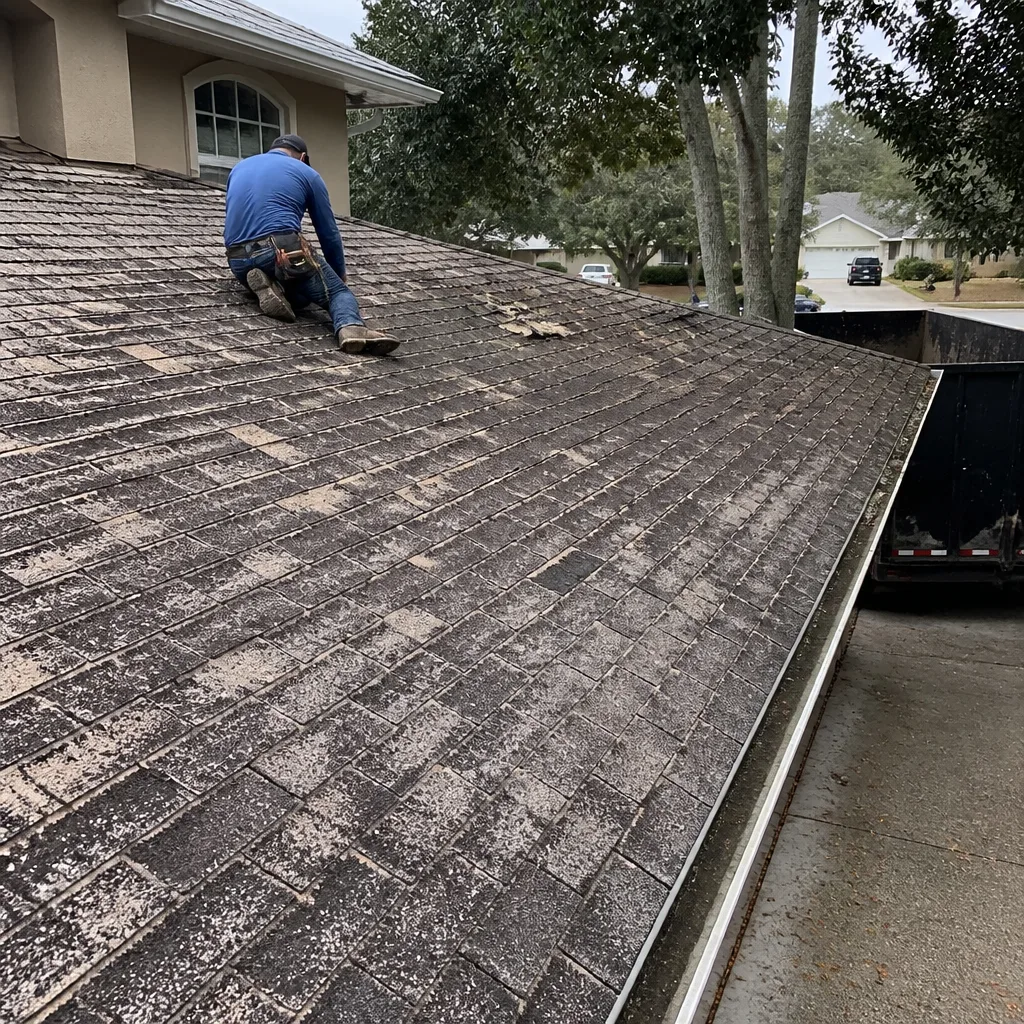 Before
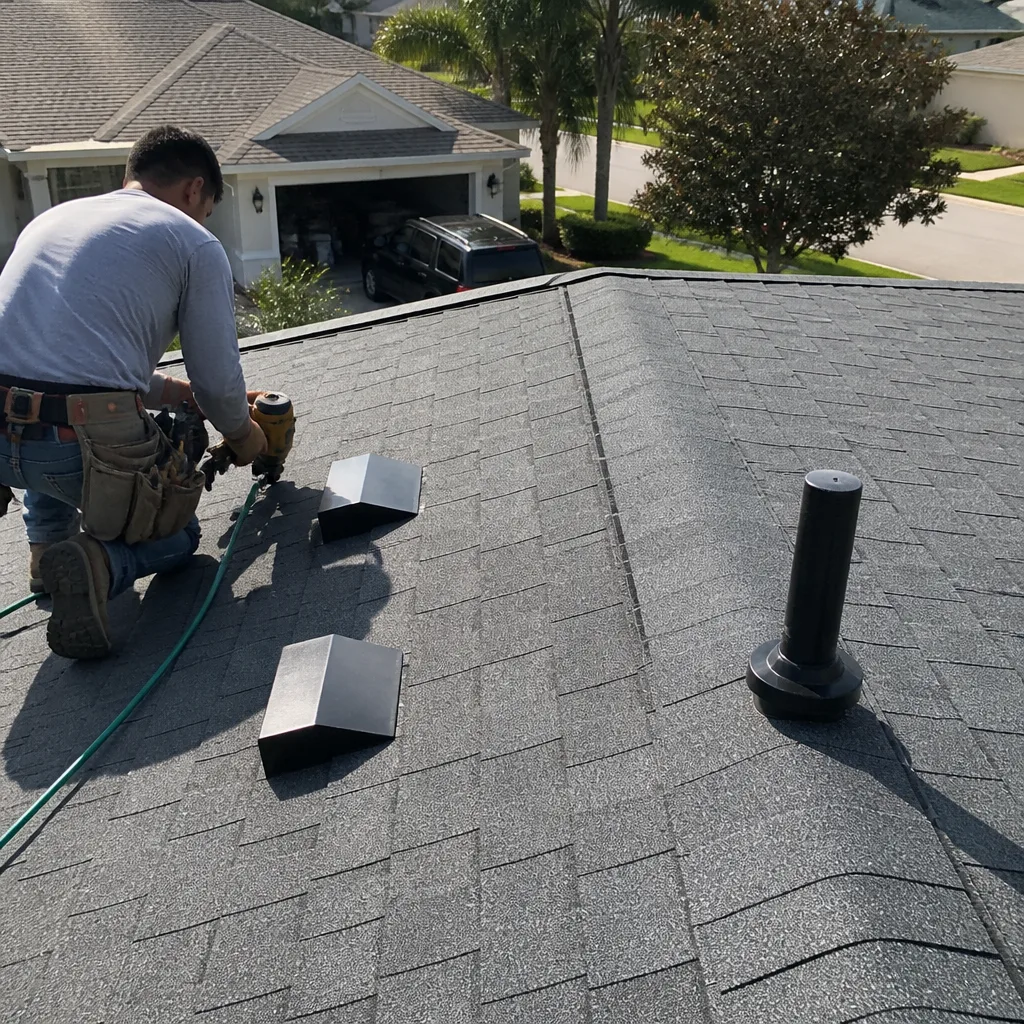 After
After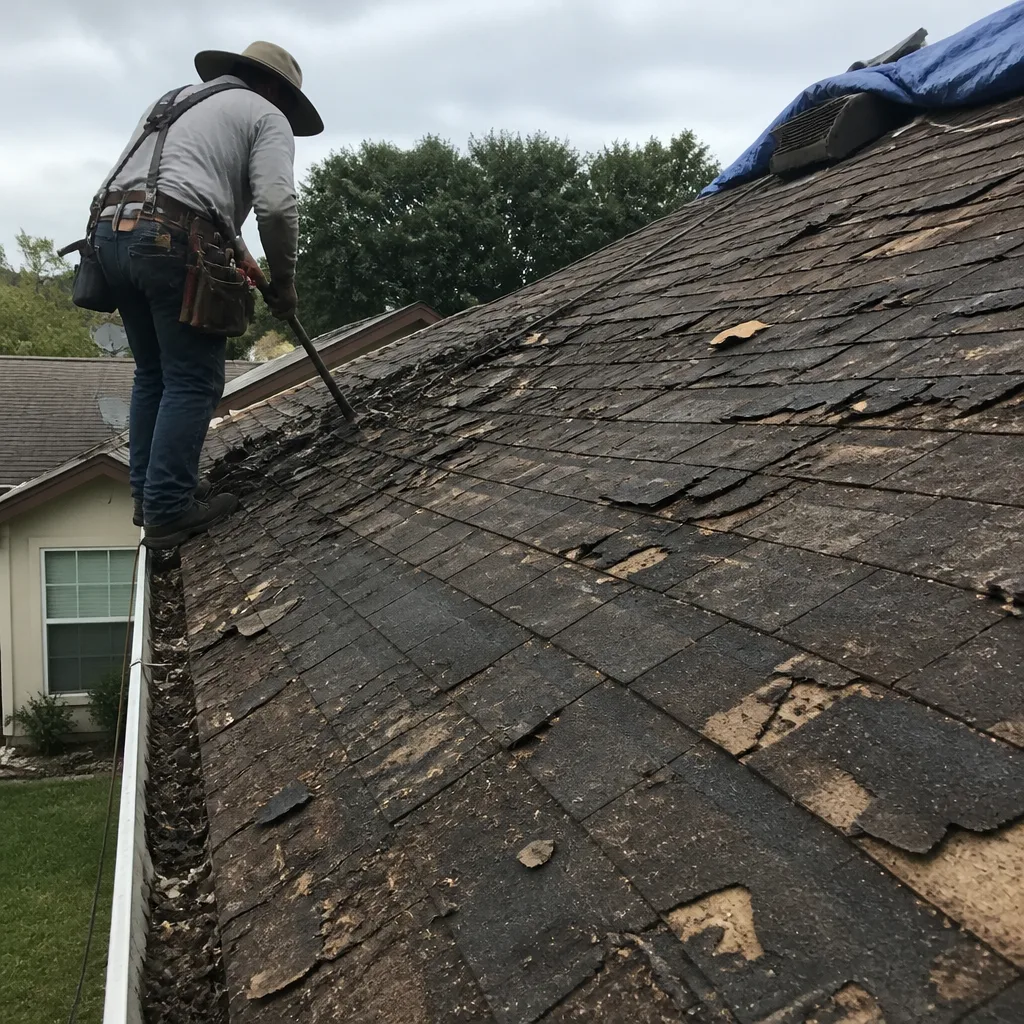 Before
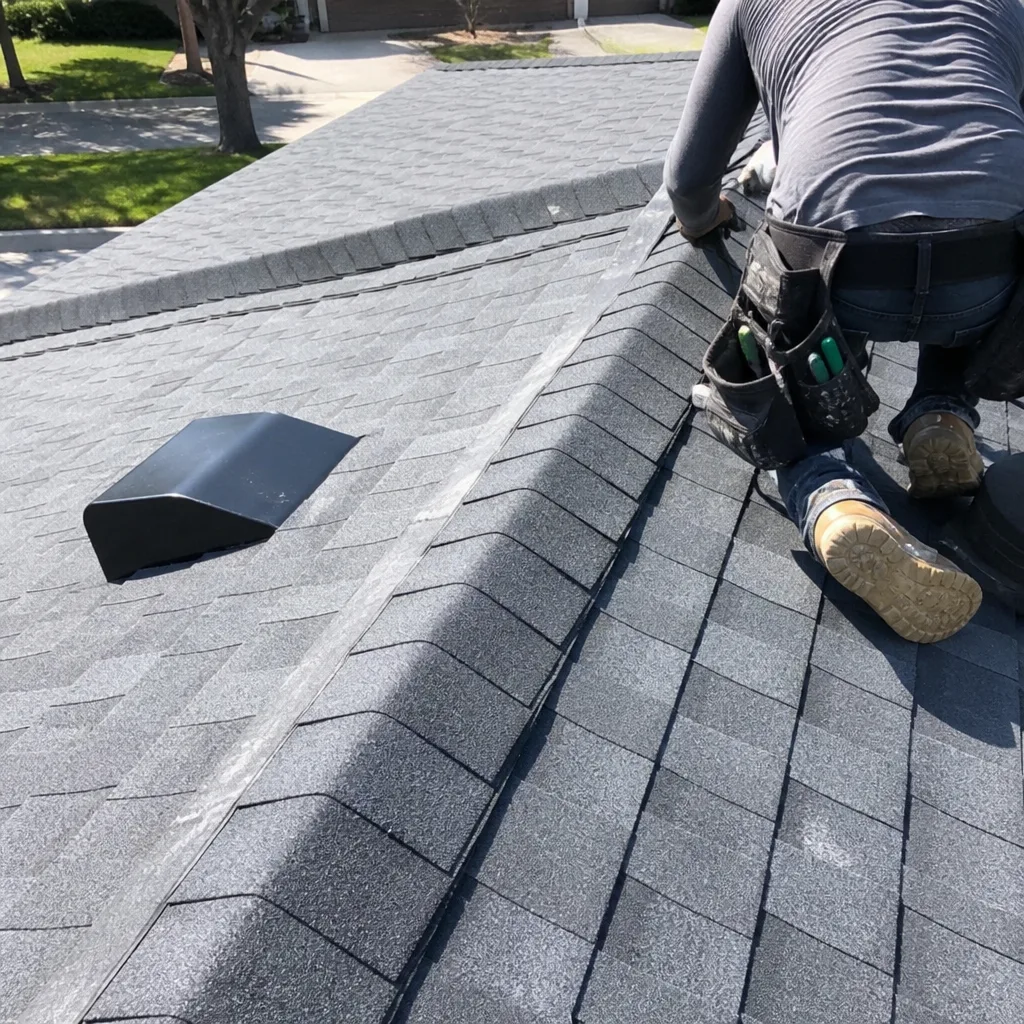 After
After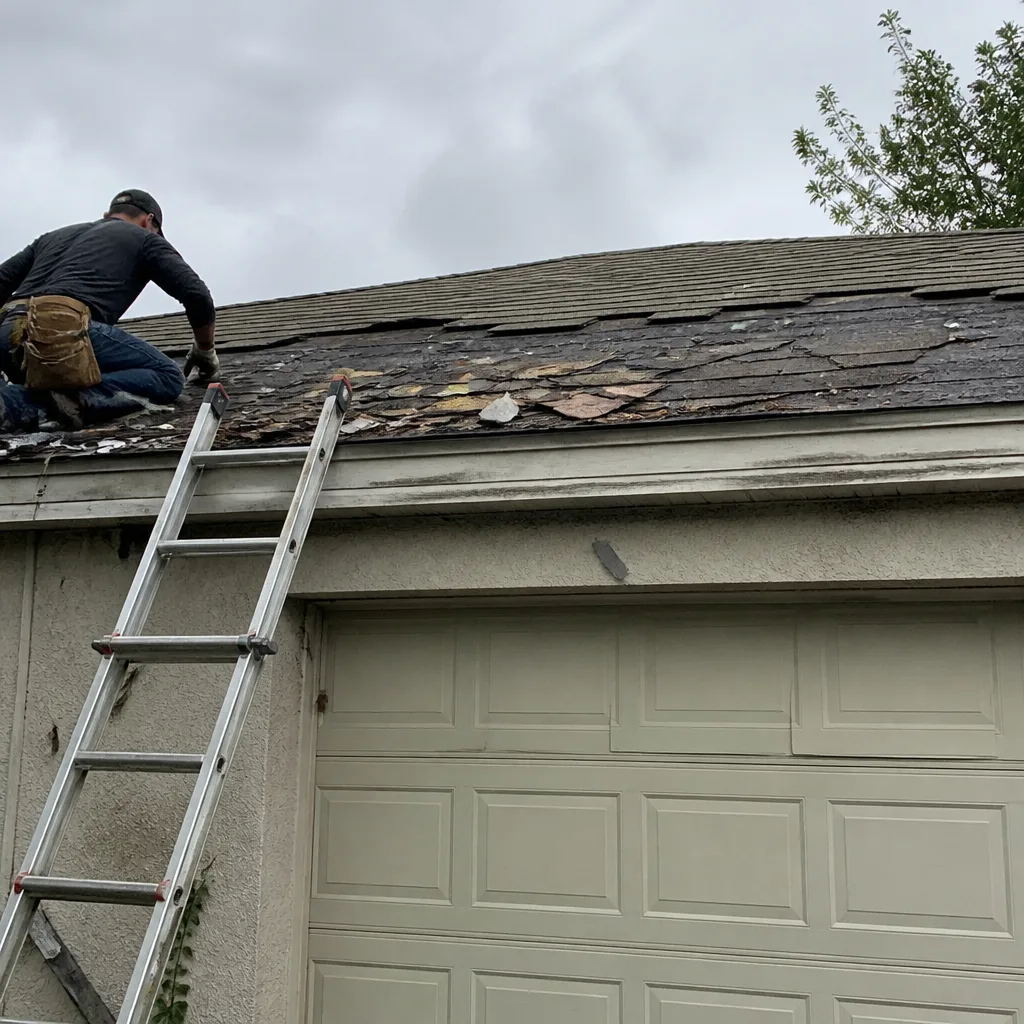 Before
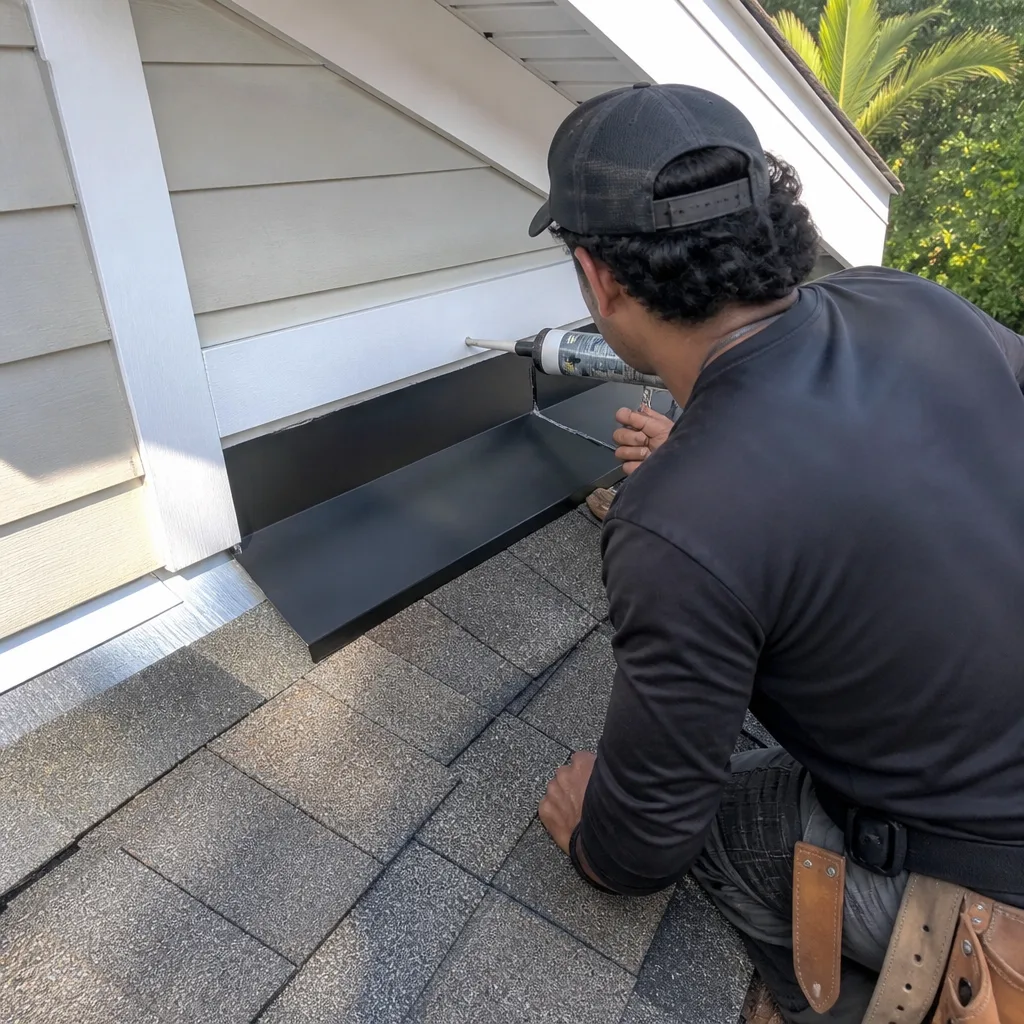 After
After